Featured image for BAP Spotlight Story: TOBA Tilapia

BAP Spotlight Story: TOBA Tilapia

The Best Aquaculture Practices (BAP) program’s “Spotlight Stories” highlight BAP-certified facilities around the world and the stories of the people behind them. This Spotlight Story features TOBA Tilapia in Indonesia. What inspired you to become involved in the seafood industry? With demand rising and many marine fish stocks already overfished, nearly half of all seafood 

Featured image for BAP Spotlight Story: DATAJ Aquafarm Inc.

BAP Spotlight Story: DATAJ Aquafarm Inc.

The Best Aquaculture Practices (BAP) program’s “Spotlight Series” highlights BAP-certified producers around the world and the stories of the people behind them. This Spotlight Story features DATAJ Aquafarm Inc., a shrimp farm in the Philippines. Questions answered by Marian Cristi Tamayo, President of DATAJ. What inspired you to become involved in the seafood industry? There are several 

Featured image for Humpty Doo Barramundi: Best Aquaculture Practices (BAP) Spotlight Story

Humpty Doo Barramundi: Best Aquaculture Practices (BAP) Spotlight Story

The Best Aquaculture Practices (BAP) Program’s “Spotlight Stories” highlight BAP-certified facilities around the world and the stories of the people behind them. This Spotlight Story features Humpty Doo Barramundi, a family-owned barramundi business in Australia. What inspired you to become involved in the seafood industry? The family behind Humpty Doo Barramundi was inspired to join 

Featured image for How Does BAP Develop a Standard?

How Does BAP Develop a Standard?

BAP is the world’s most trusted, comprehensive and proven third-party certification program for the fastest growing food-production sector, aquaculture. Creating standards that are robust yet able to adapt as best practices in aquaculture is a challenging job. The Global Aquaculture Alliance’s Standards Oversight Committee (SOC) and the BAP technical committees work tirelessly to ensure the 

Featured image for BAP Launches Video Featuring Gemso Tilapia Farm

BAP Launches Video Featuring Gemso Tilapia Farm

The Best Aquaculture Practices (BAP) program recently launched a new video featuring BAP-certified Acuicuola Gemso tilapia farm in Sonora, Mexico. The video stems from a partnership with the U.S. Soybean Export Council to increase awareness of responsible aquaculture, the BAP certification program and sustainable feed. Gemso obtained BAP certification in 2014, demonstrating its commitment to 

Featured image for Best Aquaculture Practices (BAP) Addresses Aquaculture Misconceptions with Infographic

Best Aquaculture Practices (BAP) Addresses Aquaculture Misconceptions with Infographic

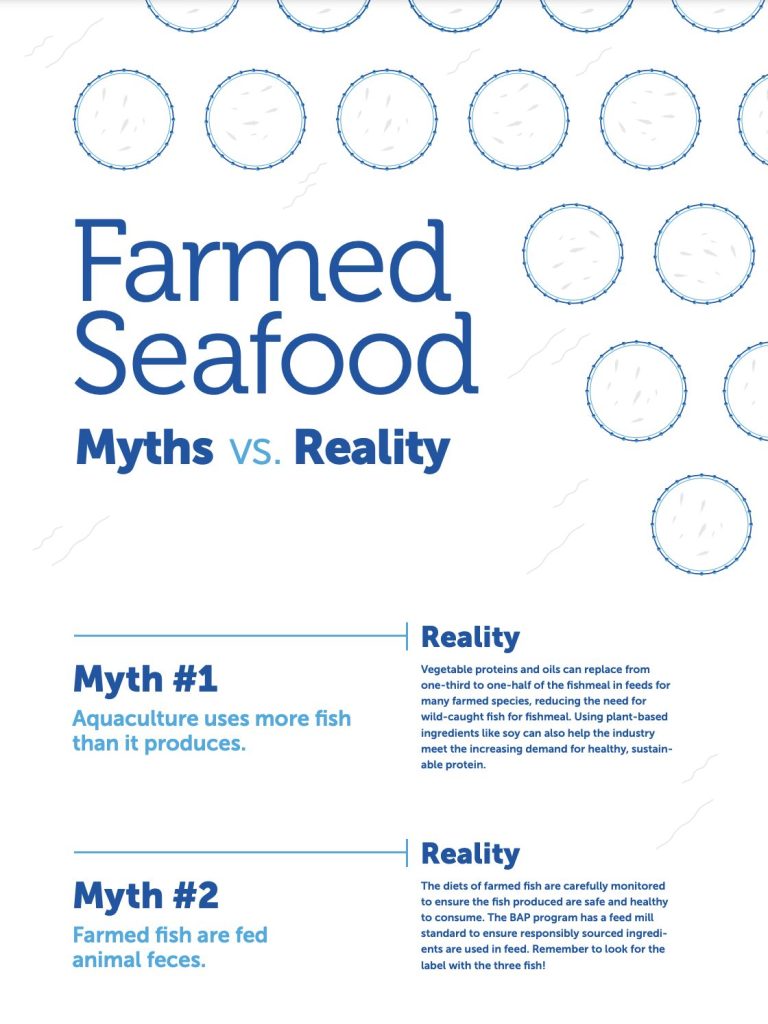
The Best Aquaculture Practices (BAP) program recently launched a new infographic that addresses ten common aquaculture misconceptions. This is part of a campaign BAP is doing in partnership with the U.S. Soybean Export Council (USSEC) to educate consumers about responsible aquaculture, sustainable feed and the BAP program. Among the misconceptions addressed are what farmed fish 

Featured image for First European Mussel Farm Earns BAP Certification

First European Mussel Farm Earns BAP Certification

Offshore Shellfish Ltd., which operates the United Kingdom’s first large-scale, offshore rope-cultured mussel farm, recently obtained Best Aquaculture Practices (BAP) certification, the Global Aquaculture Alliance (GAA) announced in early September. It is the first mussel farm in Europe to earn this distinction. Offshore Shellfish is a family-run business that grows the native blue mussel offshore 

Featured image for BAP Spotlight Story: Ram’s Assorted Cold Storage Ltd.

BAP Spotlight Story: Ram’s Assorted Cold Storage Ltd.

The Best Aquaculture Practices (BAP) Program’s “Spotlight Stories” highlight BAP-certified facilities around the world and the stories of the people behind them. This Spotlight Story features Aditya Dash of Ram’s Assorted Cold Storage Ltd., a 3-star processing plant in India. What inspired you to become involved in the seafood industry? My father started his business 

Featured image for What BAP-Certified Facilities are Saying About Us

What BAP-Certified Facilities are Saying About Us

Initial results from a survey conducted by the Best Aquaculture Practices (BAP) program show the benefits facilities have experienced from becoming BAP certified. Among the most common benefits facilities mentioned are increased sales and access to new markets, improved business practices and increased customer trust. The infographic below shows testimonials from some of the facilities 

Featured image for BAP Releases Second Supply Chain Transparency Video

BAP Releases Second Supply Chain Transparency Video

The Best Aquaculture Practices (BAP) third-party certification program recently launched a second video about its supply chain transparency technology. More than 150 retailers, foodservice operators and seafood suppliers worldwide are publicly committed to sourcing seafood responsibly from BAP-certified facilities. As a BAP endorser, companies have access free of charge to BAP’s supply chain transparency technology, 

Featured image for Ten Reasons to Buy Best Aquaculture Practices (BAP) Certified Seafood

Ten Reasons to Buy Best Aquaculture Practices (BAP) Certified Seafood

  Buy with confidence.  Best Aquaculture Practices (BAP) is the world’s only aquaculture certification program that covers the entire production chain (hatcheries, feed mills, farms and processing plants). BAP also has the most comprehensive standards, which cover environmental responsibility, social responsibility, food safety and animal health and welfare. The BAP program is endorsed by retailers 

Featured image for BAP Logo Policing Results Show 99% Compliance with Guidelines

BAP Logo Policing Results Show 99% Compliance with Guidelines

For the last six quarters, the Best Aquaculture Practices (BAP) third-party certification program has used a third-party crowdsourcing firm to perform in-store audits of BAP products in retail stores across the United States, Canada and Mexico as part of its logo policing program. This includes answering specific questions about each product regarding country of origin, 

Featured image for UNH Students Analyze BAP Supply Chain Data for Capstone Project

UNH Students Analyze BAP Supply Chain Data for Capstone Project

As part of their capstone project for the University of New Hampshire’s (UNH) Information Systems and Business Analytics (ISBA) program, five students are working to analyze data from the Best Aquaculture Practices (BAP) supply chain transparency program. BAP collects production volume data from certified facilities and trading volumes from distributors and retailers around the globe