An Overview of GSA’s Complaints, Disputes and Appeals Process for Certified Facilities
Potential Non-Compliances (NCs) identified at certified facilities outside of a Best Aquaculture Seafood Practices (BAP) or Best Seafood Practices (BSP) audit are handled by the Global Seafood Alliance (GSA) Program Integrity team. These could be standards related (against certified facilities) and/or policy related (e.g. certification bodies) and could be a result of evidence obtained through a formal complaint, media report, regulatory authority notice, or other type of observation or reported incident. All potential NCs are initially assessed by Program Integrity for authenticity, credibility, and potential legal, human safety, environmental, and animal welfare impacts. If the information is deemed as feasibly credible, GSA initiates an investigation.
Complaints, Appeals and Disputes
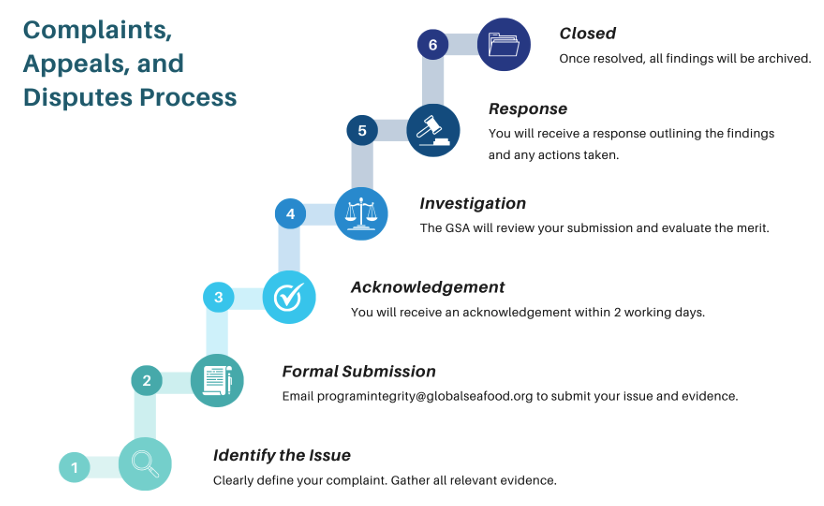
GSA has a formal complaints, appeals and disputes process that includes identifying the issue being brought forward or detected, formal submission of complaint and evidence by stakeholders, acknowledgement, investigation and response by GSA, and formal completion or closing out of any compliance issues, certification decision and the complaint.
Investigations
Investigations occur both inside and outside the Complaints, Appeals and Disputes process. If the investigation is related to or requires a certification decision, GSA will typically request the Certification Body (CB) that holds a facility’s current certificate to conduct either a Targeted or Program Integrity Audit as part of the investigation. Under higher risk situations (e.g. elevated concerns for legal, human safety, or CB-related risks), a GSA Program Integrity Investigation Audit may be conducted directly by Program Integrity personnel.
Investigations typically include all of the following:
1. Determine Certification Status
If the complaint appears credible and evidence suggests there may be a critical NC occurring, GSA and/or the CB will issue a Temporary Suspension to the facility pending the outcome of the investigation. GSA reserves the authority to suspend a facility from the program while the CB reserves the authority to suspend the facility’s certificate. In either case a temporary suspension will result in the removal of the facility from the GSA website. A critical NC is defined as a serious failure to comply with a food safety, social compliance and/or legal issue and/or a risk to the integrity of the scheme.
2. Evidence Gathering
GSA or the CB will typically conduct a supplemental Targeted or Program Integrity Audit as part of the investigation. This is most often an unannounced and onsite audit, meaning the facility has no knowledge that a surprise audit is taking place at their facility. The auditors are instructed to introduce themselves, describe the purpose of their visit, inquire and/or request facility personnel needed for the audit, and perform an immediate walk-through of the facility. Once the walk-through is completed, the auditor examines relevant documentation and conducts worker interviews and other audit trails to determine if there has been demonstrable noncompliance to GSA standards, and whether this is an isolated incident versus an ongoing issue.
3. Determine Findings and Issue Report to Facility
After gathering evidence, the GSA or CB auditor issues a report to the facility outlining the findings including any NCs and their severity levels (Minor, Major, Critical) to standard clauses. Critical NCs identified during the audit warrant an immediate suspension by either GSA and/or the CB. Upon receipt of this report, the facility has three working days to respond to the notice and 35 days to submit a completed Corrective Action Report. The Corrective Action Report includes identifying the root cause, corrective action, preventative action and list of evidence submitted for each NC attributed by the auditor.
4. Corrective Actions are Reviewed
GSA Program Integrity (or CB depending on who conducted the investigation), must accept and sign off on all aspects of the Corrective Action Report to close out each NC identified. Upon closure of the NCs, GSA and the CB determine continued certification status of the facility. A suspension, certificate withdrawal, and/or re-audit is warranted if the facility does not respond to the corrective action request within the 35-day timeframe, or the number and severity of NCs are high enough that both the CB and GSA feel the facility clearly lacks an understanding and implementation of the standard requirements, compliance with laws, and/or has insufficient systems in place to demonstrate full compliance.
5. Conclusion
Pending the outcome of Program Integrity Investigations, decisions may include returning to full certification status, requiring more frequent onsite audits, or temporary or indefinite suspension from the BAP or BSP program. Once the investigation has concluded and a final certification decision has been made, all findings are logged and archived accordingly and made available for internal and third-party system audits.