Understanding the Best Aquaculture Practices Four-Star System
Best Aquaculture Practices (BAP) is a third-party certification program developed by Global Seafood Alliance (GSA) that covers the entire farmed seafood production chain. The four star system is used to represent each piece of this chain, which includes the processing plant, farm, hatchery and feed mill. A four-star designation is the highest achievable for BAP-certified producers, and means that every facility in the production chain has attained BAP certification, which requires passing an annual third party audit.
What Each Star Stands For
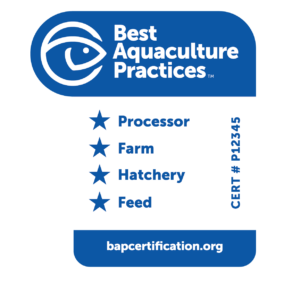
⭐ 1-Star BAP → Processing plant
⭐⭐ 2-Star BAP → Processing plant + farm
⭐⭐⭐ 3-Star BAP → Processing plant + farm + hatchery or feed mill
⭐⭐⭐⭐ 4-Star BAP → Entire production chain certified (processing plant, farm, hatchery and feed mill)
Each of these steps are an important part of the aquaculture production chain – the processing plant is where the product is processed and packaged before reaching its final destination; the farm is where the fish are grown to harvest size; the hatchery is where the fish are reared and raised; and the feed mill is where fish feed is produced. At each of these steps, BAP standards cover environmental responsibility, social accountability, food safety and animal welfare. The number on the label (or elsewhere on the package) represents the processing plant where the product was packaged before reaching you.
Why the Four Star System Matters
BAP is the only aquaculture certification program in the world with standards that cover every step in the production chain. These comprehensive standards allow BAP to provide a greater level of assurance as well as chain of custody traceability between each of these step in the production chain. To attain certification, the producer must pass an annual third-party audit and correct any non-conformities found during the audit to receive their certificate.
Frequently Asked Questions
What does a BAP 4-star logo mean?
This is the highest designation available for a BAP-certified producer – it means that the entire production chain, including the processing plant, farm, hatchery and feed mill – has been certified to BAP standards.
How is BAP different from other aquaculture certification programs?
A primary difference between BAP and other programs is that BAP is the only program with standards that cover the entire farmed seafood production chain. BAP is also unique in that it covers the four pillars of responsible aquaculture – environmental responsibility, social accountability, food safety and animal welfare – throughout the production chain. BAP also requires producers to address any non-conformities found during the audit to attain certification,
Where can I find BAP seafood?
More than 200 retail and food service companies around the world source seafood from BAP-certified producers. You can find a full list of the companies that source BAP seafood here. Look for the blue BAP-certified label when shopping for seafood.
How can I communicate to my customers about BAP-certified seafood? If you’re a BAP-certified producer, visit this page to learn more about marketing assets and opportunities available. If you’re a retailer or food service company, visit this page to learn about our Seafood You Can Trust marketing toolkit, which includes messaging, point of sale materials, market research and more. BAP also has a consumer-facing website that explains what the label means, what aquaculture is, has recipe inspiration and more here.
Where can I find a list of currently certified producers?
To view the full list of certified producers (including both Best Aquaculture Practices and Best Seafood Practices), visit this page and click the ‘Producers List’ tab at the top.