

Fisheries
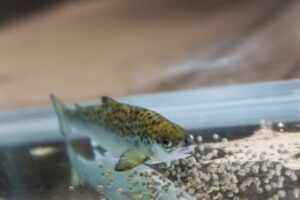
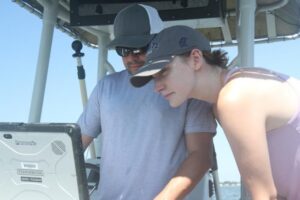
Salmon-counting could be a breeze as environmental DNA technology advances
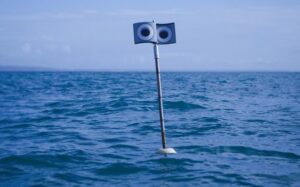
Study shows that environmental DNA (eDNA) can be detected in the air with no power sources, a potential boon for salmon fisheries managers.
Fisheries
Study shows that environmental DNA (eDNA) can be detected in the air with no power sources, a potential boon for salmon fisheries managers.
Intelligence
Tilapia sex-reversal procedures have positives, but regulatory barriers and concerns about welfare, worker safety and environmental impacts remain.
Fisheries
In this review of recent fisheries literature, we examine tuna harvest strategy optimization and why a one-size-fits-all management approach fails.
Intelligence
Trial with rainbow trout found membrane bioreactors reduced water use by 94% in recirculating aquaculture systems without affecting growth.
Responsibility
European oyster reef restoration efforts are expanding with new hatchery and feed technologies designed to improve oyster spat survival.
Responsibility
A study shows seaweed-based feed additives can cut methane emissions in cattle, pointing to new opportunities for the seaweed industry.
Bioacoustics shift shrimp farming to proactive, precision feed management to optimize shrimp growth and reduce feed waste costs as a biosensor.
Innovafeed and IRBI launch FrenchFly to scale insect protein in France, targeting key barriers in black soldier fly production.
Pacific white shrimp react differently to various soy processing techniques, with certain variants offering distinct performance advantages.
With cost a barrier to wider adoption of electronic monitoring, a new tool aims to improve catch counts with lower miss rates compared to humans.
Fishing innovation is transitioning from bigger engines, stronger gear and more sophisticated electronics to something far more subtle: light.
Fisheries literature review covers pelagic stock management, puerulus fisheries supporting spiny lobster aquaculture and nutrition security in Peru.
Precision aquaculture, powered by real-time monitoring systems, is revolutionizing how fish farmers approach feed management.
Australia’s national science agency, CSIRO, has been awarded the right to host the next International Symposium on Fish Nutrition and Feeding (ISFNF XXII) in Darwin, Northern Territory, Australia in May 2026.
Sightline Systems' new AQUA Sightline 2.0 is latest wave of artificial intelligence applications designed specifically for aquaculture.
A robotic fish prototype could improve animal welfare in aquaculture by monitoring fish and environments without noise or disturbance.
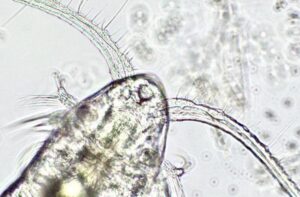
Researchers are developing eRNA-based tests to detect fish stress and disease from water samples, offering faster, noninvasive monitoring.
All major UK supermarkets now have shrimp welfare targets now in place, with Aldi Süd’s commitment to phase out stunning and ablation.
A new system removes CO2 from seawater to reduce ocean acidification, helping protect and support shellfish aquaculture production.
WorldFish Ventures will seek to bring aquaculture innovations to market, using private investment to scale solutions in emerging regions.
Two-company collaboration has AI-powered cameras tracking fish growth to enhance feeding efficiency, breeding and fish health in aquaculture.
Innovation and collaboration were in focus at Seafood Expo Global 2026, as the industry faces trade disruption, rising costs and shifting demand.
Fifteen years after an earthquake and tsunami devastated Japan, its innovative fisheries and aquaculture sectors reassess their disaster preparedness.
Precision aquaculture needs testing interdisciplinary innovations as complete operational systems that consistently deliver scalable benefits for farms.
A University of Maine study uses decades of survey data to show how ocean warming is shifting species, biodiversity and fishery conditions.
Cawthron Institute researchers are unlocking the cellular power of mitochondria to improve climate resilience in farmed salmon, mussels, oysters and more.
Cambodia designates aquatic foods as a national priority, integrating fish into nutrition, agriculture and development planning.
La acuacultura de precisión requiere poner a prueba las innovaciones interdisciplinarias como sistemas operativos integrales que generen, de manera consistente, beneficios escalables para las granjas acuícolas.
El camarón blanco del Pacífico reacciona de manera diferente a las distintas técnicas de procesamiento de soya, y ciertas variantes ofrecen distintas ventajas de rendimiento.
Los subproductos del camarón podrían abrir nuevas vías de ingresos al transformar las cáscaras y las cabezas en ingredientes para piensos y biomateriales.