


Study: AI model identifies salmon lice larvae faster and more accurately than biologists

AI model identified 97.5% of salmon lice larvae in seawater samples, outperforming experienced biologists in both speed and accuracy
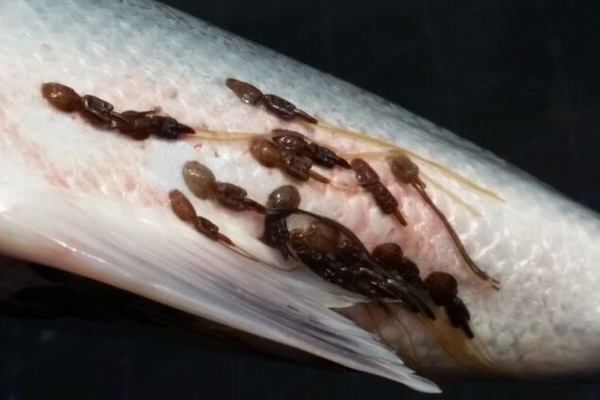
Researchers have developed an artificial intelligence (AI) system that can identify salmon lice larvae in seawater more quickly and accurately than experienced biologists, a breakthrough that could improve control of one of aquaculture’s most persistent parasites.
The study, led by researchers at the Norwegian University of Science and Technology (NTNU) and Wageningen University in the Netherlands, used more than 120,000 images of salmon lice larvae to train AI models to distinguish the parasites from other organisms and particles found in seawater.
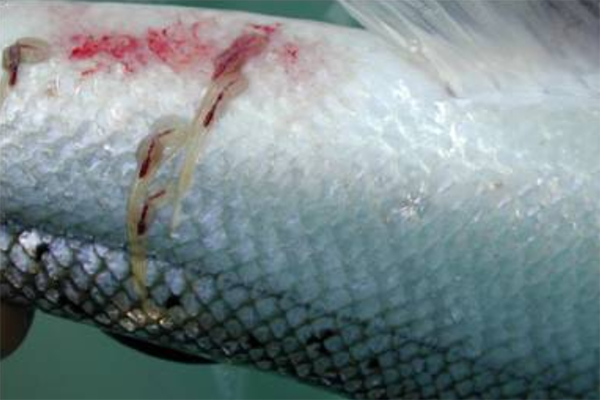
Salmon lice are blood-feeding parasites that feed on the skin and blood of salmon and other salmonid species, posing a major threat to wild fish populations and the aquaculture industry. Researchers say the new approach could make it easier to detect lice larvae and improve efforts to monitor and manage outbreaks.
“A number of different measures are being used and tested to combat salmon lice,” said Lars Christian Gansel, a researcher who helped develop the method and head of NTNU’s Department of Biological Sciences in Ålesund. “It is often the combined effect of several measures that will best improve the health of both farmed salmon and wild salmonids.”

In the study, the AI system significantly outperformed experienced biologists at identifying salmon lice larvae in a large, complex seawater sample. While trained biologists required more than 30 hours over several days to identify 82 percent of the larvae, the AI model identified 97.5 percent in just 30 minutes.
“More information is needed about the spread of salmon louse larvae to document the effectiveness of current methods, as well as develop and customize new measures,” said Gansel. “Our model makes it possible to obtain this information.”
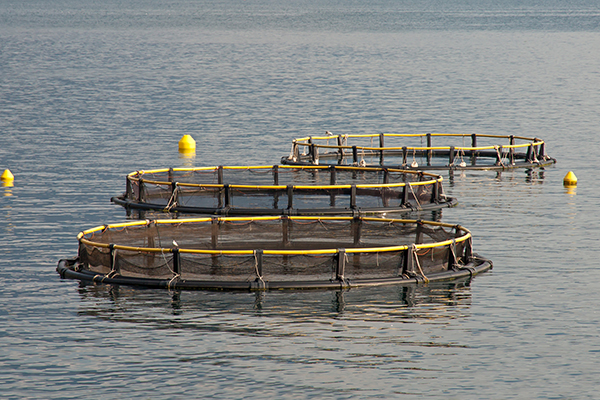
Norway’s salmon industry produces between 400 million and 450 million Atlantic salmon and rainbow trout each year, with millions of fish raised in sea pens. A single fish farm can release millions of salmon lice larvae into surrounding fjords every day, making accurate monitoring essential for protecting both farmed and wild fish.
Fish farms are currently required to count and report the number of lice on farmed fish, with the results helping determine whether operations can expand, maintain or reduce production under Norway’s traffic light management system. According to the study, directly measuring salmon lice larvae in seawater could reduce uncertainty by providing a more accurate picture of parasite levels before the larvae attach to fish.
“If we are to succeed in eradicating salmon lice, the best approach is to prevent contact between the parasite and the fish,” said Gansel. “To develop, evaluate and document the effectiveness of preventive methods, it is important to detect the larvae while they are still drifting around in the sea.”
Detecting salmon lice larvae in seawater is challenging because they are vastly outnumbered by other organisms and particles drifting through the water. According to the researchers, there may be hundreds of thousands – or even millions – of other organisms for every salmon louse larva in Norwegian fjords.
Relative to the total amount of plankton and other particles, the salmon louse can actually be considered a rare organism, Gansel said.
“We must therefore analyze large volumes of water to monitor salmon lice in the sea,” he said. “If we don’t use enough water, we can easily overestimate or underestimate the number.”
Several methods have been developed to monitor and count salmon louse larvae, but most have been cumbersome, imprecise, time-consuming and expensive.
“Currently available camera systems for plankton analysis often lack the resolution needed to distinguish between species and developmental stages,” said Gansel. “There is still no fully documented method for continuous monitoring of salmon lice in the ocean.”
2024 marked most challenging sea lice season in more than a decade for Norway, report finds
One of the biggest obstacles to using artificial intelligence for salmon lice detection has been the lack of high-quality images of larvae in their natural environment. To address that challenge, the team built its own video microscope and captured more than 120,000 close-up images of salmon lice larvae and other organisms found in seawater.
Those images were then used to generate synthetic training data, allowing the researchers to develop AI models capable of distinguishing salmon lice larvae from other organisms and particles found in seawater.
“The models performed just as well as the experts using microscopes,” said Gansel. “Even though some other marine species may look quite similar, the model was able to identify salmon lice in large seawater samples.”
To build the dataset, researchers collected and filtered thousands of cubic meters of seawater from fish farms and marine areas near Ålesund. Because salmon lice larvae are often scarce, gathering enough images for AI training can take considerable time.
To expand the dataset, the team also hatched salmon lice larvae in the laboratory and introduced them into seawater samples. Using a custom-built video microscope, they recorded the larvae as they drifted through a glass tube, then isolated images of newly hatched larvae and the older larval stage that can attach to fish.
“The individual frames from the videos will not show all sides of the larvae,” said Gansel. “They might be moving, or perhaps they are just floating about in certain parts of the tube. Because we only see a few of all the possible scenarios, we can improve the models by generating synthetic data to use alongside a large number of real-life videos.”
Researchers further expanded the dataset by digitally modifying the images. Because salmon lice vary slightly in size and appearance, the team scaled, rotated and flipped images of the larvae and combined multiple lice in a single image. They applied the same techniques to plankton and other organisms that resemble salmon lice, creating more diverse training data to improve the AI model’s accuracy.
The researchers said the AI models could be used to monitor salmon lice larvae in areas where wild salmon are present, providing earlier and more accurate information about parasite levels.
The technology could also help scientists estimate how many larvae are being released from fish farms and track how they spread and develop in the marine environment. According to the researchers, that information could improve efforts to assess the risk of salmon lice transmission between farmed and wild salmon populations and evaluate measures to reduce infestations.
“Measuring larvae directly in the sea will eliminate some of the uncertainty in the current system, where the number of larvae is estimated based on the number of lice on farmed fish,” said Gansel. “This will make the salmon lice map much more accurate. Production can be planned more effectively, and we can make better decisions about where to operate fish farms and what measures to take against salmon lice.”
Now that you've reached the end of the article ...
… please consider supporting GSA’s mission to advance responsible seafood practices through education, advocacy and third-party assurances. The Advocate aims to document the evolution of responsible seafood practices and share the expansive knowledge of our vast network of contributors.
By becoming a Global Seafood Alliance member, you’re ensuring that all of the pre-competitive work we do through member benefits, resources and events can continue. Individual membership costs just $50 a year.
Not a GSA member? Join us.
Author

Related Posts
Health & Welfare
Are salmon lice most vulnerable in their earliest stage?
New research finds larval salmon lice produce unique proteins that may help them evade immune defenses, offering new targets for parasite control.

Health & Welfare
A shocking innovation: Electric fences show promise in sea lice prevention
Electric fence technology could block sea lice at the infectious stage, boosting fish welfare and cutting costs for salmon farms.
Health & Welfare
Cermaq Canada completes first salmon cycle with zero sea lice treatments
Cermaq Canada credits Ahousaht partnership after first salmon cycle with zero sea lice treatments and record-low lice levels.
Health & Welfare
Early immune response key to sea lice resistance in Pacific salmon, study finds
Study links Pacific salmon’s rapid immune response to sea lice resistance – insights that could benefit Atlantic salmon farming.