


Study: After decades of decline, mangrove forests are recovering worldwide

A 40-year analysis found global mangrove forests are rebounding, offering hope for fisheries, climate and coastal resilience
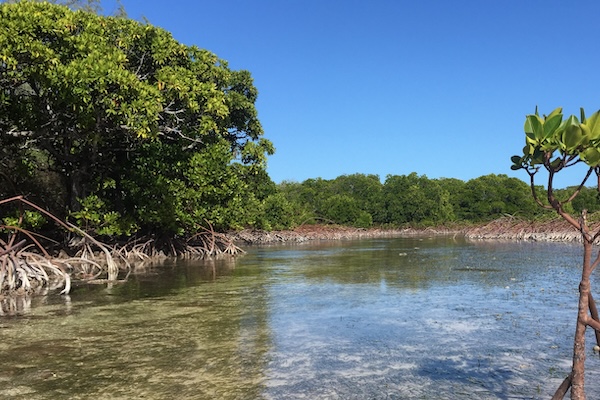
Mangrove forests, once considered among the world’s most threatened coastal ecosystems, are showing signs of recovery, according to research from Tulane University.
The study, published in Science, analyzed four decades of satellite data and found that global mangrove forests are no longer experiencing a net decline. After years of losses linked to deforestation and coastal development, mangroves are now expanding in many regions through natural regeneration and growth into newly formed coastal areas.
The findings point to a more positive outlook for mangrove ecosystems, which play an important role in protecting shorelines, supporting fisheries and storing carbon.
“After decades of loss, we’re finally seeing a global turning point for mangroves,” said Zhen Zhang, a postdoctoral scholar at Tulane University School of Science and Engineering and lead author of the study. “This highlights their strong resilience and their potential as a powerful nature-based solution for climate mitigation and coastal protection.”
![Ad for [BSP]](https://www.globalseafood.org/wp-content/uploads/2025/07/BSP_B2B_2025_1050x125.jpg)
Mangrove forests declined throughout much of the late 20th century, losing nearly 2,900 square kilometers between the 1980s and 2010. However, over the past 16 years, gains have outpaced losses.
By 2023, global mangrove coverage had largely rebounded, leaving only about a 1 percent net decline over the entire four-decade period – a substantially smaller loss than previous estimates had suggested.
“What we’re seeing now is a real shift,” said Daniel Friess, Cochran Family Professor of Earth and Environmental Sciences at Tulane and director of The Mangrove Lab. “Mangroves are now showing a net increase globally, and the rate of degradation is slowing.”
Researchers said the recovery is being driven by both mangrove restoration efforts and natural regeneration. In many regions, mangroves are recolonizing abandoned aquaculture ponds and expanding into newly formed coastal mudflats.
Pine Island Redfish and MANG team up on coastal restoration initiative in Florida
Along the U.S. Gulf Coast, mangrove expansion has been linked to rising temperatures. In the Mississippi River Delta, mangrove coverage began increasing after the late 1990s and accelerated after 2012, as warmer conditions allowed the forests to spread into higher-latitude areas. Louisiana has also recorded an overall increase in mangrove coverage over the past four decades.
Researchers also found that many existing mangrove forests are becoming denser. Closed-canopy mangrove forests, which store more carbon and provide stronger coastal protection, have expanded globally over the past four decades, while rates of degradation have declined significantly since the 1980s.
That growth suggests that mangroves may be capturing more carbon than previously recognized. At the same time, the study shows how vulnerable these gains can be. In Texas, for example, mangroves have expanded in recent decades but experienced a sharp decline in 2021 due to an extreme freeze event, highlighting how climate extremes can quickly reverse progress.
“While some mangroves are still being lost, this could make them a rare conservation success story and an important source of optimism for climate action,” said Friess.
Can seagrass and mangrove restoration help mitigate ocean acidification and climate change?
Still, researchers caution that the recovery is not complete. Newly established mangrove forests are often young and less capable of providing the full ecological benefits of mature systems. And deforestation remains a threat in some regions, particularly where coastal land is converted for agriculture or development.
The study underscores that continued protection is key to sustaining the rebound.
“The most immediate and effective way to protect mangroves is to stop deforestation,” Zhang said. “When mangroves are cleared, large amounts of long-stored carbon are released into the atmosphere. But when deforestation stops, mangroves can continue to accumulate carbon naturally over time, so there’s a major climate benefit in both avoiding emissions now and allowing future carbon storage.”
Protecting the natural processes that support mangrove growth is equally important, he said.
“Much of mangrove expansion happens on newly formed mudflats, which depend on a steady supply of river sediment,” Zhang said. “Maintaining that sediment flow is critical for creating the conditions mangroves need to establish and spread.”
The findings also suggest that conservation strategies should look beyond simply measuring total mangrove area.
“As countries invest in nature-based solutions to climate change, mangroves stand out as a rare example of an ecosystem where global trends are beginning to move in the right direction,” Zhang said.
Now that you've reached the end of the article ...
… please consider supporting GSA’s mission to advance responsible seafood practices through education, advocacy and third-party assurances. The Advocate aims to document the evolution of responsible seafood practices and share the expansive knowledge of our vast network of contributors.
By becoming a Global Seafood Alliance member, you’re ensuring that all of the pre-competitive work we do through member benefits, resources and events can continue. Individual membership costs just $50 a year.
Not a GSA member? Join us.
Author

Related Posts
Intelligence
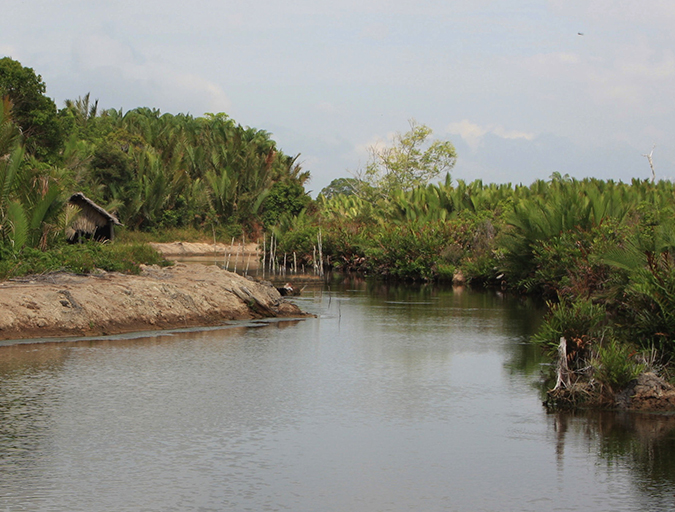
From forest to plate, a shrimp redefining ‘farmed’
The explosive growth of shrimp farming has long been associated with mangrove deforestation in Southeast Asia. A silvofishery method of producing the popular seafood is protecting the fragile ecosystems in Vietnam. A hungry marketplace is reaping the rewards.
Responsibility
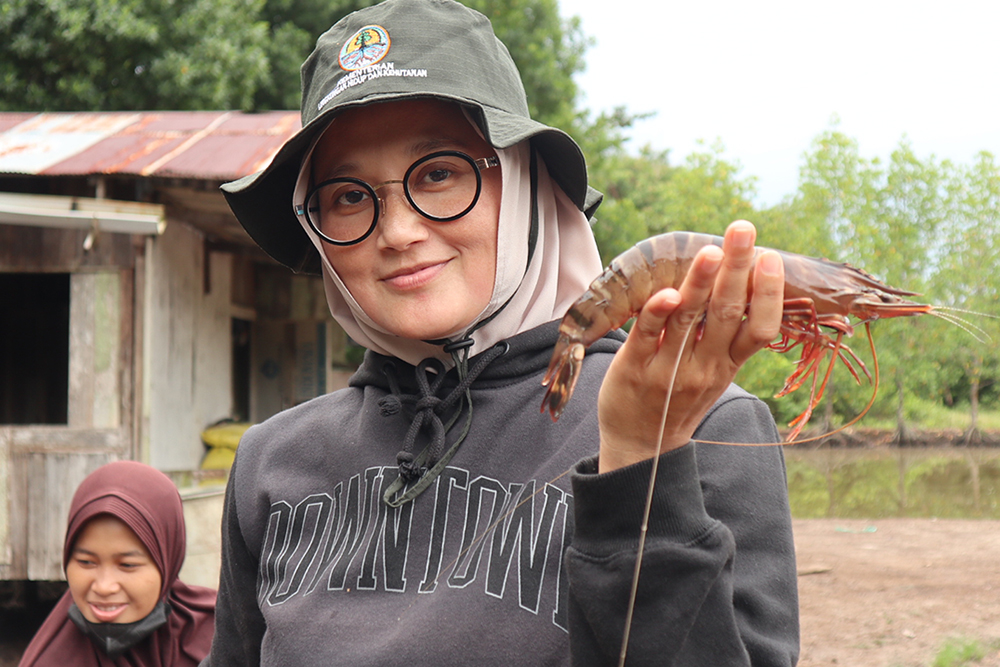
‘We found a way to address these challenges’: How shrimp producers are redesigning farms to support mangrove restoration and coastal resilience
Responsible shrimp farming paired with mangrove restoration can boost yields, protect coasts and support sustainable livelihoods.
Responsibility
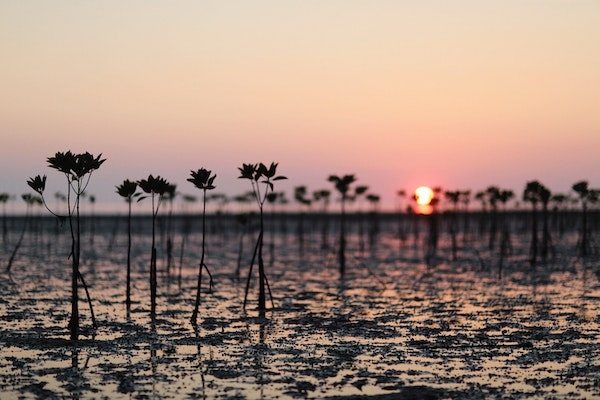
SFP: Shrimp farming can help restore mangroves and mitigate climate change
Sustainable Fisheries Partnership says shrimp farming can help restore mangroves, and in turn, help combat the effects of climate change.
Responsibility
Mapping global declines in human-driven mangrove forest loss
The severity and intensification of extreme weather and ocean processes are increasingly important factors in mangrove forest conservation.