


Study: Light pollution alters fish predator responses, a concern for coastal marine ecosystems

Researchers used virtual reality to show that light pollution changes how clownfish respond to predators

Artificial light at night changes how clownfish respond to predators, according to a recent study that used virtual reality to recreate predator encounters and reveal another potential impact of coastal light pollution.
The study, published in Conservation Physiology, used an immersive virtual reality platform to project realistic underwater scenes and a simulated attack by Heller’s barracuda onto the walls and floor of a specially designed aquarium. At the same time, researchers measured the clownfish’s oxygen consumption to assess changes in metabolic rate.
Before entering the virtual reality aquarium, the fish were divided into two groups. One group was raised under natural daylight and nighttime conditions, while the other was exposed to artificial light at night similar to lighting from coastal hotels.
The researchers found that clownfish exposed to artificial light at night responded differently to a simulated attack than fish raised under natural light conditions. While fish exposed to natural day-night cycles slowed their metabolism when a virtual predator approached – a response that may help them avoid detection – fish previously exposed to artificial light increased their metabolic rate instead.

“Our study is the first to demonstrate that artificial light at night can modify how fish respond physiologically during critical interactions with larger predators, making artificial light an important consideration when managing coastal systems,” said Professor Shaun Killen, professor of ecophysiology at the University of Glasgow and senior author of the study.
The researchers said lowering metabolic rate during a predator encounter may help small reef fish remain hidden by slowing their breathing. Fish exposed to artificial light did not display the same response, suggesting light pollution may interfere with natural anti-predator behavior.
The ocean is getting darker. What could that mean for global fisheries?
“Fish from ambient light environments exhibited a strong anti-predator response by lowering their metabolic rate, whereas fish with a history of artificial light exposure at night did not,” said Killen. “As light pollution expands globally, if left unchecked, its ability to disrupt natural predator and prey dynamics may have cascading consequences for survival, as well as fish population numbers in coastal ecosystems.”
Predator-prey interactions are difficult to observe in the wild and nearly impossible to recreate in laboratory settings involving large predators realistically. The researchers said the virtual reality platform overcomes those challenges and could also be used to study animal behavior, decision-making and how aquatic species respond to future environmental change.
“Artificial light at night is becoming increasingly widespread along coastlines, yet we still know surprisingly little about how it affects the interactions between predators and prey,” said Suzanne Mills, École Pratique des Hautes Études Professor at CRIOBE, Moorea. “By combining virtual reality with physiological measurements, we can now study these processes under realistic but fully controlled conditions.”
Now that you've reached the end of the article ...
… please consider supporting GSA’s mission to advance responsible seafood practices through education, advocacy and third-party assurances. The Advocate aims to document the evolution of responsible seafood practices and share the expansive knowledge of our vast network of contributors.
By becoming a Global Seafood Alliance member, you’re ensuring that all of the pre-competitive work we do through member benefits, resources and events can continue. Individual membership costs just $50 a year.
Not a GSA member? Join us.
Author

Related Posts
Fisheries
Some fish species are shrinking. Is global warming to blame?
Some fish species are shrinking but future research must determine if overfishing, global warming and food availability are responsible.
Health & Welfare
LED lighting technology provides unique benefits for aquaculture
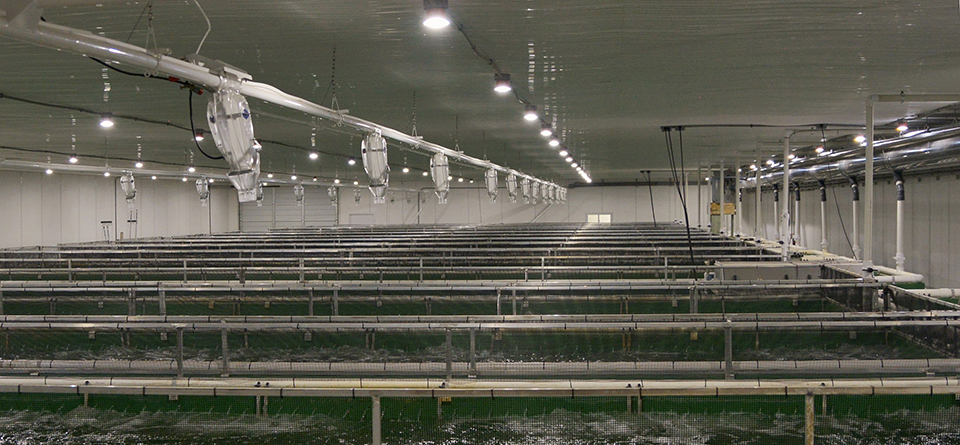
Environmental lighting, which synchronizes all stages of aquatic life, is an important consideration as more aquatic animals are produced indoors in highly controlled environments. Artificial lighting should deliver uniform light across the water’s surface in rearing tanks and mimic not only photoperiod, but also light color and intensity.

Fisheries
Fish are getting smaller as global food webs quietly reorganize, study finds
Study finds global fish food webs are shifting toward smaller species and fewer top predators, even where species counts stay stable.
Responsibility
Can artificial reefs in seagrass meadows help protect the ocean against climate change?
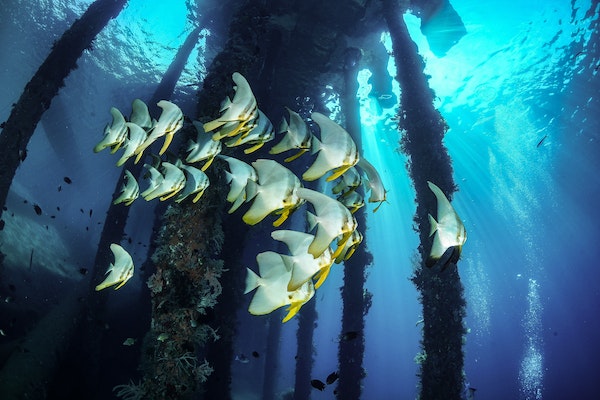
A new study finds that artificial reefs can bolster seagrass growth in the tropics and help mitigate climate change.