


Will astronauts be eating (and farming) oysters on future space missions?

Students design prototype oyster aquaculture system that could use oysters to produce food, recycle water and support long-duration spaceflight
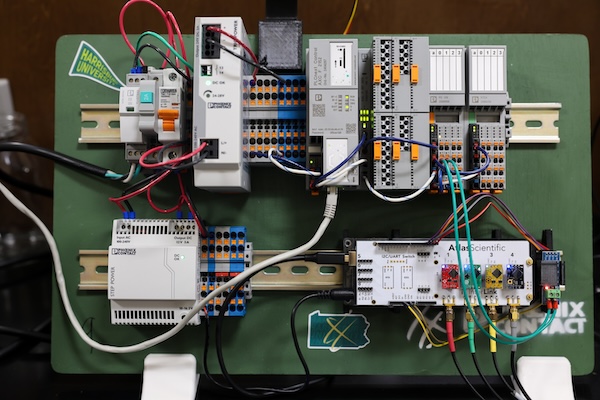
Students at Harrisburg University have designed a prototype oyster-based aquaculture system that could help provide food, recycle water and support life during long-duration space missions.
The concept uses oysters as part of a bioregenerative life support system, or BLSS — a closed-loop system that relies on living organisms to produce food, regenerate air and recycle water. Researchers and space agencies have identified such systems as a potential solution for sustaining astronauts on future missions to the Moon and Mars.
The project aligns with NASA’s growing interest in sustainable food production for deep-space exploration. In a 2024 report, the agency identified food and nutrition for long-duration missions among its highest research priorities.
“Oysters and other filter feeders build on the established science behind aquaponics, reinventing the concept for a bold future where more humans live and work off-planet,” said Jacob Scoccimerra, Founder of Monolith LLC. “Oysters could provide additional benefits beyond finfish in off-planet aquaponics systems because they are filter feeders that require no external feed, instead thriving on algae or microorganisms.”

Students selected oysters because they combine food production with natural water filtration, making them a promising candidate for space-based aquaculture systems.
“They naturally clean and recycle water, reducing the need for complex filtration systems and maintenance,” said Scoccimerra. “Oysters also produce nutrient-rich byproducts that can support plant growth, and their hardy physiology makes them more resilient to variations in water quality than many fish species.”
‘The ultimate setting’: Why Japan wants to grow fish in space
The prototype was developed by students at Harrisburg University of Science and Technology in collaboration with Monolith LLC, a company specializing in advanced environmental control and life support systems.
Using computer-aided design software and automation technologies, the students designed a closed-loop aquaculture system capable of supporting oysters from the spat stage through adulthood. The prototype provides a controlled environment for studying oysters as a potential food source for future space missions.
The project was funded by Monolith LLC through a grant from the Keystone Space Collaborative Innovation Challenge and will continue to involve Harrisburg University students in advanced manufacturing and environmental science. Future work will focus on refining the system to meet NASA’s payload interface requirements, with the long-term goal of testing it aboard the International Space Station or future commercial space stations as part of space aquaculture research.
Now that you've reached the end of the article ...
… please consider supporting GSA’s mission to advance responsible seafood practices through education, advocacy and third-party assurances. The Advocate aims to document the evolution of responsible seafood practices and share the expansive knowledge of our vast network of contributors.
By becoming a Global Seafood Alliance member, you’re ensuring that all of the pre-competitive work we do through member benefits, resources and events can continue. Individual membership costs just $50 a year.
Not a GSA member? Join us.
Author

Related Posts
Responsibility
Inside the science: How mitochondria could boost New Zealand fish farms’ climate resilience
Cawthron Institute researchers are unlocking the cellular power of mitochondria to improve climate resilience in farmed salmon, mussels, oysters and more.
Responsibility
Study: Oysters play unexpected role in protecting blue crabs from disease
By filtering parasites from the water, oysters can lower disease risk for juvenile blue crabs, adding to the ecological benefits of oyster reefs.
Responsibility
Study: Farming shrimp with oysters and seaweed cuts nitrogen output
A new study finds pairing shrimp with oysters and seaweed reduces nitrogen levels, making shrimp farming more responsible and profitable.
Intelligence
Solar Oysters and Blue Oyster Environmental launch solar-powered oyster production system
A prototype of Solar Oysters' solar-powered oyster production system will operate on Hoopers Island Oyster Company’s lease in 2024.