


Nitrogen isotopes help researchers verify fishmeal sources for aquafeeds

Nitrogen isotope signatures can verify fishmeal use in aquaculture diets, potentially improving seafood traceability
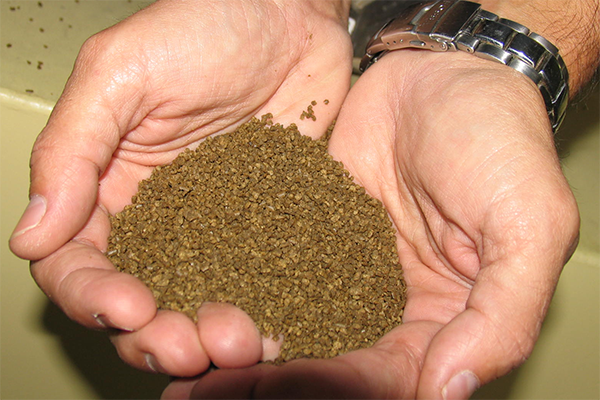
Researchers have identified a new way to determine whether farmed fish were fed fishmeal, offering the aquaculture industry a potential tool to verify feed sources as alternative ingredients become more common.
The study, led by the F3 – Future of Fish Feed initiative, found that naturally occurring nitrogen isotope signatures in fish muscle can reliably indicate whether fishmeal was included in aquaculture feeds. The findings, published in Fishes, could provide producers and seafood buyers with a science-based tool for verifying feed sources.
To test the approach, researchers analyzed carbon and nitrogen isotope data from fish muscle samples collected during feeding trials involving seven aquaculture species, along with feed samples from two trials. They found that the nitrogen isotope known as δ¹⁵N consistently distinguished fish raised on diets containing fishmeal from those fed alternative ingredients.
“As next-generation feed ingredients scale and aquaculture producers adopt formulation strategies that reduce reliance on marine ingredients, isotopic analysis could help validate sustainability claims, detect potential fraud and strengthen consumer confidence,” said Michael Tlusty, the study’s senior author, professor of sustainability and food solutions at the University of Massachusetts Boston and F3 Challenge judge.
![Ad for [BSP]](https://www.globalseafood.org/wp-content/uploads/2025/07/BSP_B2B_2025_1050x125.jpg)
Across nearly all species studied, fish fed diets containing fishmeal had higher nitrogen isotope values than those raised on plant-based feeds. Fish fed mixed diets containing both plant- and animal-based ingredients consistently fell between the two.
The researchers also found that other feed ingredients, including fish oil, algal oil and poultry byproduct meal, did not appear to affect the nitrogen isotope signature. According to the study, the results suggest the method can reliably distinguish diets with substantial differences in fishmeal content, although additional research is needed to determine how well it can detect smaller amounts of fishmeal in aquaculture feeds.
As demand for farm-raised seafood continues to grow, aquaculture producers are increasingly adopting alternative feed ingredients as fishmeal supplies become more limited. The researchers say that a tool that is able to confirm what fish are fed will become increasingly important as those feed formulations evolve.
The study suggests isotopic analysis could provide a science-based way to verify whether fishmeal was used in aquaculture feeds and, with further research, potentially trace the origins of ingredients. The research tool will be used to verify fishmeal inclusion in the current F3 Fish Farm Challenge, a global competition designed to eliminate wild-caught marine ingredients in aquaculture.
Now that you've reached the end of the article ...
… please consider supporting GSA’s mission to advance responsible seafood practices through education, advocacy and third-party assurances. The Advocate aims to document the evolution of responsible seafood practices and share the expansive knowledge of our vast network of contributors.
By becoming a Global Seafood Alliance member, you’re ensuring that all of the pre-competitive work we do through member benefits, resources and events can continue. Individual membership costs just $50 a year.
Not a GSA member? Join us.
Author

Related Posts
Aquafeeds
New PCR method ensures authenticity of insect-based ingredients in aquafeeds
Researchers develop a PCR method to detect mealworm and black soldier fly DNA in aquafeeds, enhancing product authenticity and traceability.

Responsibility
Is the seafood industry prepared for the next level of transparency under CSRD?
The EU's Corporate Sustainability Reporting Directive (CSRD) raises concerns about supply chain traceability and reporting accuracy.

Intelligence
In the fight against seafood fraud, the technology behind trace element fingerprinting is maturing
Analysis of trace chemical elements can reveal where farmed seafood comes from. Standardization of traceability tools and techniques is improving the process.

Fisheries
Can a data-sharing tool eliminate IUU fishing and make seafood supply chains more reliable?
The Sustainable Fisheries Partnership’s new data-sharing tool helps users identify environmental risks and eliminate IUU fishing in seafood supply chains.