Innovation & Investment
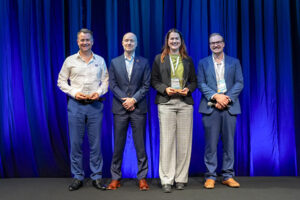
Can the 3D-printed Reef of Hope turn the tide on oyster reef restoration?
Award-winning Reef of Hope uses 3D-printed biodegradable design to advance oyster reef restoration and revive marine ecosystems.
Innovation & Investment
Award-winning Reef of Hope uses 3D-printed biodegradable design to advance oyster reef restoration and revive marine ecosystems.
Intelligence
Scientists at Okayama University of Science hope to boost astronaut survival by taking aquaculture where no man has gone before.
Fisheries
Analysis of Peruvian anchovy spawning strategy stresses urgency for regional management as a global warming scenario affects natural cycles.
Intelligence
Deep learning can identify wild vs. farmed salmon with 95% accuracy, possibly helping to track escapees and protect declining wild stocks.
Fisheries
Overfishing in the Mediterranean and Black seas reaches a 10-year low, underscoring aquaculture’s growing role as demand for seafood rises.
Intelligence
Nova Scotia launches a compliance unit with new penalties, audits and enforcement tools to target illegal seafood activity.
Edinburgh Napier University and AlgiSys join forces to develop and scale up algae-based omega-3s as sustainable feed alternatives.
Partially defatted black soldier fly meal in aquafeeds could affect the sensory properties of raw fillets without altering the nutritional composition.
F3 Fish Farm Challenge will award $200,000 to four farms showing the most progress rearing carnivorous finfish on fish-free aquaculture feed.
New two-year pact aims to improve labor conditions in Pacific fisheries through capacity-building and enforcing international standards.
Solar-powered net lights cut sea turtle bycatch without reducing target catch, offering a practical, scalable fix for sustainable fisheries.
Findings highlight a trade-off in the fishery: Smaller mesh sizes boost catch efficiency, mainly for targeted females, but increase bycatch of males.
Precision aquaculture, powered by real-time monitoring systems, is revolutionizing how fish farmers approach feed management.
Australia’s national science agency, CSIRO, has been awarded the right to host the next International Symposium on Fish Nutrition and Feeding (ISFNF XXII) in Darwin, Northern Territory, Australia in May 2026.
Sightline Systems' new AQUA Sightline 2.0 is latest wave of artificial intelligence applications designed specifically for aquaculture.
Because water quality and microbial composition are closely linked, pond management is essential to maintain ecological stability and shrimp health.
Tasmanian salmon farmers say selective breeding has produced fish with improved tolerance to heat and disease after a major mortality event.
Research indicates that dietary lysolecithin can improve metabolic efficiency, tissue quality, yields and reduce feed waste in L. vannamei culture.
Researchers say Canada’s ban on ocean-based BC salmon farms overlooks decades of science and offers limited gains for wild salmon.
Morocco is expanding aquaculture with new farms, regulatory updates and World Bank-backed programs to boost production and attract investment.
A program was launched in Maine to turn ocean-based biotech research into market ventures, advancing U.S. blue innovation.
Building resiliency in crustacean aquaculture requires physiological responses, emerging technologies and adaptive management practices.
CSIRO and Genics have developed genomic tools to map sex and diversity in black tiger shrimp, improving selective breeding and reliability.
Developing countries get more nutrition per dollar from seafood imports, but experts warn equity, culture and local food security must be considered.
New two-year pact aims to improve labor conditions in Pacific fisheries through capacity-building and enforcing international standards.
Efforts in Indonesia and Zambia are closing the gender gap in aquaculture and fisheries, highlighting women’s contributions and leadership.
The Welsh government has launched a study to measure the carbon footprint of its seafood industry and guide its transition to net-zero.
Las evaluaciones de la capacidad de carga basadas en SIG pueden ser herramientas dinámicas de apoyo a la toma de decisiones que proporcionan información para la planificación y gestión espacial de la acuicultura.
Investigaciones indican que la lisolecitina en la dieta puede mejorar la eficiencia metabólica, la calidad de los tejidos y el rendimiento, además de reducir el desperdicio de alimento en el cultivo de L. vannamei.
Los inversores se muestran indecisos respecto al cultivo de camarón en interiores, ya que no se ha vislumbrado un claro ganador entre los sistemas RAS y de biofloc, explica un analista.