


‘Encouraging’ global mangrove cover increase despite losses in key regions, data reveals

New mapping shows a net gain in global mangrove cover since 1985, even as Indonesia and other key regions recorded significant declines
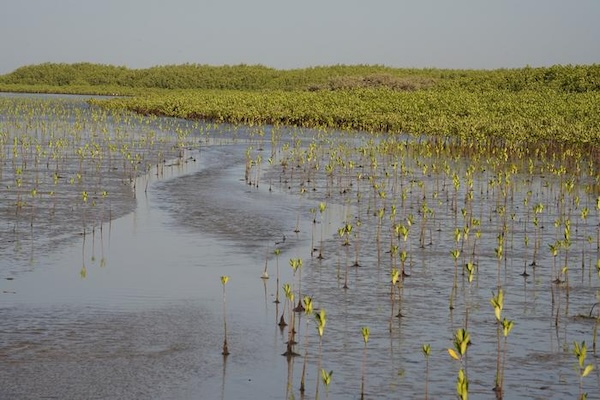
Global mangrove cover increased slightly over the past four decades, according to new mapping data that also show substantial losses in several countries, including Indonesia, Myanmar, Malaysia and Nigeria.
Researchers at Aberystwyth University, working as part of Global Mangrove Watch, found a net gain of 47,720 hectares (about 117,920 acres) of mangrove cover worldwide between 1985 and 2025.
The findings are based on newly released maps tracking four decades of changes in mangrove ecosystems. Researchers used satellite imagery and advanced analysis techniques to identify areas of mangrove loss, recovery and stability.
“The latest Global Mangrove Watch update gives us a much clearer picture of how mangrove ecosystems are changing around the world,” said Pete Bunting, a reader in remote sensing at Aberystwyth University. “The overall increase in mangrove cover is encouraging, but it also shows that progress is uneven, with some regions continuing to experience significant losses.”

The global increase masks substantial declines in some countries. Indonesia, which has the world’s largest area of mangroves, lost 2,044 square kilometers (about 789 square miles) of mangrove cover between 1985 and 2025, according to the analysis. Myanmar, Malaysia and Nigeria also recorded significant declines, although the release did not provide figures for those countries.
“The findings also highlight the complexity of mangrove change, with gains in some areas linked to both restoration efforts and natural processes,” Bunting said.
Mangrove ecosystems support biodiversity and coastal livelihoods while helping protect coastal communities from storms and sea-level rise. They also store significant amounts of carbon.
Pine Island Redfish and MANG team up on coastal restoration initiative in Florida
The latest Global Mangrove Watch dataset, known as GMW v4.1, uses improved satellite imagery and machine learning techniques to provide more detailed and accurate information about where mangroves are being lost, recovering or remaining stable.
Researchers said the updated mapping could help scientists, conservation organizations and policymakers better understand changes in mangrove ecosystems and determine where conservation and restoration efforts could have the greatest impact.
“Reliable information about mangroves is essential for understanding what is driving these changes and for supporting effective conservation,” Bunting said. “The improved mapping capabilities of the Global Mangrove Watch help identify where conservation efforts can have the greatest impact.”
View the Global Mangrove Watch mapping here.
Now that you've reached the end of the article ...
… please consider supporting GSA’s mission to advance responsible seafood practices through education, advocacy and third-party assurances. The Advocate aims to document the evolution of responsible seafood practices and share the expansive knowledge of our vast network of contributors.
By becoming a Global Seafood Alliance member, you’re ensuring that all of the pre-competitive work we do through member benefits, resources and events can continue. Individual membership costs just $50 a year.
Not a GSA member? Join us.
Author

Related Posts
Responsibility
‘We found a way to address these challenges’: How shrimp producers are redesigning farms to support mangrove restoration and coastal resilience
Responsible shrimp farming paired with mangrove restoration can boost yields, protect coasts and support sustainable livelihoods.
Responsibility
Study: After decades of decline, mangrove forests are recovering worldwide
Four-decade analysis finds mangrove forest restoration and natural regeneration are reversing the trends of mangrove loss globally.
Intelligence
Can seagrass and mangrove restoration help mitigate ocean acidification and climate change?
Researchers suggest seagrass and mangrove restoration could also remove carbon through a novel pathway while combating ocean acidification.
Responsibility
SFP: Shrimp farming can help restore mangroves and mitigate climate change
Sustainable Fisheries Partnership says shrimp farming can help restore mangroves, and in turn, help combat the effects of climate change.