


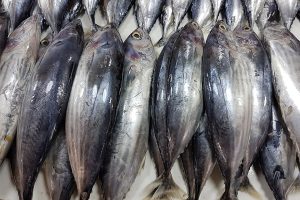
3D imaging and machine learning system aims to improve weight estimates for frozen skipjack tuna


Now that you've reached the end of the article ...
… please consider supporting GSA’s mission to advance responsible seafood practices through education, advocacy and third-party assurances. The Advocate aims to document the evolution of responsible seafood practices and share the expansive knowledge of our vast network of contributors.
By becoming a Global Seafood Alliance member, you’re ensuring that all of the pre-competitive work we do through member benefits, resources and events can continue. Individual membership costs just $50 a year.
Not a GSA member? Join us.
Author

Related Posts
Intelligence
Catch & Culture Review: Precision aquaculture can shape greater advancements in aquaculture
Precision aquaculture needs testing interdisciplinary innovations as complete operational systems that consistently deliver scalable benefits for farms.
Innovation & Investment
The artificial intelligence of things and its aquaculture applications
Artificial intelligence of things, or AIoT, is solving aquaculture challenges related to operational efficiency, sustainability and productivity.
Responsibility
Machine learning model tracks decline in ocean oxygen, highlighting climate change impact
A new machine learning technique precisely tracks ocean oxygen loss, offering insights into climate change’s impact on marine life.
Fisheries
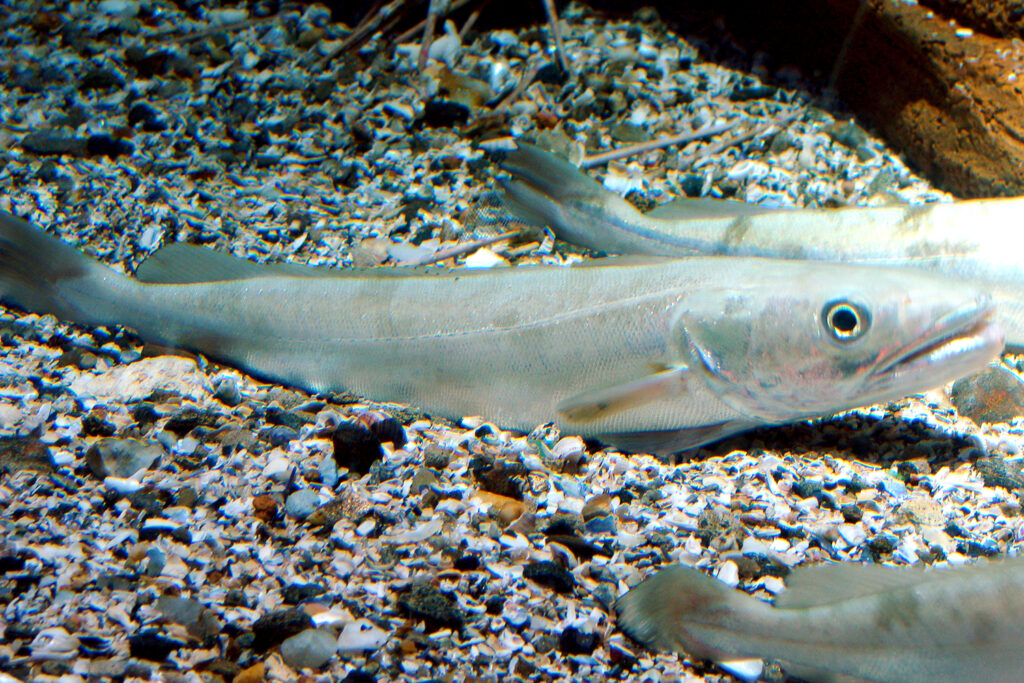
Machine learning approaches for fish age prediction in European hake
Strategy uses predictive equations for practical assessments and more sophisticated machine learning models for higher accuracy and automation.