


Crushed shells shield juvenile Pacific littleneck clams from ocean acidification impacts, study finds

Study finds crushed shells in sediment reduce local acidity, improve clam shell growth and limit genetic responses to ocean acidification
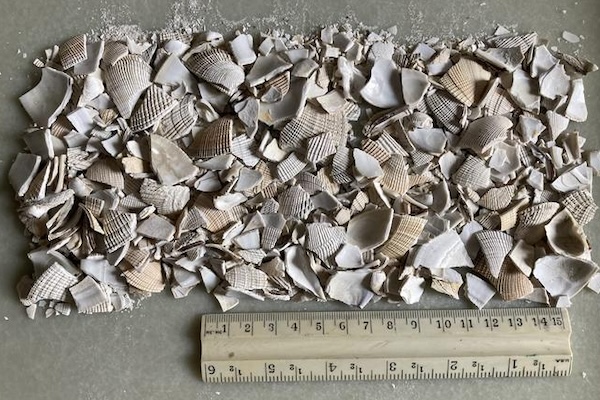
New research finds that adding crushed shells to coastal sediments can reduce local acidity and help young clams grow larger shells, potentially protecting them from the effects of ocean acidification.
The study, conducted by researchers at the University of California (UC), Davis and published in Biogeosciences, examined how mixing crushed shells, known as shell hash, into sand affects water chemistry and the growth of juvenile Pacific littleneck clams.
During a 90-day experiment at the UC Davis Bodega Marine Laboratory, researchers raised clams in four conditions: regular seawater with sediment, acidified seawater with sediment, regular seawater with sediment and shell hash, and acidified seawater with sediment and shell hash.
They monitored acidity, salinity, temperature and dissolved oxygen three times a week, tracked clam growth and collected mantle tissue samples for gene sequencing at the end of the experiment.
Clams raised in sediments containing shell hash developed larger shells on average than those raised without it. Researchers also found that gene expression patterns in clams exposed to acidified seawater with shell hash were largely indistinguishable from those raised in non-acidified conditions.

“We found that, on average, clams grew larger shells when shell hash was present in their treatment,” said Hannah Kempf, the study’s first author and an environmental scientist at the California State Water Board. “Interestingly, we also found that, on a genetic level, the ‘acidification’ signal was dramatically minimized when shell hash was present.”
Study: Ocean acidification and ocean warming hinder juvenile Atlantic sea scallop growth
Ocean acidification occurs as seawater absorbs excess atmospheric carbon dioxide, changing water chemistry and making it more difficult for shell-forming organisms to build and maintain their shells. Young clams and other juvenile shellfish are considered particularly vulnerable to these conditions.
“Adding crushed shells removed the negative genetic changes that occur when young clams are raised in acidified water,” said David Gold, an associate professor of earth and planetary sciences at UC Davis and the study’s corresponding author.
The findings suggest that shell hash can reduce the effects of ocean acidification at a localized scale, potentially supporting shellfish growth in affected coastal habitats. The experiment was conducted at a marine laboratory rather than in natural clam beds.
The research also examined a practice with a long history among Indigenous communities, which have used crushed shells in coastal sediments to help maintain healthy coastal ecosystems.
Tsim Schneider, a study co-author and associate professor of anthropology at the University of California, Santa Cruz, said traditional ecological knowledge provides evidence of the benefits of shell hash and could inform future research and coastal management.
“For me, one of the interesting aspects of this research is the potential to engage more fully with tribes on designing projects that promote their long-standing expertise and Indigenous science,” Schneider said. “If there’s a history of adding shell hash to clam beds in California, for example, western science might be able to better support communities interested in reawakening dormant cultural knowledge and coastal stewardship practices.”
Now that you've reached the end of the article ...
… please consider supporting GSA’s mission to advance responsible seafood practices through education, advocacy and third-party assurances. The Advocate aims to document the evolution of responsible seafood practices and share the expansive knowledge of our vast network of contributors.
By becoming a Global Seafood Alliance member, you’re ensuring that all of the pre-competitive work we do through member benefits, resources and events can continue. Individual membership costs just $50 a year.
Not a GSA member? Join us.
Author

Related Posts
Innovation & Investment
Can removing carbon from seawater cut ocean acidification risk for shellfish farms?
A new system removes CO2 from seawater to reduce ocean acidification, helping protect and support shellfish aquaculture production.

Fisheries
How ocean warming and acidification affect the life cycle of six commercial sea urchin species
A summary of the literature focusing on the impacts of ocean warming and acidification on life stages of commercially relevant sea urchin species.
Responsibility
Have mussel shells become more porous due to climate change?
A new study reveals East Coast mussel shells have become weaker and more susceptible to damage due to climate change.
Fisheries
NOAA confirms link between snow crab decline and marine heatwave
Starvation is most likely the cause of a mass mortality event during the eastern Bering Sea marine heatwave, according to NOAA scientists.