


Responsible Seafood Innovation Award finalist: How blue-violet LED lights could help longline fisheries reduce bycatch

The Fellows Network at The Safina Center is a 2026 Responsible Seafood Innovation Award finalist for its LED lights that could replace single-use lightsticks
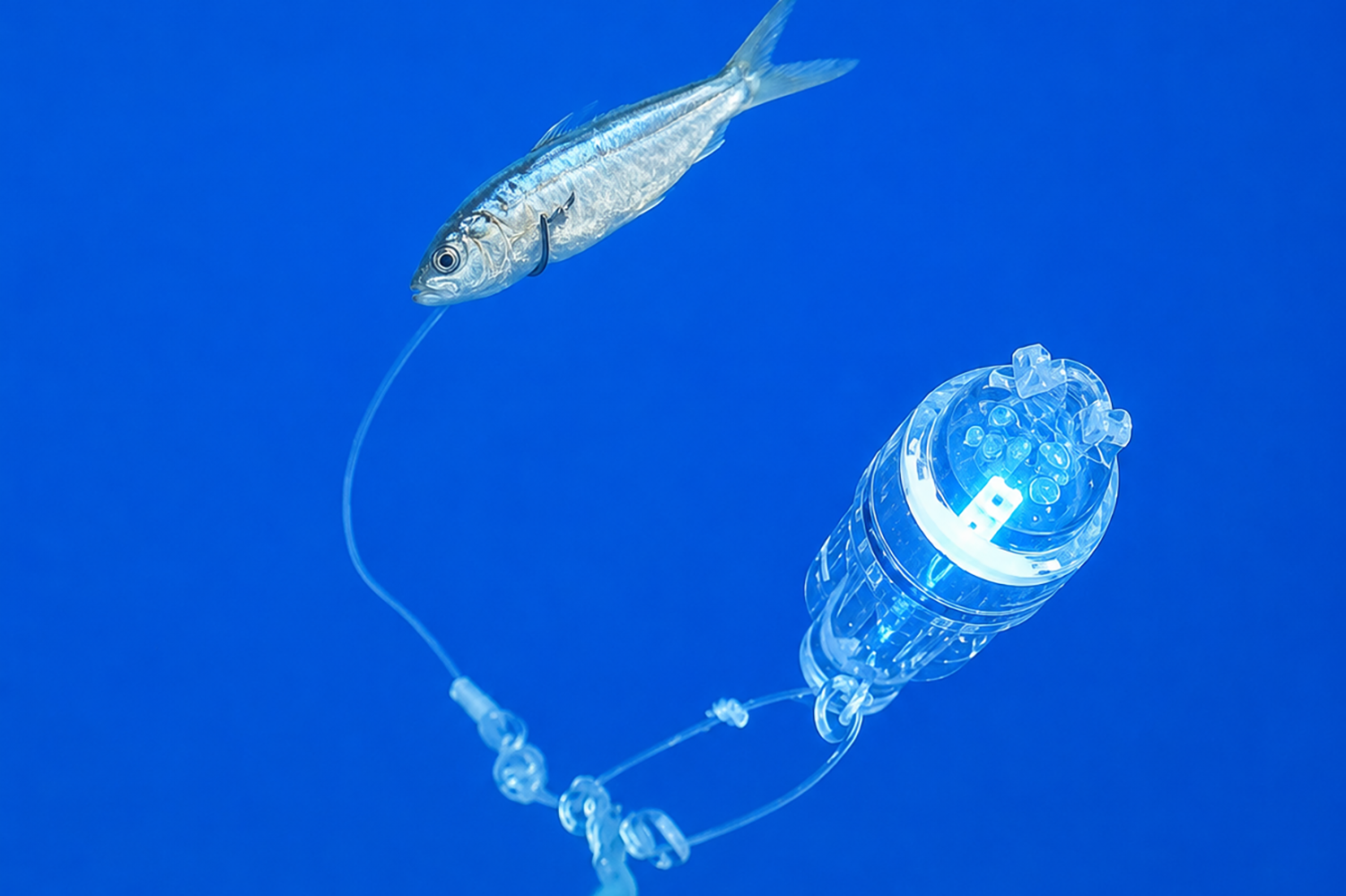
Pelagic longline fishers — those targeting tuna, swordfish and other Pacific billfish — often rely on light to attract fish toward their lines. That has typically meant using single-use chemiluminescent light sticks that emit a green light – similar to the glow sticks handed out at Halloween parties or nighttime parades.
Crack it, and it glows. Use millions of them, though, and they create a much bigger problem.
The Fellows Network at the Safina Center estimates that industry uses more than 11 million of these lights every year. While they help attract commercially valuable species, the disposable sticks also contribute to plastic and chemical pollution and may increase interactions with some at-risk species, including marine turtles, sharks and seabirds.
The chemiluminescent material that creates the green glow is a problem, too.
![Ad for [membership]](https://www.globalseafood.org/wp-content/uploads/2025/07/membership_web2025_1050x125.gif)
“If they wash up on beaches, if people play with them or they break, they’re toxic,” said Eric Gilman, Ph.D., senior fellow at The Fellows Network at the Safina Center.
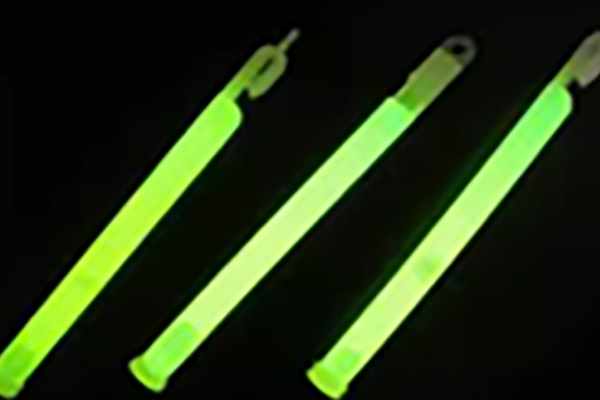
The lights can also become food for marine wildlife. Because light sticks float, seabirds are particularly vulnerable.
“It harms the bird that ingests them, but it’s also regurgitated into chicks at nesting colonies, so it harms the chicks as well,” he said.
There had to be a better way, Gilman thought. And researchers at The Fellows Network at The Safina Center are working to find one: reusable, battery-powered LED fishing lights that emit blue to violet light. The idea, Gilman said, came from battery-powered LED lights used in recreational fishing gear.
The goal is to develop an alternative that works for fishers while reducing plastic and chemical waste and potentially cutting bycatch. This work has made The Fellows Network at The Safina Center a finalist for the 2026 Responsible Seafood Innovation Award in the fisheries category.
A light of a different color
Battery-powered fishing lights are not new. They’re already used in recreational fishing and commercial fisheries employing traps, gill nets, squid jigging and trawls.
Some pelagic longline fisheries have already adopted LED lights, including portions of Australian bluefin tuna and eastern tuna and billfish fisheries. Japan’s Kesen-numa swordfish longline fishery has adopted them completely. That voluntary adoption “suggests that it holds promise for other fisheries,” Gilman said.
The Fellows Network wants to create a solution that could work on a global scale. That requires more than simply swapping one light for another. Researchers need to understand whether the LEDs are practical for crews, how they affect fishing operations, and critically, what happens to catches of both target and non-target species.
Part of that work has focused on fishers, testing LED designs “to get a sense of fishermen’s perception of how they like them, and how practical they are,” said Gilman.
Crew safety is another consideration. Since the LED lights don’t float, researchers wanted to understand how they could affect fishing gear and hooks.
So far, the outlook is promising. In a forthcoming study, researchers found that battery-powered blue-to-violet LED lights cut down on toxins and waste while remaining attractive to target fish and less detectable for at-risk bycatch species.
The LEDs bring practical advantages, too. They are small and easy to attach to and remove from gear without interfering with baited hooks or landing catch. They’re also water- and pressure-activated, so each light activates automatically rather than by hand. And because the LEDs don’t float on the surface, they “will keep the hook away from the surface and reduce birds’ access,” Gilman said.
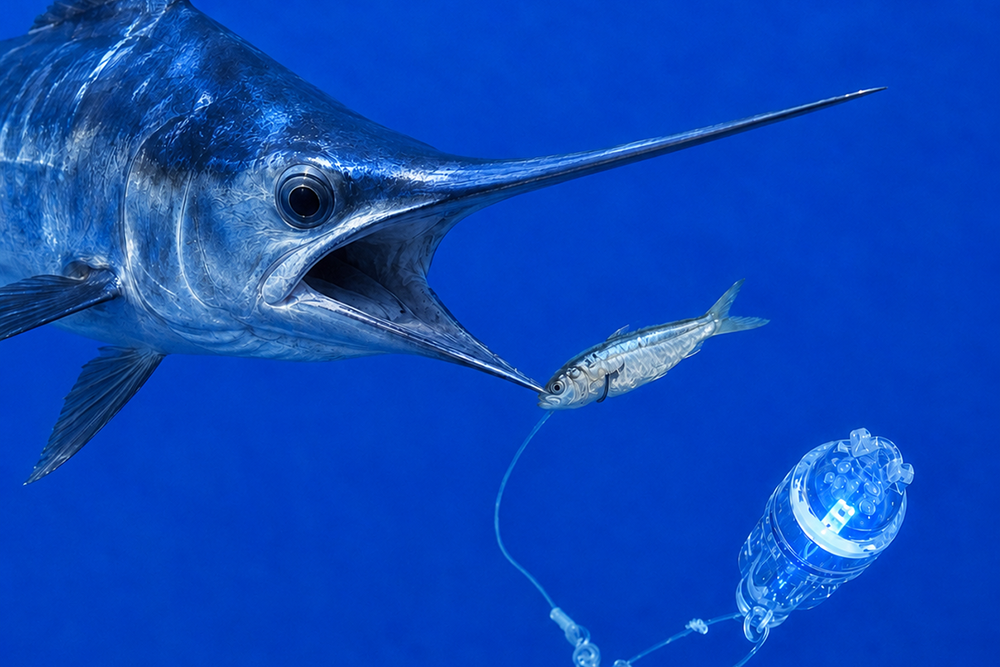
Putting the concept to the test
For an innovation intended for widespread use, proving that it works under real fishing conditions is essential.
The Fellows Network completed demonstration field trials earlier this year in Australia, Hawaii and Réunion Island, and has initiated trials for a randomized controlled experiment in France. Experimental field trials are also being prepared for fisheries in China and Hawaii, expected to start in November.
These trials will compare how blue-violet LED lights perform, with the conventional green chemiluminescent light sticks serving as a control.
“We want to get some direct evidence of what the response rate is for each commercial species and also of bycatch like sharks, turtles and seabirds,” Gilman said.
The goal, he said, is to document that “using these blue-to-violet LED lights with designs that fishermen have indicated is the most practical for their use will work well and improve catch rates of commercial species,” which could help bolster industry support for making the switch.
“[Hopefully], there will eventually be a transition globally for these shallow-set fishers to stop using single-use chemical light sticks and transition to battery-lit LEDs,” Gilman said.
If that happens, it could reduce toxic and plastic waste and cut bycatch, while improving catch rates of commercial species.
“LED fishing lights promise to be a win-win for pelagic longline fisheries, providing both economic and environmental benefits,” he said.
GSA’s 2026 Responsible Seafood Innovation Awards in the aquaculture and fisheries categories will be presented at the Responsible Seafood Summit in Bangkok, Thailand.
Now that you've reached the end of the article ...
… please consider supporting GSA’s mission to advance responsible seafood practices through education, advocacy and third-party assurances. The Advocate aims to document the evolution of responsible seafood practices and share the expansive knowledge of our vast network of contributors.
By becoming a Global Seafood Alliance member, you’re ensuring that all of the pre-competitive work we do through member benefits, resources and events can continue. Individual membership costs just $50 a year.
Not a GSA member? Join us.
Author
-

Jen A. Miller is a New Jersey-based writer whose work has appeared in everything from The New York Times to Engineering News Record.
Related Posts
Fisheries
Can dam removal actually restore fish populations in U.S. rivers?
Dams have helped build nations but fish – and river health – have paid a steep price. Dam removal can have restorative effects on ecosystems.
Intelligence
Will 2024 be the year of the tinned fish?
Tinned fish is a growing food trend in the U.S. market, and more companies are creating products using locally sourced seafood.
Intelligence
A seat at the table: Fed By Blue team says aquaculture needs a stronger voice
In Fed By Blue, star power and a women-led production team aim to prop up farmed seafood with a focus on the message: Blue foods are the future.
Fisheries
Salmon-counting could be a breeze as environmental DNA technology advances
Study shows that environmental DNA (eDNA) can be detected in the air with no power sources, a potential boon for salmon fisheries managers.