


Study of historic Baltic herring fishery collapse offers lessons for modern fisheries management

Historic Baltic herring fishery collapse highlights why fisheries management must consider overfishing, climate change and socioeconomic pressures
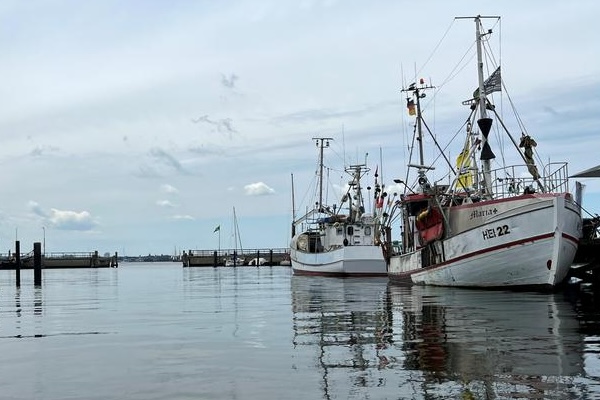
A study of a historic Baltic herring fishery collapse found that overfishing, climate change and socioeconomic pressures can combine to undermine fisheries, highlighting the need to consider these factors together in fisheries management.
The study, published in Nature Sustainability, examined the collapse of the Skanör-Falsterbo herring fishery in the Sound, a strait between Denmark and Sweden. Researchers found that although herring stocks declined significantly during the 16th century, they did not disappear entirely. Instead, several environmental, economic and social factors contributed to the fishery’s collapse around 1570.
“Only when you look at climate, ecology and socio-economic conditions together does a coherent picture of this historic collapse emerge,” said Rudi Voss, lead author and fisheries economist at Kiel University and the German Centre for Integrative Biodiversity Research (iDiv). “None of these factors alone would have brought the fishery down. It is their interplay that explains the dynamics.”
For centuries, salted herring from the sound was a major trade commodity in northern Europe, supplying markets across the continent. When the fishery collapsed, it took nearly 400 years for catches to return to comparable levels in the 1950s.
![Ad for [Aquademia]](https://www.globalseafood.org/wp-content/uploads/2025/07/aquademia_web2025_1050x125.gif)
To investigate the decline, researchers reconstructed 450 years of herring catches, covering 1200 to 1650. They combined historical customs records, trade documents and other archival material with economic indicators and reconstructed climate data to estimate changes in fish stocks and fishing activity.
The analysis found that overfishing had already weakened herring stocks and increased fishing costs when cooling associated with the Little Ice Age further reduced the population’s productivity.
At the same time, shifting sand dunes damaged fishing infrastructure, a system of serfdom restricted the availability of workers and cheaper herring from the expanding North Sea fishery increased competition. Together, these pressures contributed to the collapse of a fishery that had operated for centuries.
Tagged bigeye tuna recaptured after nearly a decade could help improve fisheries management
The researchers said the findings have implications for modern fisheries management, particularly in the western Baltic Sea, where herring stocks are currently outside safe biological limits and subject to a zero-catch recommendation, according to the study.
Although the historical and modern fisheries involve different herring stocks, researchers identified similarities in the pressures affecting them. Cooling contributed to the historical decline, while warming waters associated with climate change are adding pressure to present-day Baltic herring populations.
The study supports an ecosystem-based approach to fisheries management that considers environmental conditions alongside economic and social factors, including fishing infrastructure, market conditions and the livelihoods of fishing communities.
“Looking back at history makes it clear: Sustainable fisheries only succeed if we take social and economic conditions just as seriously as the state of the stock itself,” said Voss. “That is the lesson from 450 years of herring fishing in the Sound – and it is just as relevant today as it was then.”
Now that you've reached the end of the article ...
… please consider supporting GSA’s mission to advance responsible seafood practices through education, advocacy and third-party assurances. The Advocate aims to document the evolution of responsible seafood practices and share the expansive knowledge of our vast network of contributors.
By becoming a Global Seafood Alliance member, you’re ensuring that all of the pre-competitive work we do through member benefits, resources and events can continue. Individual membership costs just $50 a year.
Not a GSA member? Join us.
Author

Related Posts

Fisheries
FAO opens Adriatic unit to strengthen fisheries management
The FAO has opened a new Adriatic Sea unit in Croatia to support science-based fisheries management and cooperation among six countries.
Fisheries
A decade after anti-IUU fishing pact, Mediterranean and Black Sea overfishing drops
A decade after a the anti-IUU fishing Port State Measures Agreement, overfishing in the Mediterranean and Black Sea drops to record lows.
Fisheries
Does greater amberjack need a new fisheries management approach?
Study finds that greater amberjack in the Gulf of Mexico and South Atlantic may benefit from separate fisheries management approaches.
Fisheries
A synthetic control approach to estimate the effect of total allowable catch limits in the high seas
Research highlights the potential of a synthetic-control method to estimate the causal effect of catch quotas on fishing mortality and biomass.