


At the Responsible Seafood Summit, seafood industry’s pressure points come into focus

Feed volatility, fisheries data gaps, animal welfare, consumer affordability and digital risk shaped the final two days of the 2026 Responsible Seafood Summit

What happens when producing more seafood also means managing more pressure? From feed volatility and limited fisheries data to price-conscious consumers, animal welfare and digital risk, the seafood industry is navigating a complicated operating environment.
Those issues shaped the final two days of the 2026 Responsible Seafood Summit in Bangkok. Feed suppliers focused on raw-material availability and quality, fisheries experts on managing complex fisheries with limited information and retailers on how consumers adjust as costs rise. Across those discussions, resilience became a practical question: What companies can measure? What producers can afford? What will buyers pay for? Where can technology be useful?
Volatility pushes feed suppliers to adapt
Feed costs ranked among the biggest concerns for aquaculture producers in the 2026 GSA-Rabobank surveys. In the shrimp survey, aquafeed cost moved ahead of market prices and disease prevention to become the top-ranked concern in 2026. Among finfish producers, aquafeed cost ranked second only to market prices.
Oscar Tjakra, executive director at RaboResearch, said the outlook for soybean, a major feed ingredient, remains mixed. Higher fertilizer costs are influencing planting decisions, with some farmers shifting toward lower-input crops such as soybeans, while weather remains another source of uncertainty. Tjakra said El Niño conditions could affect soybean production and soybean oil even as global supplies expand.

“It’s going to be hot, and it’s going to impact soybeans,” he said. “We’re not going to see the low-level price that we saw in 2020.”
Rabobank expects soybean prices to remain supported rather than returning to earlier lows, although Tjakra indicated soybean meal could face less upward pressure than soybean oil or soybeans themselves.
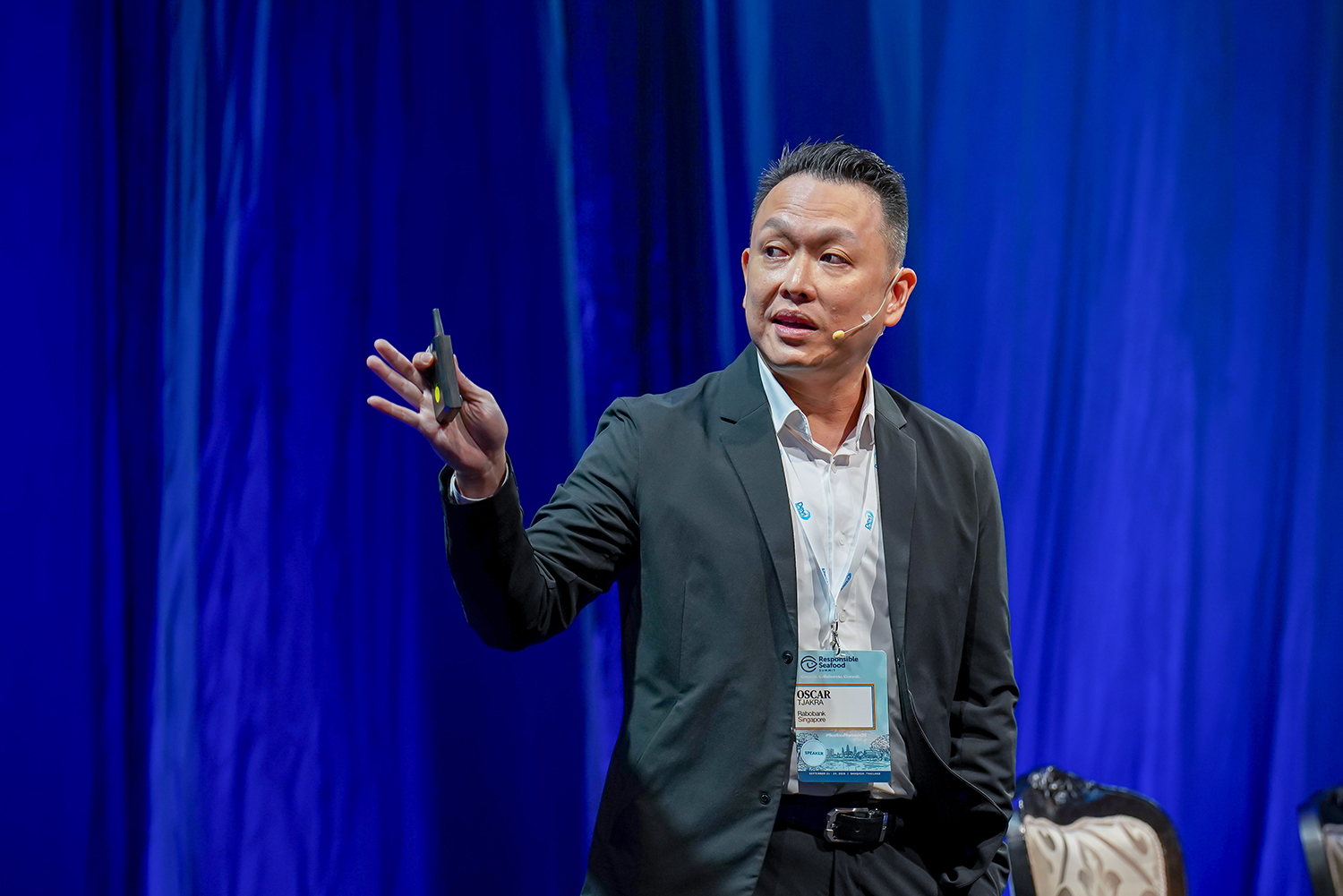
“Price forecast, as mentioned, is going to increase,” he said.
Marine ingredient markets are accustomed to volatility, but MarinTrust Executive Chair Libby Woodhatch described 2026 as an “extreme” year. “But it doesn’t mean it’s the end of the world because the industry is used to operating in this volatile environment,” she said.
That uncertainty is also changing how the industry thinks about raw materials. Woodhatch said almost 40 percent of marine ingredients now come from byproducts, while more than half of fish oil is produced from byproducts.
“This is a trend we expect to see continue as people recognize the value of byproducts,” she said.
Even as the overall use of marine ingredients declines, Woodhatch said they remain an important component of aquafeed. Pressure on wild resources has also pushed the industry to use what it has more efficiently.
“We’re used to these fluctuations,” she said. “Fluctuations often drive innovation.”
She pointed to Peru as one example, where pressure on available supply has pushed the industry to get more value from each fish.
“We’ve seen this in Peru with the better utilization,” Woodhatch said, pointing to greater use of byproducts and trimmings. “The volumes of fish in and fish out have changed significantly. They’re far more efficient.”
During the broader feed discussion, Peerasak Boonmechote, CEO and director of Thai Union Feedmill, said the challenge is not simply securing ingredients at a competitive price. Feed companies still must maintain performance at the farm level while meeting responsible sourcing and traceability requirements.
“The quality needs to be first. That is very important,” he said.
Boonmechote said feed manufacturers must respond to uncertainty without losing sight of quality, responsible sourcing and traceability. He also stressed that feed decisions have to work across the value chain, through to the end consumer.
“We need to work together,” Boonmechote said. “We need to be creative. We need to think ahead of time and be prepared for that.”

‘We need industry to help count fish’
Effective fisheries management depends on knowing what is being caught, in what quantities and whether stocks can support continued harvest. In complex multi-species and small-scale fisheries, however, collecting enough information to make those decisions can be difficult.
Dave Martin, deputy division director in the programs division at Sustainable Fisheries Partnership (SFP), said management systems designed around individual stocks do not always translate easily to fisheries where dozens or even hundreds of species can be caught together.
“For multi-species fisheries, we need approaches that start with the ecosystem,” Martin said. “We don’t start with a couple single species and build out from there. We start with the ecosystem and look at it holistically from the beginning.”
That also requires a different approach to science and data. Robust stock assessments may work for well-studied fisheries, Martin said, but applying the same model becomes difficult when many species are harvested together.
“It’s great to have kind of robust stock assessments we see in Alaskan pollock and tuna,” Martin said. “You cannot do that for a fishery where there are literally hundreds of species being taken in the same nets.”
Small-scale fisheries present another problem. They can have difficulty producing the kind of information buyers and certification systems increasingly expect, even when they are important to local economies and are being managed responsibly.
Martin said seafood companies can help fill some of those gaps by supporting data collection, management and compliance.
“We need industry to help count fish,” he said. “You absolutely can’t manage them if you can’t count them.”
That has implications beyond fisheries managers. Better information can also help smaller producers demonstrate responsible practices and reach buyers with increasingly detailed procurement requirements.
“There’s a lot that markets can do to help support and recognize small-scale fisheries,” Martin said. “Markets can really help empower fishers and ensure that they have a role in management.” He said markets can also support data gathering and improvements in post-harvest handling that can increase access to buyers.
Animal welfare gets more practical
A stressed fish is not just a welfare problem. It can also be a production problem, showing up in health, water quality, feeding, behavior and ultimately farm performance.
That was the practical case speakers made for treating animal welfare as part of day-to-day farm management rather than as a separate ethical consideration.
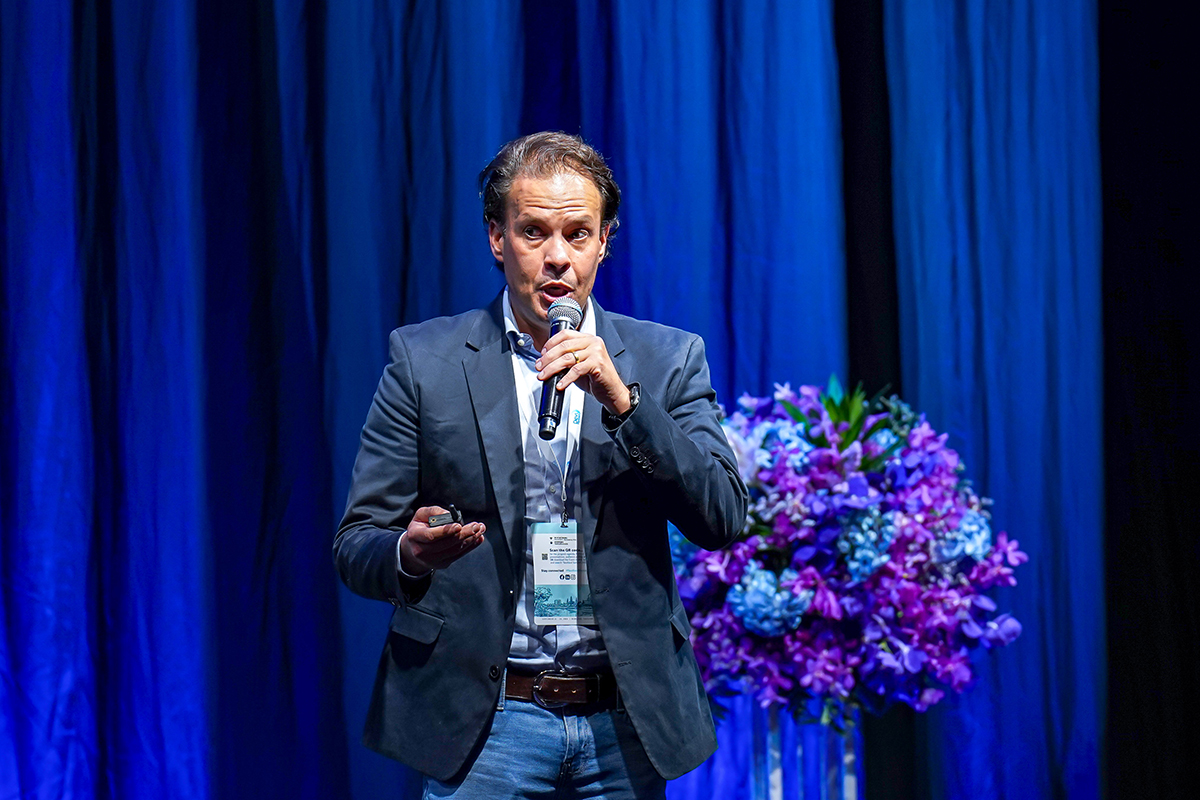
“Animal welfare is actually a core component of a good production system,” said FAI Farms COO Murilo Quintiliano. “When you ignore it, you do have higher health challenges. You do have higher water quality pressure. You have feed and nutrition issues. You have behavioral signs of stress.”
Michelle Lavery, associate program officer for farm animal welfare at Coefficient Giving, put a number on one of those effects. She pointed to research on juvenile salmon subjected to chronic, unpredictable stress.
“Stressed fish grew almost 33 percent slower over that period, which, depending on what happens later in life, may result in a pretty serious delay to acceptable harvest weight,” Lavery said.
But speakers also cautioned against assuming every animal welfare improvement will automatically produce an immediate return on investment. Some solutions do not yet exist, some technologies may not deliver the promised welfare gains and some improvements remain costly.
“Some improvements don’t pay for themselves yet,” Lavery said, adding that some equipment can cost tens to hundreds of thousands of dollars, putting it out of reach for many producers. “The market can’t really reward welfare super reliably at the moment.”
That trade-off became even more apparent during a discussion on animal health and antimicrobial resistance. Andrea Caputo Svensson, global health advisor at ReAct Europe, argued that the goal should not be eliminating antibiotics altogether. Rather, they need to remain effective and available when animals require treatment. The problem comes when their use continues over time or becomes preventive.
“We want to keep them effective, and we want to keep them for whenever they need it,” Caputo Svensson said.
Reducing that reliance through better diagnostics, disease prevention, biosecurity and husbandry also requires money and expertise. Quintiliano cautioned against expecting one technology to solve all the problems.
“I don’t see silver bullets,” he said.

Consumers are adjusting what they buy
Further down the supply chain, consumer research and retailer perspectives pointed to the same pressure: shoppers are paying closer attention to price.
Victoria Gilbert, director and head of Asia Pacific at GlobeScan, said safety and taste remain the strongest drivers of seafood purchases, followed by health. But affordability has become a much bigger part of the decision.
“Affordability is dominating the conversations at the moment from a consumer perspective,” Gilbert said, noting that the pressure extends beyond seafood.
At Walmart, Michael Berto said that pressure is showing up less as consumers abandoning seafood and more in what they choose to put in their carts.
“We’re not necessarily seeing customers buy less; they’re changing what they’re buying,” he said.
That can mean smaller pack sizes and lower-priced products. Berto said suppliers need to respond to those shifts rather than assuming they know what shoppers want.
“We really need to think about what the consumer wants and start there,” he said.
Price, however, only goes so far. Berto cautioned against lowering quality to hit a particular price point.
“Quality is what will keep the customer coming back,” he said, adding that price may encourage the initial purchase, but a bad experience can cost a customer.
The way consumers shop is changing, too. Berto said more grocery business is moving online, putting additional pressure on seafood companies to think about packaging, presentation and convenience for customers who may be shopping from a screen rather than standing at a seafood counter.
“Most people don’t know what they’re going to do for dinner at 5 p.m.,” he said. Berto said companies need to think about how products, packaging and the shopping experience work for that increasingly digital customer.
Gilbert offered a useful counterpoint: consumer attitudes do not always translate neatly into purchasing behavior.
“The consumer trends are telling us that people care, but that doesn’t necessarily translate into action,” she said.
The Advocate reports from the Responsible Seafood Summit in St Andrews
From data security to doing more with less
Other breakout sessions turned to some of the less visible operational risks facing seafood companies.
A technology session examined AI, interoperability, traceability and digital trust – and the risks that emerge when underlying data and systems are incomplete, incompatible or insecure. Speakers emphasized how closely those issues are connected: without reliable data, companies cannot build effective traceability or automation systems, while insecure infrastructure can undermine trust in the information those systems produce.
Another session examined how seafood companies can get more value from material they already produce. Melanie Siggs, global head of seafood at LRQA, pointed to fish heads, skins, shells and other byproducts that can move into higher-value markets rather than being discarded or sold cheaply.
“Once you show people that value, there’s a change in the whole attitude,” Siggs said.
Iceland Ocean Cluster CEO Alexander Leeper offered a concrete example. As Iceland’s cod industry shifted away from a volume-based model, companies began looking beyond the fillet for new sources of revenue – finding markets for heads, skins, livers, bones and other parts of the fish.
“They had to figure out how they were going to not only survive and thrive and really do more with less,” Leeper said.
Some of those uses now reach well beyond seafood. Leeper pointed to cod skin being turned into premium textiles, collagen products and medical applications, while similar efforts are creating value from parts of seafood that once had little or no market.
“If we can create this much value from this skin that we used to throw away, what else is possible?” Leeper said.
Now that you've reached the end of the article ...
… please consider supporting GSA’s mission to advance responsible seafood practices through education, advocacy and third-party assurances. The Advocate aims to document the evolution of responsible seafood practices and share the expansive knowledge of our vast network of contributors.
By becoming a Global Seafood Alliance member, you’re ensuring that all of the pre-competitive work we do through member benefits, resources and events can continue. Individual membership costs just $50 a year.
Not a GSA member? Join us.
Author
-

Lisa Jackson is a writer based in Hamilton, Canada, who covers a range of food and environmental issues. Her work has been featured in Al Jazeera News, The Globe & Mail and The Toronto Star.
Related Posts
Health & Welfare
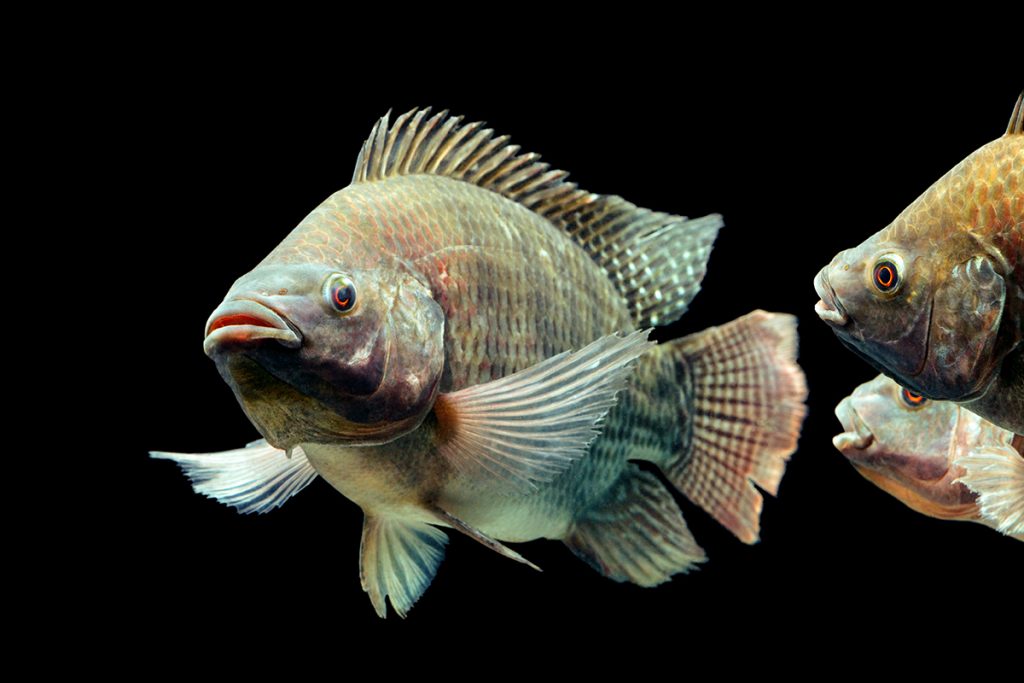
‘The right thing to do’: How aquaculture is innovating to reduce fish stress and improve animal welfare
With research showing that stress can damage meat quality, fish and shrimp farmers are weighing the latest animal welfare solutions.
Responsibility
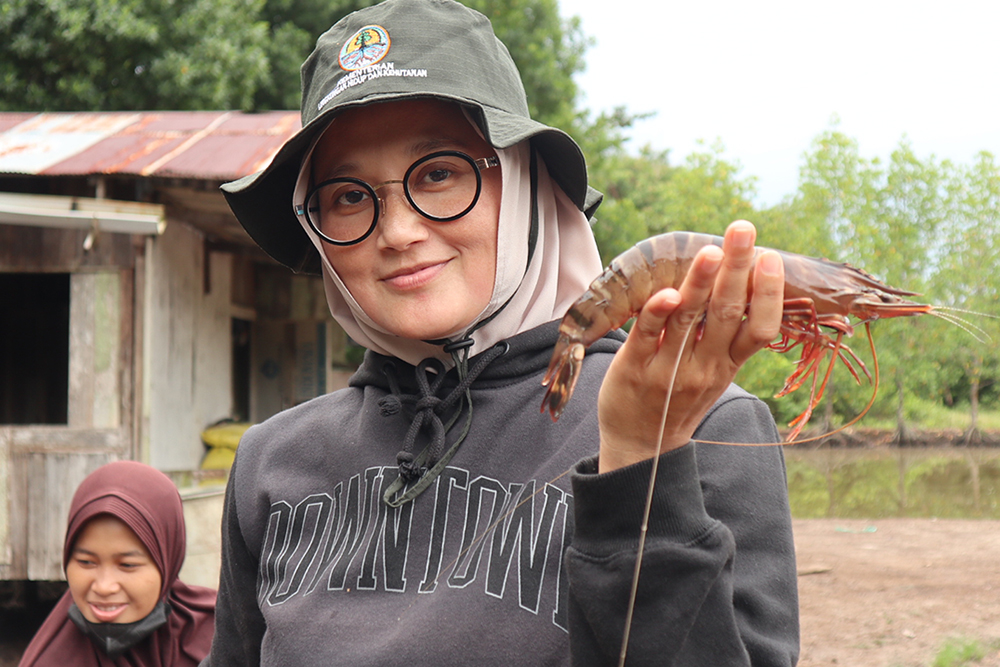
‘We found a way to address these challenges’: How shrimp producers are redesigning farms to support mangrove restoration and coastal resilience
Responsible shrimp farming paired with mangrove restoration can boost yields, protect coasts and support sustainable livelihoods.

Intelligence
At the 2026 Responsible Seafood Summit, growth comes with harder questions about risk and responsibility
Market volatility, climate change, trade and social responsibility drive opening day discussions at the 2026 Responsible Seafood Summit in Bangkok last week.
Innovation & Investment
WildTechDNA and 100% Great Lakes Fish win the 2026 Responsible Seafood Innovation Awards
WildTechDNA and 100% Great Lakes Fish win 2026 Responsible Seafood Innovation Awards for aquaculture health and full fish utilization.