


Study: Oyster reef restoration supports larger fish years after completion

Chesapeake Bay study finds oyster reef restoration can maintain high oyster cover and provide habitat for larger fish up to a decade later
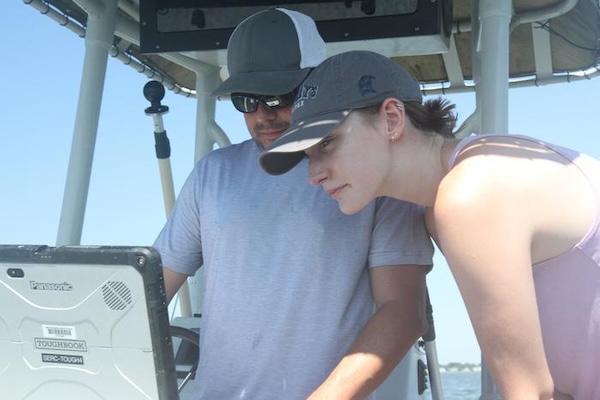
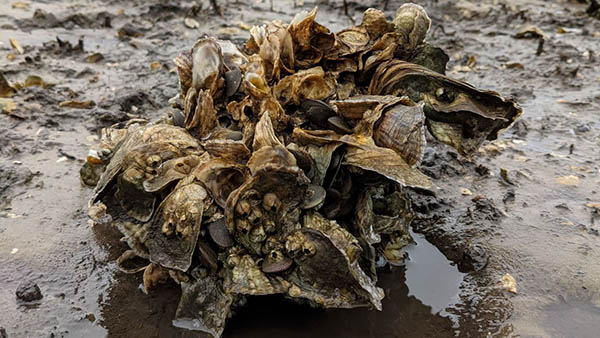
Large-scale oyster reef restoration in Chesapeake Bay is creating complex underwater habitats that support larger fish and maintain high oyster cover years after restoration, according to new research.
The study, published in Ecosphere, examined restored reefs in Harris Creek, one of the world’s largest oyster restoration projects. Researchers from the University of Maryland, Baltimore County (UMBC), the Smithsonian Environmental Research Center and the National Oceanic and Atmospheric Administration (NOAA) assessed reef conditions and marine life six to 10 years after restoration.
The findings showed that restoration methods influenced the results. Reefs restored with stone and juvenile oysters attached to adult oyster shells had more complex structures and supported larger fish than reefs restored without stone or reefs that continued to be harvested.
The results suggest that incorporating stone and protecting restored reefs from harvesting could help sustain habitat for larger fish over time.
![Ad for [Aquademia]](https://www.globalseafood.org/wp-content/uploads/2025/07/aquademia_web2025_1050x125.gif)
“Oyster restoration is important for lots of different stakeholders in Chesapeake Bay, so we wanted to know precisely how it influences reef habitat and the fish and crabs that use that habitat,” said Allison Tracy, lead author and assistant professor of marine biotechnology at UMBC.
Researchers used underwater video cameras and high-resolution sonar to examine reef structure and the fish, crabs and other animals living around the reefs. The approach could also help restoration programs monitor reef conditions in murky waters, where traditional methods can be difficult to use.
Underwater cameras facilitate large-scale study of oyster reef habitat in Chesapeake Bay
Although restored reefs supported fewer fish overall, individual fish tended to be larger. Reefs restored with stone had the greatest abundance of fish longer than 30 centimeters, while smaller, schooling fish dominated harvested reefs and unrestored areas.
“One of the key takeaways is that large fish in particular are taking notice of restored oyster reefs,” Tracy said. “Harris Creek is one of the most valuable case studies of oyster restoration in the world. It was a great opportunity to study how animals use these reefs.”
The researchers said the more complex structures of restored reefs appear to provide shelter and feeding opportunities for larger fish and other species that live near the seafloor. The study also found that restored reefs maintained high oyster cover and structural complexity years after construction, suggesting that the habitats can remain productive over time.
The findings could matter for Chesapeake Bay, where oyster populations have declined to about 3 percent of historical levels because of overharvesting, disease, and environmental pressures, according to NOAA.
Researchers said long-term monitoring is important because official assessments of large-scale oyster restoration typically occur only three and six years after restoration.
“Official monitoring of the large-scale restoration efforts only takes place three and six years after restoration, but studying these reefs in the long term is needed to ensure that they continue to support oyster populations and provide habitat for other animals,” said Matthew Ogburn, senior author and senior scientist at the Smithsonian Environmental Research Center. “This study shows that underwater video can help fill this need.”
Now that you've reached the end of the article ...
… please consider supporting GSA’s mission to advance responsible seafood practices through education, advocacy and third-party assurances. The Advocate aims to document the evolution of responsible seafood practices and share the expansive knowledge of our vast network of contributors.
By becoming a Global Seafood Alliance member, you’re ensuring that all of the pre-competitive work we do through member benefits, resources and events can continue. Individual membership costs just $50 a year.
Not a GSA member? Join us.
Author

Related Posts
Responsibility
Feed and hatchery technologies seek to scale oyster reef restoration in Europe
European oyster reef restoration efforts are expanding with new hatchery and feed technologies designed to improve oyster spat survival.
Innovation & Investment
Can the 3D-printed Reef of Hope turn the tide on oyster reef restoration?
Award-winning Reef of Hope uses 3D-printed biodegradable design to advance oyster reef restoration and revive marine ecosystems.
Responsibility
As North Carolina restores oyster reefs, a case for regenerative aquaculture grows
Restoring oyster reefs in North Carolina boosts the economy, strengthens ecosystems and showcases the value of regenerative aquaculture.
Innovation & Investment
Can drones detect early signs of oyster reef deterioration?
New research shows that the digital elevation map produced by drones can accurately determine the condition of an oyster reef.