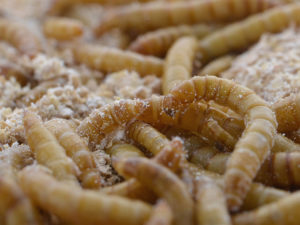
Larvae lunch, anyone? Insect-based feeds soon on aquafeed menu
This July, European Commission regulations allowing insect-based feed will be amended, and insect-farming companies like Agriprotein and Ynsect are gearing up for expansion in the EU.



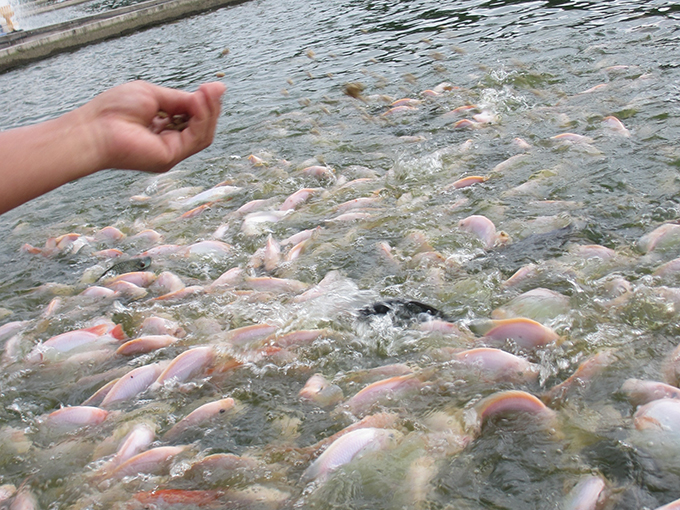
The results of this study provide the first comprehensive evidence of the significant impact of dietary oils with different fatty acid class profile on the in vivo fatty acid metabolism of tilapia.
This July, European Commission regulations allowing insect-based feed will be amended, and insect-farming companies like Agriprotein and Ynsect are gearing up for expansion in the EU.

A study evaluated the inclusion of bacterial, dried fermented biomass as a replacement for fishmeal in four practical diets for Florida pompano juveniles. There were no significant differences in final weight, survival, FCR or thermal-unit growth coefficient.
The physical integrity and nutrient leaching of shrimp aquafeeds are important aspects in their quality control. The water stability of shrimp aquafeeds is often evaluated in various subjective manners. This analytical procedure provides a baseline for the aquafeed manufacturer to assess product quality.

Aquafeed manufacturers and alternative feed ingredient suppliers from all over the world gathered in Silicon Valley for F3, the Fish Free Feed contest. In the hub of innovation, solutions to a global problem were on full display.
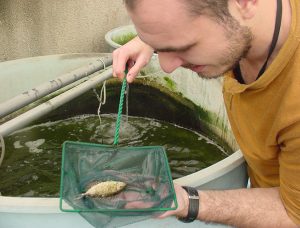
Soybean meal is not a viable option for partial or full fishmeal replacement in a diet for juvenile marbled rabbitfish. Results from a study in Beirut are somewhat surprising, as the herbivorous species is theoretically capable of performing well without animal-sourced protein in feed.

Giovanni Turchini, associate professor at Deakin University (Australia) spoke at the GOAL 2016 conference in Guangzhou, China, and gave a comprehensive historical look at global fishmeal usage.
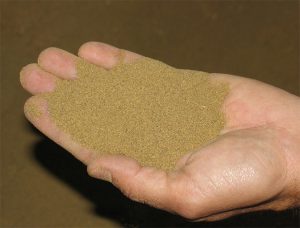
Ingredients that are properly proportioned and mixed for an adequate mixing time are very important to assure the manufacturing of aquafeeds that meet the standards for the shrimp species and life stage for which the formula was designed.

What started out as a simple yet ambitious contest to drive innovation in the aquafeed sector has evolved into a fully global competition – and collaboration – amongst ingredient suppliers and feed manufacturers.
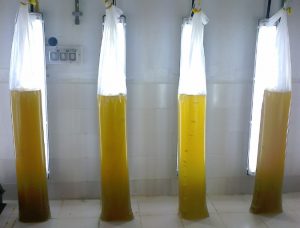
The diatom Thalassiosira weissflogii is important in the aquaculture industry to feed shrimp and shellfish larval stages in hatcheries. This study examined culture conditions for this diatom and determined that it can be successfully cultured semi-continuously and without population crashes.
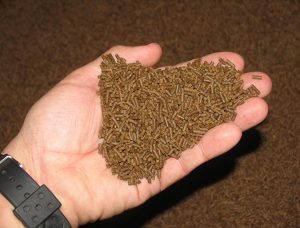
Effective aquafeed management methods are critical for efficient production of farmed shrimp, and to minimize environmental impact. In the second part of his series, Editor Emeritus Darryl Jory looks at shrimp feed management in terms of application, distribution, frequency, calculations and adjustment practices.
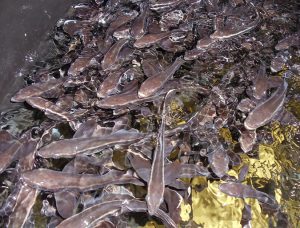
The availability of a cost-effective grow-out feed formulation is an ongoing bottleneck for the expansion of cobia production. Studies by the authors show that the development of an aquafeed with limited or no fish oil content is possible.
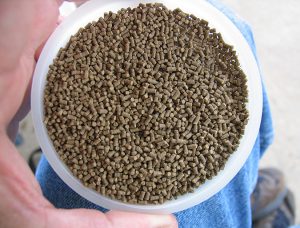
Shrimp production systems and their feed management must be considered together. It requires an understanding of biological aspects of the targeted species and age, of production system used, of chemical and biological processes that control water and bottom quality and continuous system monitoring and feedback to provide appropriate and timely inputs and adjustments.

After 14 years with the USDA’s Agricultural Research Service, Rick Barrows talks about the importance of finding ‘complete’ and commercially viable alternative sources of omega-3 fatty acids and continuing innovation in the aquafeed sector.
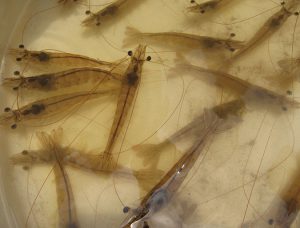
Studies demonstrate that hydrolyzed soy protein can be well digested and utilized by Pacific white shrimp, and that digestibility is improved through a bioprocess with the bacterium Lactobacillus spp.
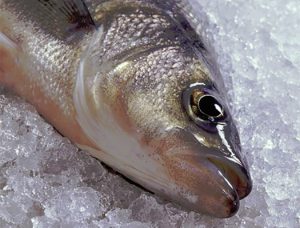
A study assessed the growth performance and fillet fatty acid composition of juvenile hybrid striped bass that were fed various diets containing different levels of fish oil, soybean oil, and blends of both. Results suggest that alternative lipid composition influences the degree of tissue fatty acid profile distortion.