Innovation & Investment
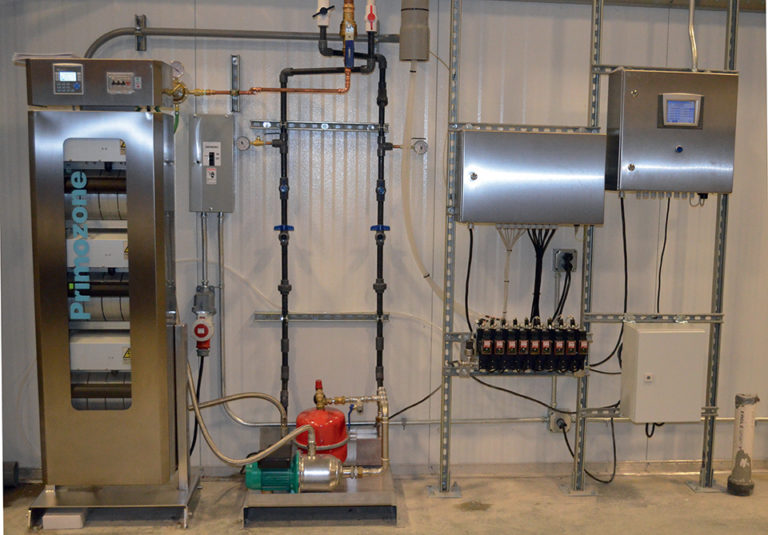
Ozone increases productivity in RAS systems
Studies on improving water quality in recirculating aquaculture systems has identified ozone as an excellent solution for an optimal water environment.


Health & Welfare
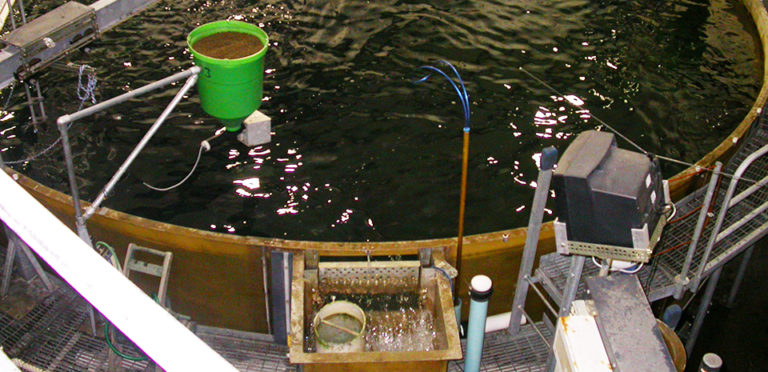
The presence of compounds such as geosmin and 2-methylisoborneol (MIB) in recirculating aquaculture systems (RAS) can result in earthy or musty off-flavors in salmonids raised in the systems.
Innovation & Investment
Studies on improving water quality in recirculating aquaculture systems has identified ozone as an excellent solution for an optimal water environment.
Responsibility
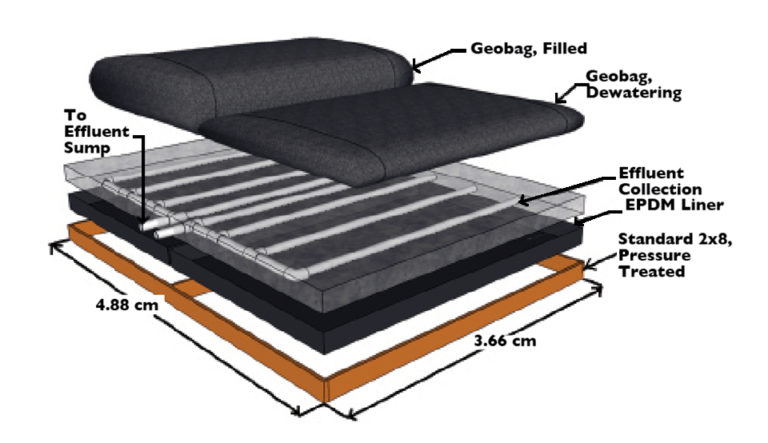
One promising new technology for dewatering aquaculture solid waste is the use of geotextile bags: porous, sealed tubular containers constructed of high-strength, woven polyethylene material.
Health & Welfare
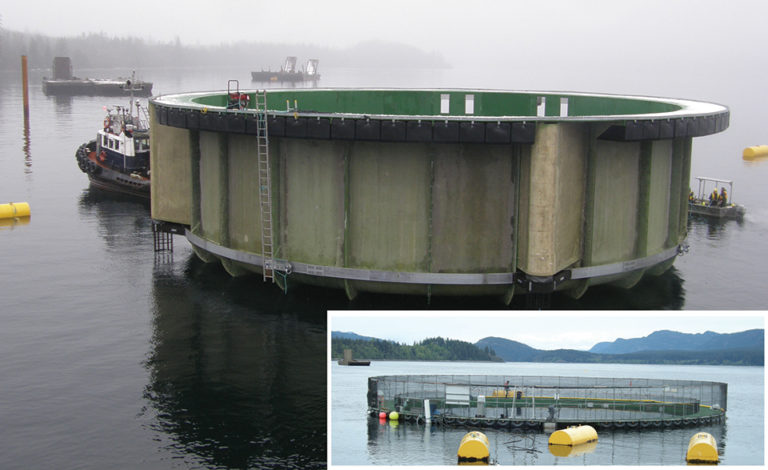
Floating closed-containment systems incorporate low-pressure pumping, oxygen supplementation, solid-waste separation and efficient feed management.
Health & Welfare
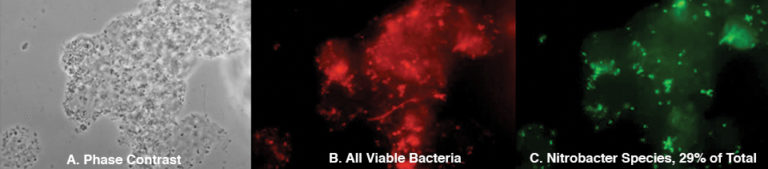
Healthy populations of both ammonia- and nitrite-oxidizing bacteria must be present in aquaculture systems to support the nitrification of potentially toxic ammonia to nitrite, with further oxidation to less problematic nitrate.
Health & Welfare
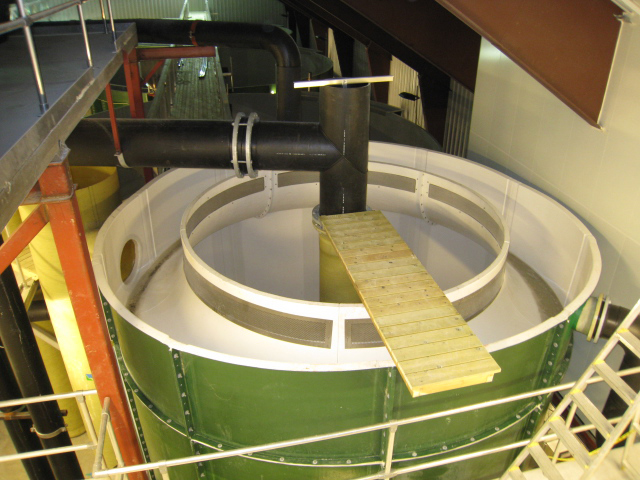
Smolt production in Norwegian hatcheries will likely increase during the next decade to answer salmon grow-out needs. Farmers are converting existing flow-through systems to partially or fully incorporate recirculation technologies.
Health & Welfare
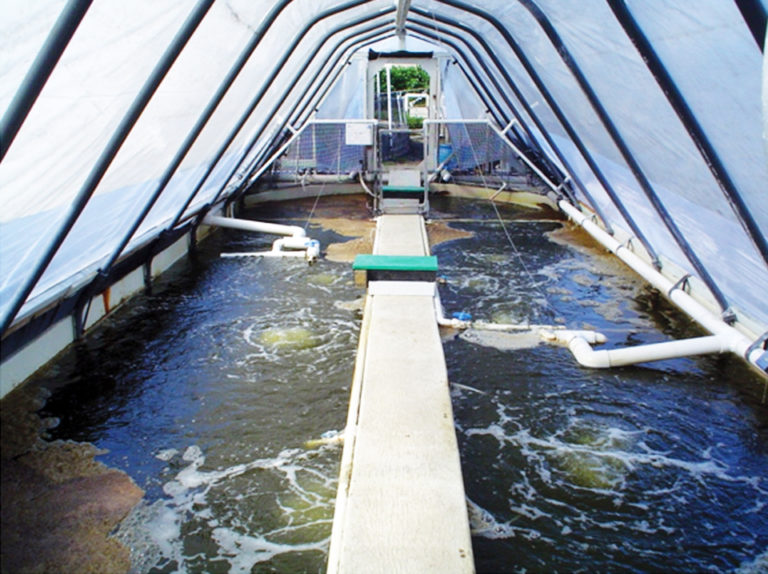
Nitrifying bacteria readily form biofilms on surfaces, and colonization by these important bacteria on the interior walls of RAS production units likely provides an additional source of nitrification.
Health & Welfare
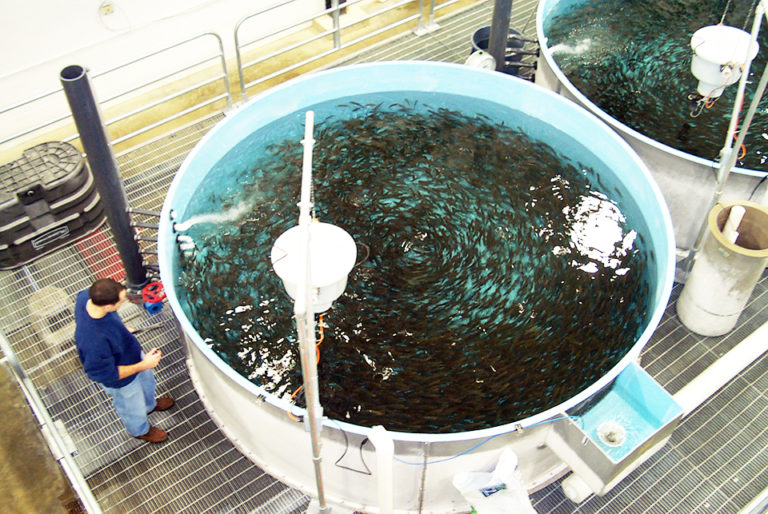
Circular tank-based recirculating aquaculture systems can be used to effectively culture rainbow trout and other salmonids in a bio-secure and environmentally friendly manner that imposes a much lower water and wastewater footprint than traditional flow-through culture technologies.
Responsibility
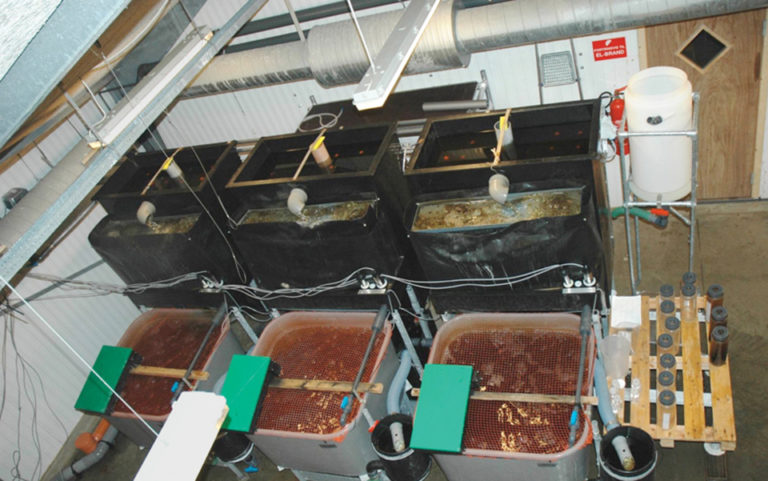
Hydrogen peroxide is a candidate for water treatment in aquaculture systems for it has antimicrobial effects and easily degrades to harmless byproducts.
Health & Welfare
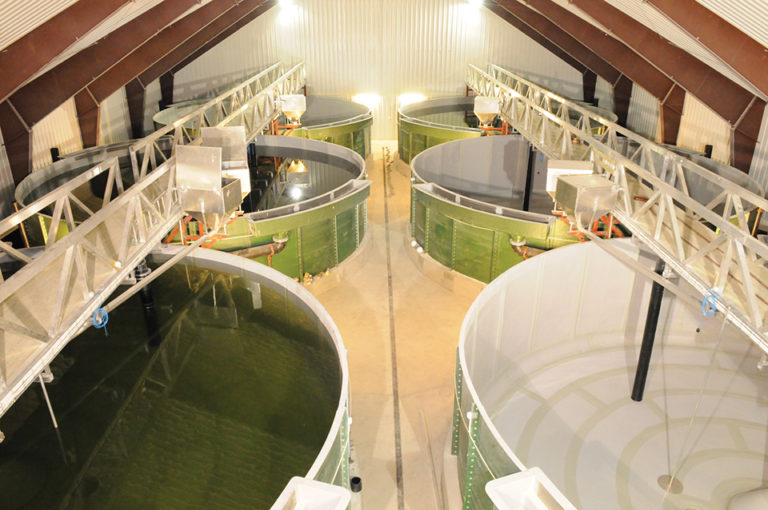
The Fjordsmolt RAS farm applies a relatively simple, low-cost design to produce millions of salmon smolts per year in fiberglass tanks.
Responsibility
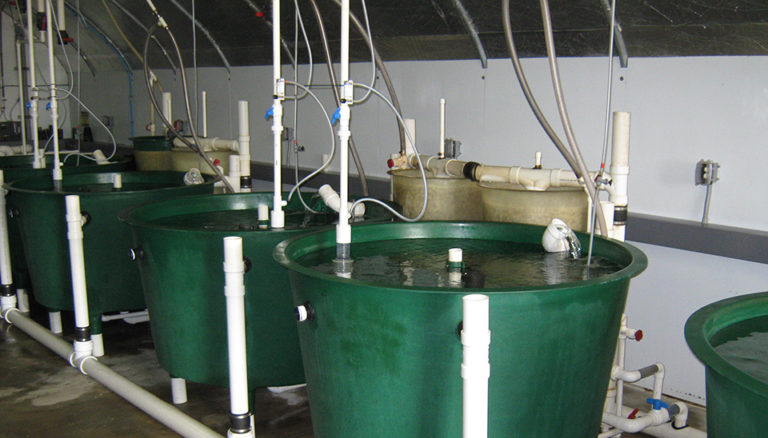
U.S. institutions are collaborating to evaluate low-energy recirculating aquaculture system designs to produce marine finfish in a low-salinity environment.
Health & Welfare
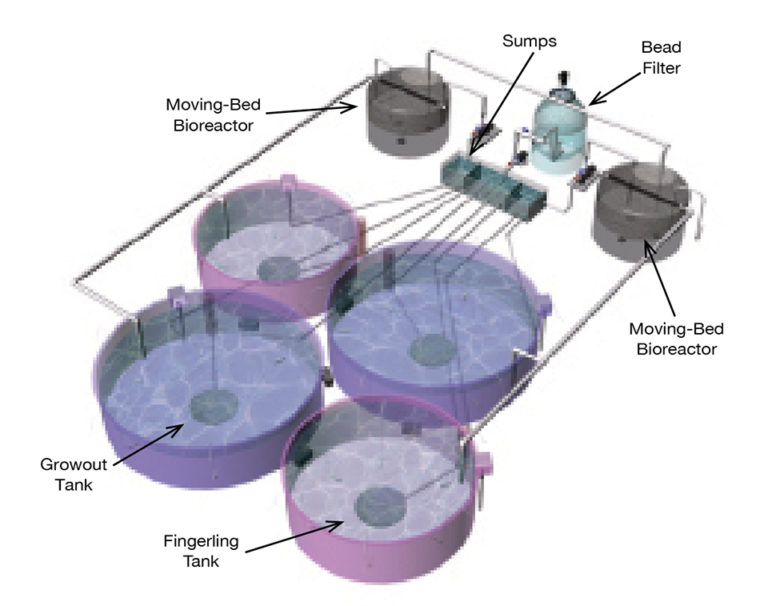
A boutique design project validated a land-based, recirculating production system capable of producing 50 metric tons of spotted sea trout per year.
Responsibility
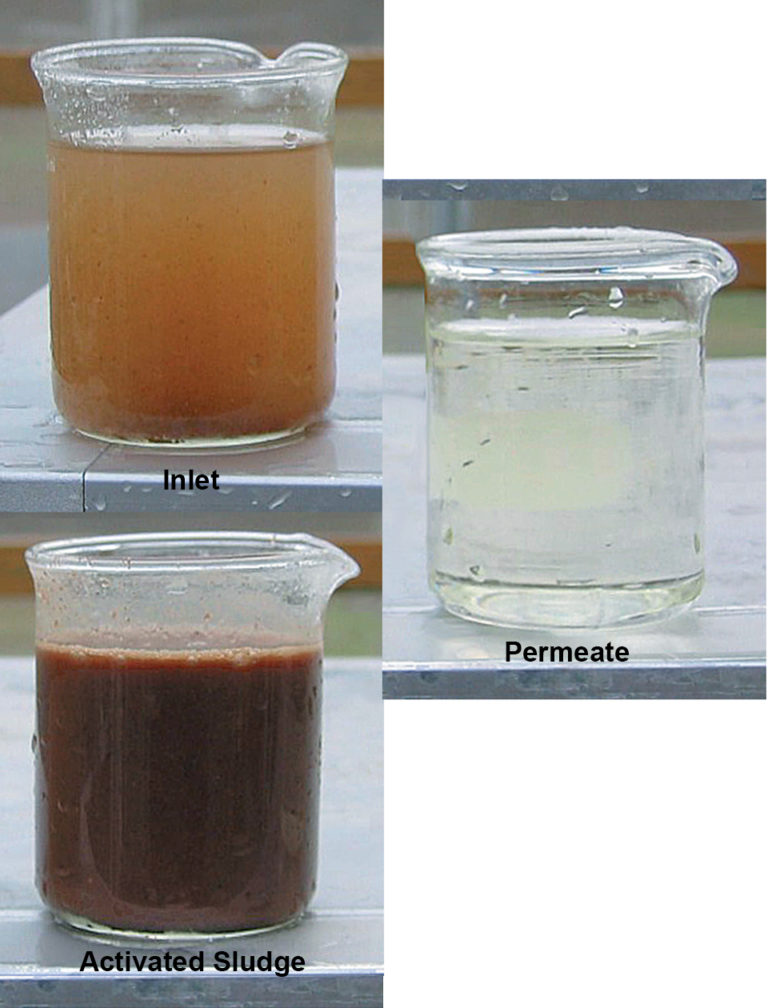
Membrane biological reactor technology is a scalable wastewater treatment system that reclaims water discharged from RAS solids-collection devices.
Health & Welfare
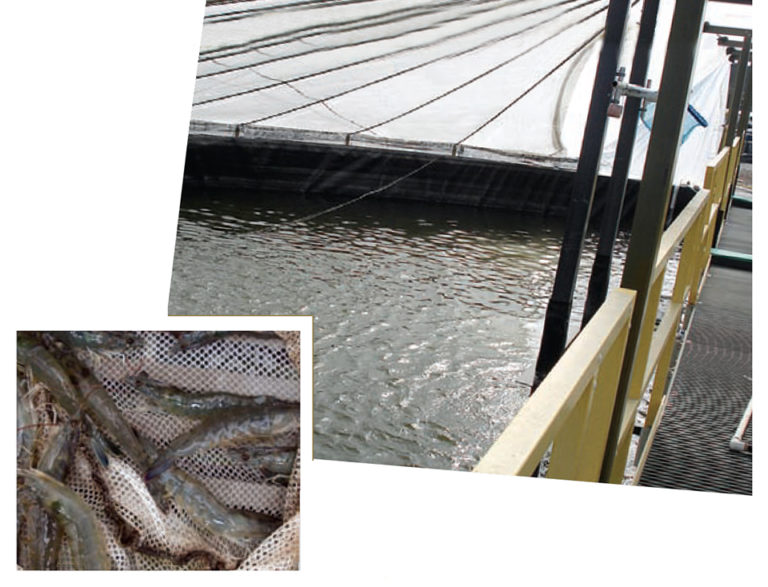
A super-intensive, commercial-scale RAS trial with Pacific white shrimp at Oceanic Institute achieved record production at a low cost and with low stocking densities.
Innovation & Investment
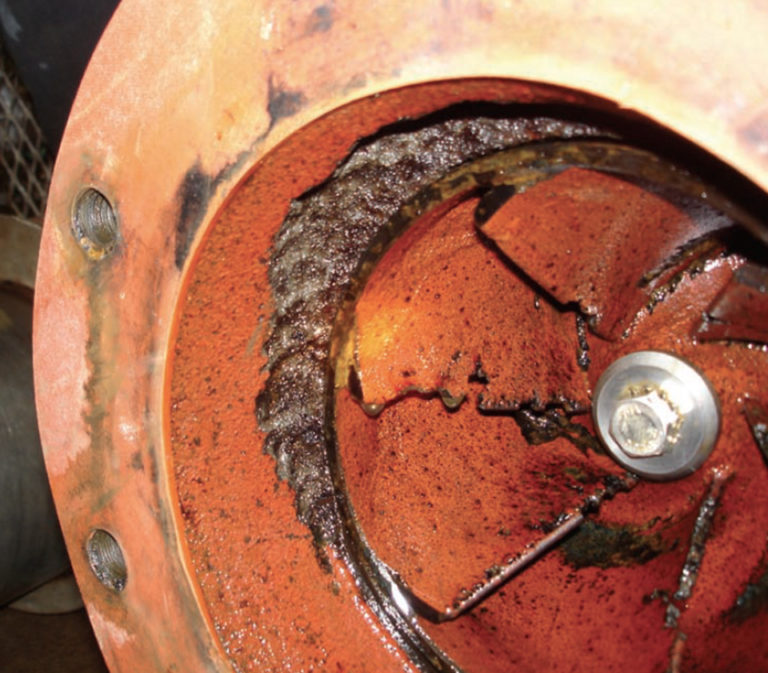
Cavitation occurs in a centrifugal pump when the effects of low internal water pressure lead to impeller damage. Proper design and installation of pumping systems can help.
Responsibility
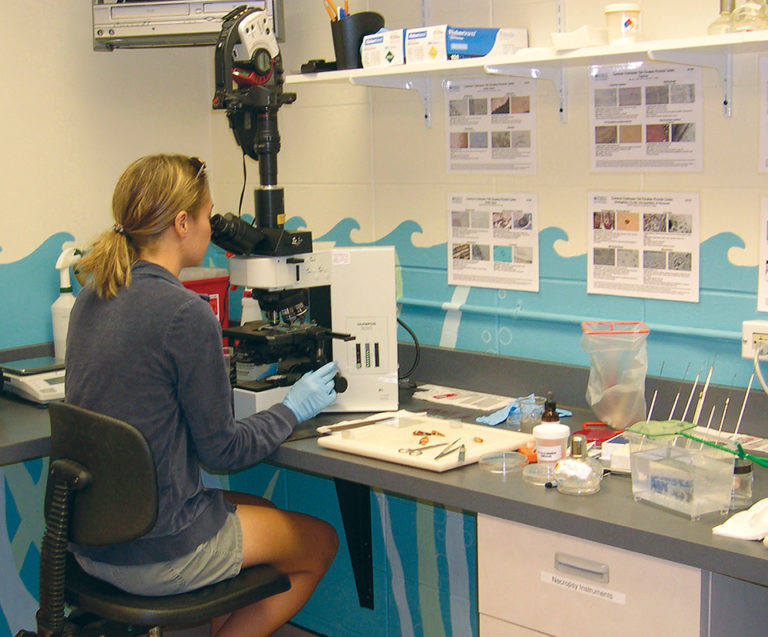
Recirculating systems and health management schemes should be designed concurrently to maximize their effectiveness.