


Seaweed compound cuts methane emissions in grazing cattle, study finds

A seaweed-derived feed additive reduced methane emissions in grazing cattle, highlighting potential for seaweed in livestock feed
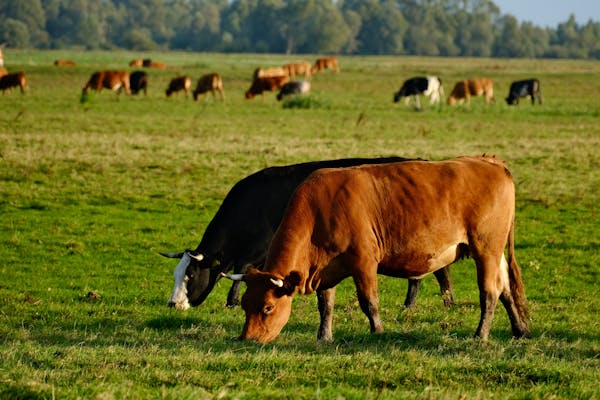
A compound derived from red seaweed has been shown to significantly reduce methane emissions in beef cattle raised in grazing systems, according to a recent study from Adelaide University.
The research, published in Frontiers in Animal Science, examined the use of a bromoform-based extract from the seaweed Asparagopsis in pregnant and lactating Angus cows.
Methane accounts for about 30 percent of the rise in global temperatures since the industrial revolution, according to the International Energy Agency, and reducing emissions in grazing systems remains a challenge because animals roam freely and feed intake is harder to control.
The study suggests the approach could offer a practical way to cut emissions under real-world farming conditions.
![Ad for [BSP]](https://www.globalseafood.org/wp-content/uploads/2025/07/BSP_B2B_2025_1050x125.jpg)
“Across the eight-week trial involving 80 Angus cows, methane emissions were reduced by between 49 percent and 77 percent in cows receiving the supplement,” said Kellie Wenham, a Ph.D. student from the School of Animal and Veterinary Sciences. “This is a substantial reduction, particularly in an extensive system where delivering consistent supplementation can be difficult.”
The study found no negative effects on calf growth or development. Calves born to treated cows showed normal weight gain from birth to 150 days, indicating no carry-over impacts from the supplementation.
“This is critical,” said Dr. Mariana Caetano, corresponding author and supervisor. “In breeding systems, it’s not just about the cow – you need to be confident there are no unintended consequences for their offspring.”
The cows maintained stable body weight throughout the trial, despite slightly lower feed intake with the supplement, suggesting potential cost savings for producers.
Start-up raises $20M to advance technology that converts methane to aquafeed
“In a commercial setting, reduced feed intake without a drop in productivity could translate into meaningful savings,” said Caetano. “That’s an important incentive for adopting bromoform, alongside the environmental benefits.”
While the results were positive overall, the study also found changes in blood chemistry in some supplemented cows, including signs of mild metabolic alkalosis.
“These changes were generally within acceptable ranges, but they highlight the need for further research into long-term health impacts and optimal dosing,” said Caetano.
Some minor changes were also observed in calf blood markers, although these remained within normal ranges. Most previous studies on bromoform have focused on feedlot or intensive systems, where diets can be closely controlled. This study is among the first to show strong methane reductions in breeding cows under grazing conditions.
“Our findings show that bromoform-based supplements can be effective beyond feedlots, including in pasture-based systems that dominate Australian beef production,” said Caetano.
The research team says more work is needed to refine delivery methods, optimize dosage and better understand long-term impacts on animal health and productivity. But Wenham said there’s “real potential.”
“Adoption will depend on ensuring the approach is safe, practical and cost-effective for producers,” Wenham said. “If we can get that balance right, this could be a powerful tool to help the livestock industry reduce its environmental footprint.”
Now that you've reached the end of the article ...
… please consider supporting GSA’s mission to advance responsible seafood practices through education, advocacy and third-party assurances. The Advocate aims to document the evolution of responsible seafood practices and share the expansive knowledge of our vast network of contributors.
By becoming a Global Seafood Alliance member, you’re ensuring that all of the pre-competitive work we do through member benefits, resources and events can continue. Individual membership costs just $50 a year.
Not a GSA member? Join us.
Author

Related Posts
Responsibility
Beefing up seaweed production to green up beef
Josh Goldman is on a mission to reproduce asparagopsis, a tropical seaweed that could have a significant impact on global greenhouse gas emissions.
Intelligence
Asparagopsis seaweed producer nets contract with cattle feed supplement maker
Blue Evolution, a producer of Asparagopsis taxiformis seaweed, will supply Blue Ocean Barns with a feed supplement to suppress cow burps.
Responsibility
Australis Aquaculture wins prestigious climate innovation award
Australis Aquaculture received the U.S. Secretary of State’s 2021 Award for Corporate Excellence in the Climate Innovation category for advancing climate-smart ocean farming of barramundi in Vietnam.

Aquafeeds
A new nutrient for aquaculture, from microbes that consume carbon waste
Biotechnology firm NovoNutrients aims to produce a line of nutraceutical aquafeed additives as well as a bulk feed ingredient that can supplement fishmeal. Its process includes feeding carbon dioxide from industrial gas to a “microbial consortium” starring hydrogen-oxidizing bacteria.