
New intensive pond aquaculture technology demonstrated in China
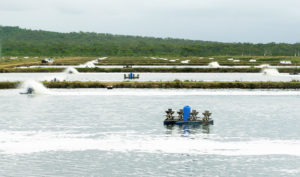
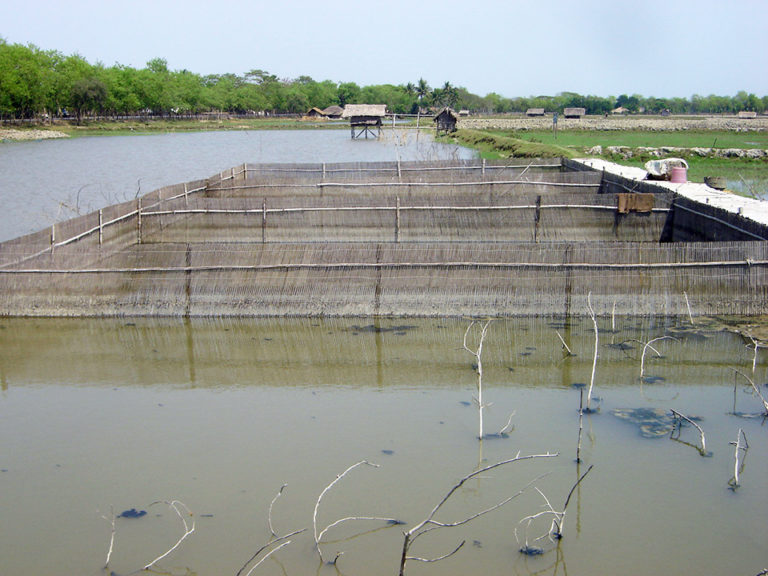
An in-pond raceway system for intensive pond aquaculture was successfully demonstrated in China by the international marketing program of the U.S. Soybean Export Council.
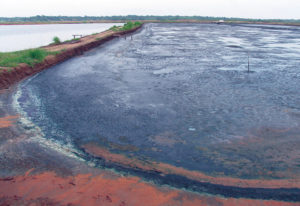
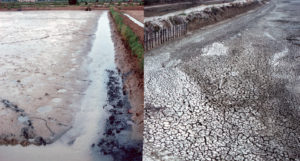
Hydrogen sulfide, which can form in pond bottom sediment, is toxic to aquatic animals because it interferes with reoxidation of cytochrome a3 in respiration.
An in-pond raceway system for intensive pond aquaculture was successfully demonstrated in China by the international marketing program of the U.S. Soybean Export Council.
Private aquafeed certification standards have been developed to bring trust and demonstrate responsible industry practices among aquafeed manufacturing stakeholders.
A farm project in Namibia established at a lake formed by an old tin mine incorporates a hatchery facility and grow-out cages to raise tilapia. It utilizes an existing water resource to improve food security and ensures the participation of disadvantaged local communities.
Natural factors, institutional support and a big appetite for fish have all contributed to the growth of aquaculture in Ghana, where about 80 percent of all farmed fish is tilapia.
Many consumers look for an eco-label or rely on a trusted retailer or restaurant to identify sustainable seafood. Certification programs convey this assurance by providing consistent information about the origins, food safety and environmental credentials of seafood.
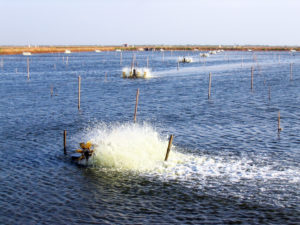
A carbon footprint is an estimate of the total carbon emissions resulting from the production, use and disposal of a product or service. Carbon footprints for aquaculture products result mainly from the use of manufactured feed and mechanical aeration.
Government policy and regulation are great determiners of whether aquaculture succeeds. Despite the spending of millions of government dollars on research and extension services, aquaculture production in the United States is declining.
With limited space and carrying capacities available in inshore areas, aquaculture operations are looking into offshore longline mussel aquaculture. In New England, USA, researchers are striving to increase production efficiency and perfect techniques related to mussel socking and eradication of tunicates.
Greater knowledge of fouling organisms and their settlement can help lead to greater effectiveness for cage net-cleaning machines. If cleaning is done regularly at certain times of the year, biofouling may be easier to remove or kept from settling on nets.
The reliability of trace element analyses reported by custom laboratories cannot be checked by simple techniques, and results may not always be accurate. One should check the reliability of major ion analyses by determining the charge balance and comparing the measured total ion concentration with the total ion concentration estimated from conductivity.
Tons of aquaculture byproducts are available as sources for fishmeal and fish oil to supplement the supplies obtained from fisheries. Innovative technologies are supporting more efficient use of these by-products in aquafeed.
In integrated multi-trophic aquaculture, farmers combine the cultivation of fed species such as finfish or shrimp with extractive seaweeds, aquatic plants and shellfish and other invertebrates that recapture organic and inorganic particulate nutrients for their growth.
A cooperative project established to study the small-scale culture of the native shrimp Farfantepenaeus notialis in Cameroon aims to develop family- and community-level production in the region.
Oxidants are used in aquaculture as disinfectants or to enhance water quality. Hydrogen peroxide and sodium carbonate peroxyhydrate can be sources of dissolved oxygen in emergency situations where mechanical aeration is not possible.
Research at the Texas AgriLife Research Mariculture Laboratory is investigating ways to improve the economic viability of super-intensive raceways for shrimp production.