


Stronger ports, smarter farms: Japan’s seafood sector remains on guard since the devastating 2011 earthquake

Aside from rebuilding ports and infrastructure, transforming Japan’s fisheries industry has required a rebuild of its human foundation
The Great East Japan Earthquake and Tsunami caused extensive damage to coastal areas of northeast Japan, known as the Tohoku region. Rubble, the loss of seaweed beds and tidal flats, and the buildup of sand and mud on reefs changed marine ecosystems, coastal aquaculture farms and fishing grounds. Ports, fishing fleets and aquaculture facilities were decimated.
Most of the damage spanned seven prefectures, from Hokkaido in the north to Chiba prefecture near Tokyo, with Iwate, Miyagi and Fukushima prefectures the hardest hit. Before the tsunami, these seven prefectures produced more than half of Japan’s fisheries output and more than one-third of its aquaculture. The region accounted for all domestic coho salmon and scallops, and more than 90 percent of salmon and Pacific saury (Cololabis saira) catches.
“The destruction of fishing boats and aquaculture facilities was by far the greatest impact of the earthquake and tsunami,” Dr. Yoshinori Shigihara of the National Defense Academy in Yokosuka near Tokyo, told the Advocate. “While both sectors are recovering amidst the reconstruction of key infrastructure, fisheries and aquaculture in Fukushima prefecture still face challenges from radiation-related rumors. Overall, progress is steady, but full recovery will take a long time. Much remains to be done.”
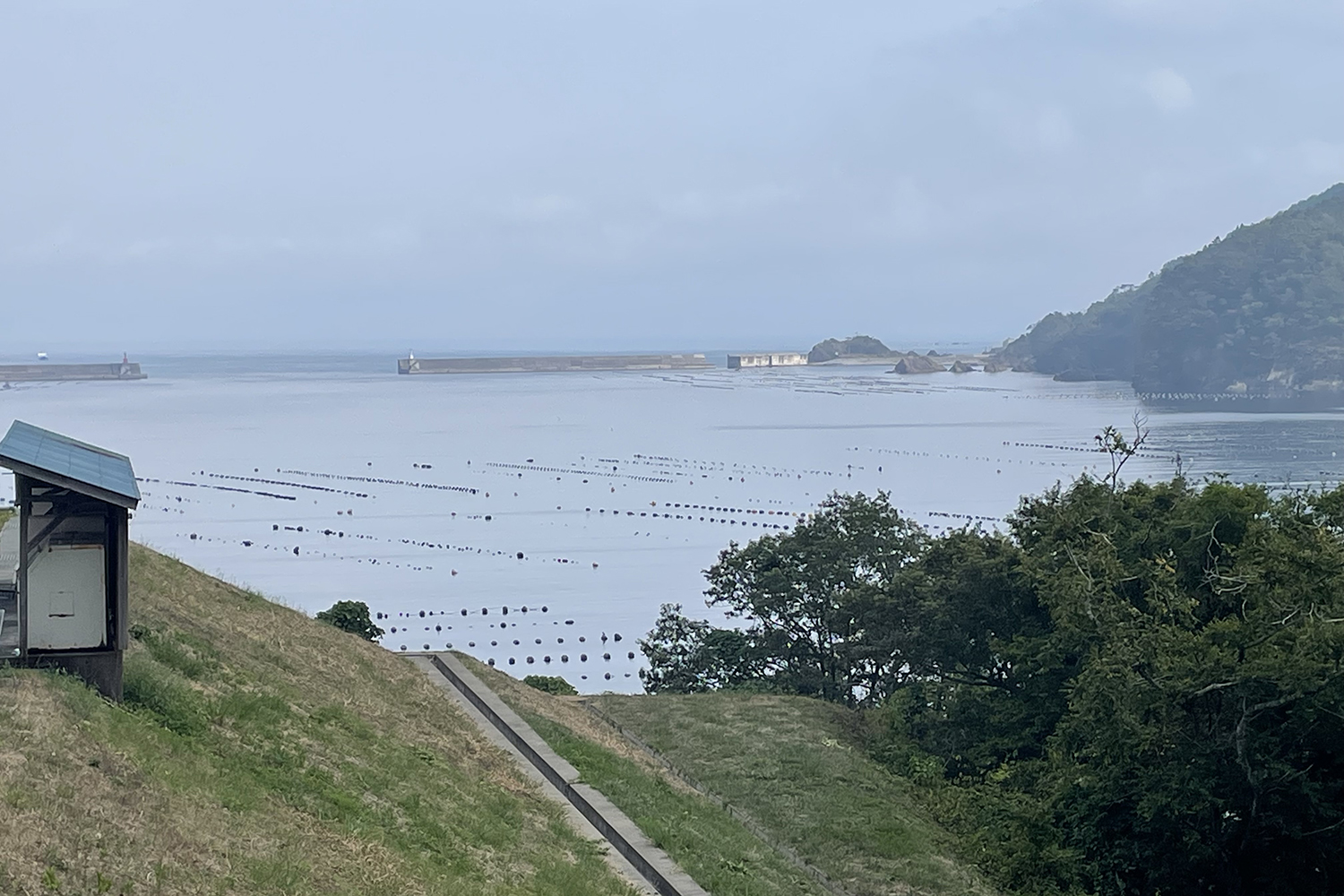
Japan’s experience provides a rare real-world stress test of fisheries and aquaculture disaster recovery. Today, most affected coastal towns and villages have been restored. By 2025, more than 80 percent of planned reconstruction in Iwate and Miyagi prefectures was complete, including reinforced seawalls, breakwaters and upgraded ports. The oyster industry on the Urato Islands in Miyagi prefecture fully revived by 2023, with rafts rebuilt and exports resumed. Fishing communities have also rebounded through subsidies, international aid, innovation and improved evacuation planning for workers.
![Ad for [BSP]](https://www.globalseafood.org/wp-content/uploads/2025/07/BSP_B2B_2025_1050x125.jpg)
One area that Japan has prioritized in its recovery is advancing scientific research to better understand and reduce future disaster impacts. By investing in rigorous hazard analysis and risk modelling, the country aims not only to rebuild what was lost, but to strengthen coastal industries against future tsunamis.
Dr. Anawat Suppasri of the International Research Institute of Disaster Science at Tohoku University in Sendai specializes in fragility functions – statistical models that estimate the probability of damage to fisheries infrastructure, such as rafts, lines and nets, based on tsunami intensity measures.
These functions are critical for disaster recovery because they provide a quantitative, probabilistic link between the intensity of a hazard, such as tsunami flow velocity or wave height, and the likelihood of damage to fishing equipment or aquaculture facilities. They can enable better risk assessment, damage estimation and the development of targeted, long-term mitigation strategies for fisheries and aquaculture.
“As conditions improve, fishermen and farmers are returning to their usual areas,” said Suppasri. “They know the tsunami risk in those areas, but the waters are nutrient-rich and good for faster fish growth. Through our research, we are trying to provide support by using simulations to recommend the right anchor weight or rope thickness, based on location and fishermen’s and farmers’ needs.”
Building on this work, researchers are combining statistical fragility models with physics-based simulations to create a more comprehensive picture of tsunami risk. By integrating field data, laboratory experiments and advanced computational modelling, they are able to test how aquaculture facilities, for example, behave under different tsunami scenarios before another disaster strikes.
Shigihara, Suppasri and their colleagues have also researched numerical simulations to reproduce tsunami flows and drifting behavior of equipment such as rafts or cages to support more accurate tsunami damage risk assessments and inform strategies for mitigating future damage.
“Numerical simulations can identify areas at high risk of tsunami damage, and countermeasures can be implemented based on these findings,” said Shigihara. “For example, in hazardous coastal areas, reducing the number of aquaculture facilities installed is one possible response.”
Alongside scientific research and infrastructure rebuilding, long-term recovery has also required attention to the people who sustain Japan’s coastal industries. Revitalizing fisheries and aquaculture depends not only on physical reconstruction, but on rebuilding communities, skills and confidence, especially among young people. Shigihara says that one step toward recovery is for fisheries and aquaculture to secure and educate the next generation of fishers and farmers.
“Both sectors have become more difficult to sustain, with an increasing number of individuals choosing to leave altogether after the earthquake and tsunami,” he said. “However, the crisis facing fisheries and aquaculture became widely known nationwide through media coverage and other channels. As a result, some areas have seen more efficient fisheries and aquaculture management using the latest technology, or moves to establish new initiatives centered on the younger generation.”
Indeed, the focus has shifted from rebuilding ports and infrastructure to transforming Japan’s fisheries industry and rebuilding its human foundation. Today, recovery means reshaping the very structure of fisheries.
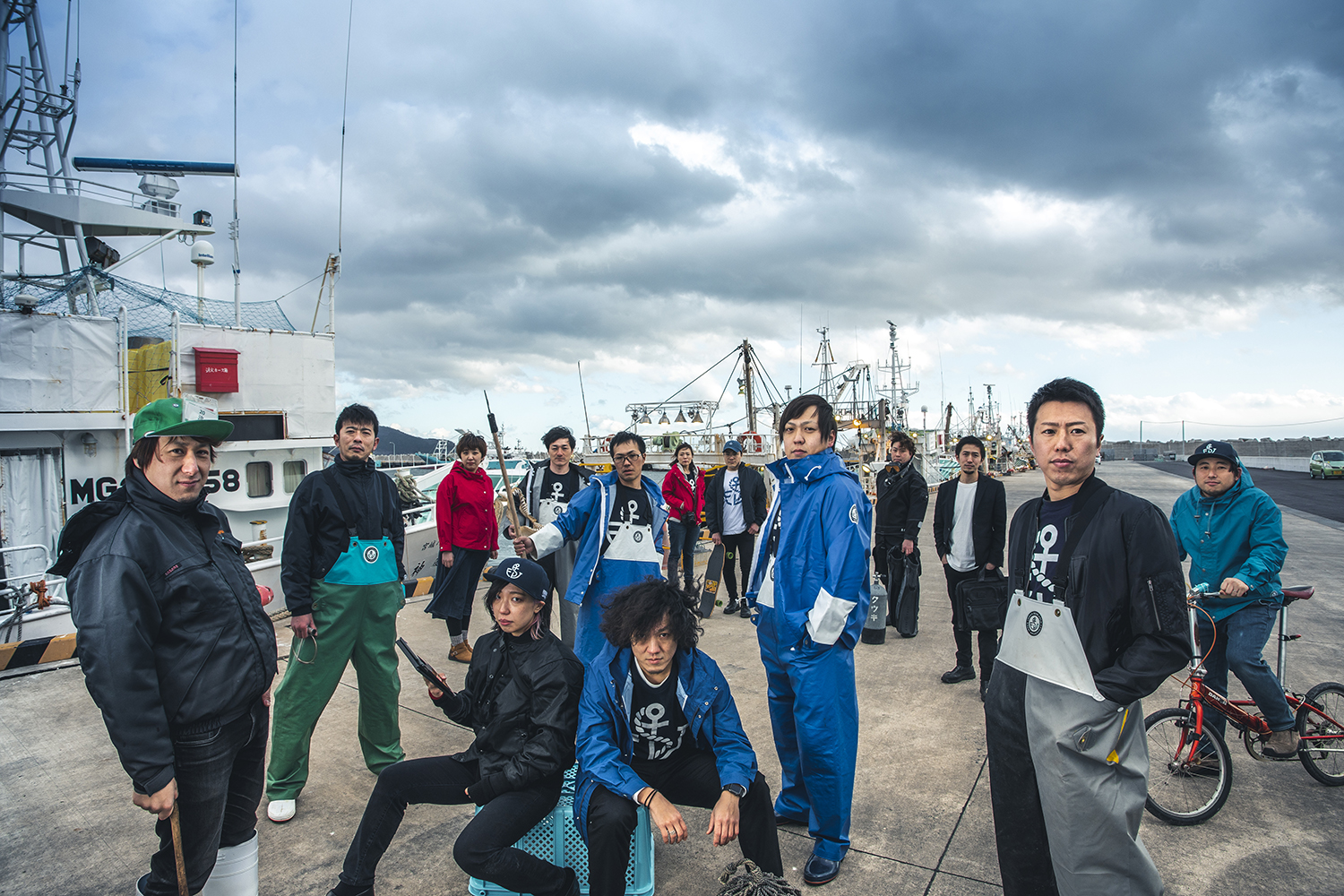
Leading this effort is a group of young fishermen from Ishinomaki, Miyagi Prefecture, who formed a cooperative called Fisherman Japan in 2014 to promote fishing as a cool, innovative and successful industry and encourage people to become its leaders of the future. The group has built a diverse network to challenge the status quo, bringing together people with diverse skills and expertise to support and empower fishermen, seafood processors and wholesalers, while strengthening the industry ecosystem.
Fisherman Japan’s work centers on four pillars: transforming industry structures to create greater economic leverage and resilience; developing future fishermen to reinforce fisheries’ human foundation; promoting the true appeal of fisheries to elevate its social presence and attract talent; and ensuring long-term sustainability and responsible resource stewardship.
Salamu Watanabe, fishery recruitment and training coordinator at Ark Shell Fisherman, agrees with Shigihara that revitalization hinges on nurturing the next generation.
“Across many coastal regions, aging populations and disaster-related losses continue to create labor shortages,” he said. “Without building an industry structure in which young people can envision a future, fishing grounds, accumulated skills, and generations of community knowledge will disappear. True recovery means adapting fisheries to the realities of today, rather than being bound by the structures of the past. We call everyone involved in seafood – from fishermen to processors, distributors and supporters – fishermen. For us, recovery is not simply about restoring what once existed. It’s about reshaping the industry so that the next generation chooses it as a viable and inspiring career path.”
Following the March 11th earthquake and tsunami, Japan has utilized its experience to provide aid and knowledge to other nations facing similar disasters. On January 15th, 2022, an eruption of the Hunga Tonga-Hunga Ha’apai submarine volcano off the coast of Tonga in the South Pacific Ocean had widespread impacts, not only in Pacific Island countries such as Fiji, but also in Japan, the United States and Chile.
The agriculture, forestry and fishing sectors in Tonga were directly harmed, with losses estimated at U.S. $20.9 million. Having already played a major role in providing foreign aid to fisheries in the region, Japan’s experiences and expertise are helping to inform fishery management in Tonga to enhance resilience and adaptive capacity, detect any potential impacts early and develop appropriate aid responses for recovery efforts.
Shigihara and Suppasri stress that strengthening physical infrastructure alone is not enough. They argue that a broader understanding of risk – particularly the often-overlooked impacts on fisheries and aquaculture – is essential to build long-term resilience in coastal communities.
“To the best of my knowledge, the vulnerability of fisheries and aquaculture to tsunamis is largely unrecognized globally, yet both sectors are vital to regional economies like those in Tohoku,” said Shigihara. “I believe it is crucial to also raise awareness that similar risks exist in other countries affected by tsunamis, that these risks are high and could recur in the same locations.”
“It is difficult to predict tsunamis like the one in 2011 and plan support accordingly,” said Suppasri. “But fishermen and farmers also have practical knowledge from reinforcing facilities against strong winds or waves from typhoons – such as adapting anchor types and materials. Saving lives is the top priority, but recovery efforts must combine local knowledge and experience with scientific expertise.”
In the years since the 2011 disaster, Japan’s fisheries and aquaculture have rebuilt and innovated, particularly in high-value species production such as bluefin tuna. Yet key issues remain. The drive to maximize harvests often outweighs investment in robust disaster prevention, and tsunami countermeasures are still not fully integrated into the design and management of many facilities.
For now, the most practical step is to reduce potential losses by strengthening vessels, ports, cages and onshore infrastructure, and by embedding risk planning into everyday operations. With greater emphasis on preparedness alongside productivity, the sector can become more resilient – and there is reason to hope that disaster readiness will increasingly be treated as essential, not optional, in the years ahead.
Now that you've reached the end of the article ...
… please consider supporting GSA’s mission to advance responsible seafood practices through education, advocacy and third-party assurances. The Advocate aims to document the evolution of responsible seafood practices and share the expansive knowledge of our vast network of contributors.
By becoming a Global Seafood Alliance member, you’re ensuring that all of the pre-competitive work we do through member benefits, resources and events can continue. Individual membership costs just $50 a year.
Not a GSA member? Join us.
Author
-

Correspondent Bonnie Waycott became interested in marine life after learning to snorkel on the Sea of Japan coast near her mother’s hometown. She specializes in aquaculture and fisheries with a particular focus on Japan, and has a keen interest in Tohoku’s aquaculture recovery following the 2011 Great East Japan Earthquake and Tsunami.
Related Posts
Fisheries
‘It’s been done for decades’ – How the upcoming Fukushima water release could impact Japan’s fishing industry
In Japan, discussions continue and concerns grow as authorities prepare for the Fukushima water release into the Pacific Ocean.
Innovation & Investment
With water treatment tech, has Japanese collaborative cracked the code on sockeye salmon farming?
Operators of the world’s first land-based sockeye salmon farm say their water treatment technology could mark a turning point for aquaculture in Japan.
Fisheries
IAEA team in Japan to review Fukushima water release plan
The Fukushima water release is set to start in a few months, but with growing concerns, IAEA experts will review Japan's final plan first.
Intelligence
In Japan, tiger puffers find themselves in hot water
A technique to farm tiger puffers in hot spring water was invented to revitalize the town of Nasu-karasuyama and is now spreading to other areas of Japan.