


Catch & Culture Review: Bioeconomic modeling for tuna fisheries and bespoke fisheries management

Simulated analysis of harvest strategy trade-offs for tuna stocks in the Western and Central Pacific Ocean

The Central Pacific Ocean (WCPO) supports the world’s largest and most productive tuna fisheries. To promote sustainable use of these key stocks, the Western and Central Pacific Fisheries Commission (WCPFC) has been progressively implementing harvest strategies. Harvest strategies have become a cornerstone of modern fisheries management, delivering a structured, science-based framework that promotes long-term sustainability, lowers risk and brings greater predictability to decision-making.
A study by Ciara Willis and colleagues in the United States, Australia, Philippines, Indonesia and Canada evaluated the ecological, economic and social consequences of three harvest-strategy scenarios that are of particular interest to WCPO stakeholders: (1) rebuilding juvenile tuna populations through lower fishing mortality, (2) maintaining adequate baitfish stocks for pole-and-line fleets and (3) enhancing the status of bigeye tuna (Thunnus obesus) and yellowfin tuna (Thunnus albacares).
By clearly connecting predefined management objectives with monitoring data and specific actions, harvest strategies replace ad-hoc or politically driven responses with transparent, rule-based systems. At their heart are harvest control rules (HCRs), which define precise management responses – such as changes to catch or effort limits – according to stock-status indicators like biomass or fishing mortality. When properly designed, HCRs can support a wide array of goals, from stock rebuilding and economic optimization to greater equity in resource access.
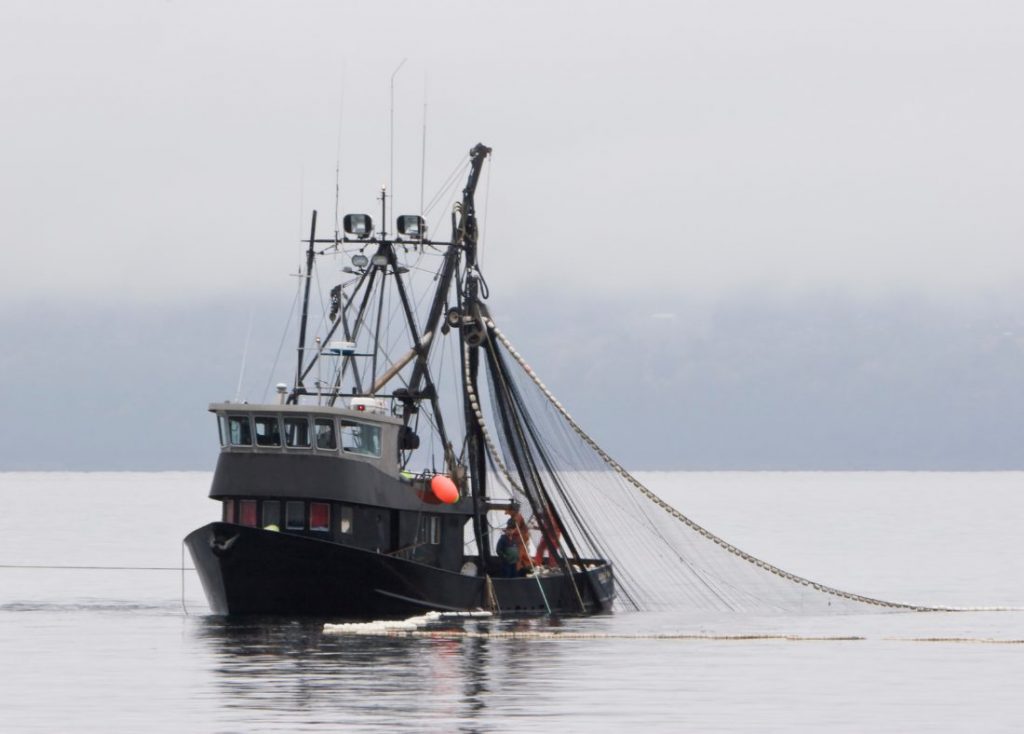
The authors employed a scenario-based bioeconomic modelling approach to simulate catches of skipjack tuna (Katsuwonus pelamis), yellowfin tuna and bigeye tuna across a range of fleets – longline, purse-seine and small-scale fisheries – with detailed focus on Indonesia, the Philippines and Vietnam, as well as the wider WCPO fleet components.

Results indicate that, in the long term, all three harvest strategies deliver clear ecological improvements alongside positive net economic gains. Fleet-level outcomes, however, differed substantially within each country, with purse-seine operations generally incurring the largest simulated economic costs. Nevertheless, when domestic fleets were considered collectively, overall economic benefits rose for Indonesia, the Philippines and Vietnam under every scenario.
This work establishes a foundational bioeconomic modelling platform for testing proposed tuna harvest strategies and demonstrates that the conservation costs of an international fishery can be distributed more equitably by incorporating country-specific domestic management perspectives.
Relevance of research findings to the industry

For tuna fishers, processors and exporters across the Pacific, this research is immediately useful. It moves beyond simple biomass targets to quantify real-world trade-offs in dollars, jobs and catch shares. Industry stakeholders, particularly purse-seine operators who may face short-term pain, can now consider concrete numbers showing that strategic conservation can still deliver long-term profitability when viewed across entire national fleets. Governments in Indonesia, the Philippines and Vietnam, which together account for a huge share of WCPO tuna landings, gain evidence that domestic management adjustments can help shoulder the “conservation burden” more fairly rather than relying solely on international negotiations.
The modeling platform also offers a roadmap for designing compensation mechanisms, such as quota transfers or gear-transition support, to help fleets that bear disproportionate costs. Processors and retailers committed to sustainable sourcing will benefit from the transparent, science-backed scenarios that strengthen certification claims and market access. Overall, the study provides the industry with credible forecasts that can inform investment decisions, fleet modernization and advocacy positions at WCPFC meetings.
Perspectives
This study showed that well-designed rules can generate win-win outcomes for ecology and economics and it challenges the outdated view that conservation and profit are always in conflict. The emphasis on domestic-level equity demonstrates that international agreements work best when they account for differences in fleet composition and national priorities.

As harvest strategies gain momentum, highlighted by recent progress on skipjack, long-term implementation for tropical tunas in the WCPO appears increasingly feasible. However, success will depend on improved data and models incorporating fleet dynamics, policies addressing biological and socio-economic linkages, sustained political will and consistent rule adherence despite short-term pressures and geopolitical challenges. Inclusive decision-making that incorporates small-scale fishers and coastal communities, along with stronger coordination among members and national jurisdictions, will be essential – particularly as climate change alters stock distribution and access. Addressing these issues will enhance harvest strategies.
Overall, the findings of this study highlight an important lesson in fisheries governance: transparent, simulation-driven approaches can replace ad-hoc decision-making with predictable, equitable rules. As climate change and growing demand put increasing pressure on Pacific tuna resources, tools like this bioeconomic platform may help to keep both fish stocks and fishing communities healthy for generations to come.
New insights into the life history of mutton snapper: First age-based study from the southern Gulf of Mexico

The mutton snapper (Lutjanus analis) is widely distributed in temperate and tropical climates, in waters from Massachusetts (U.S.) and Bermuda to southern Brazil, including much of the Gulf of Mexico and Caribbean Sea. This popular fish species supports commercial, artisanal and recreational fisheries throughout its distribution area. Its populations in Florida, the U.S. South Atlantic and the northern Gulf of Mexico have declined significantly, with commercial landings declining by up to 60 percent over 27 years. Determining the population structure of mutton snapper is essential because species with low to moderate growth rates tend to decline more rapidly under fishing pressure.
In a study authored by Ximena Renán and colleagues in Yucatán, Mexico, the authors present the first detailed, age-based life history profile for L. analis in the southern Gulf of Mexico. This medium-sized reef fish supports important fisheries across the region, yet until now managers have had to rely on life-history data from other parts of its range or on length-based approximations that can be misleading. The study is especially timely because mutton snapper populations have shown worrying declines in biomass in several areas and some stocks are already considered overexploited.
Between January 2018 and July 2023, the researchers collected 433 specimens directly from commercial fishing operations. The fish ranged from 19.0 to 79.3 cm fork length and 0.13 to 9.10 kg in total weight, covering a wide spectrum of sizes and ages. Working with sagittal otoliths – the small calcium carbonate structures in the fish ear that record growth rings much like tree rings – researchers first validated that one annulus forms each year. Marginal increment analysis showed that the opaque bands are laid down consistently between March and June, confirming the annual periodicity essential for reliable ageing.
Ages turned out to span from young-of-the-year (0+) all the way to a remarkable 28 years, although the bulk of the catch consisted of 4- and 5-year-old fish. This age distribution already hints at a population that is being harvested relatively early in life. To describe growth, the authors compared three widely used non-linear models: von Bertalanffy, Gompertz and logistic. Using standard model-selection criteria, they determined that the von Bertalanffy growth model fit the data best, and from these values they calculated an estimated lifespan of roughly 16 years for the species and region studied.
Growth trajectories were statistically indistinguishable between males and females, but reproductive timing differed noticeably. Males reached sexual maturity before their first birthday, while females took about 1.6 years. Natural mortality was estimated at 0.35 per year overall, yet it declined exponentially as fish grew older and larger – an important note that many stock-assessment models have traditionally overlooked by assuming constant mortality.
Overall, the results show a fish species that grows at a moderate pace, lives a relatively long time for a snapper and matures early. These traits make L. analis moderately resilient to fishing but still vulnerable if exploitation rates stay high, especially given the truncated age structure observed in the commercial catches.

Relevance of research findings to the industry

For the commercial and artisanal fishers who depend on mutton snapper, this study provides the missing age-based foundation needed for modern fisheries management. Because species with low-to-moderate growth rates lose biomass faster under sustained fishing pressure, the new parameters allow scientists to build more accurate stock-assessment models tailored to the southern Gulf of Mexico. Regulators can now set size limits that protect the youngest fish until they have had a chance to spawn at least once and seasonal closures can be timed around the March–June period when annuli form and spawning may overlap.
The early maturity (especially in males) offers a small buffer against recruitment overfishing, but the long lifespan of the species means that any reduction in older age classes will take years to rebuild. Fishery managers can therefore use the time-varying natural mortality estimates to run more realistic simulations of future stock status under different harvest scenarios. In practical terms, this research provides the industry and government agencies in the area studied a clearer roadmap for setting sustainable quotas, designing marine protected areas and monitoring recovery trends – ultimately helping to safeguard both the resource and the livelihoods that rely on it.
Perspectives
The results of this research are an important step forward, filling a long-standing data gap for one of the Gulf’s commercially valuable snappers. By demonstrating that region-specific life-history information can differ from data collected elsewhere (for example, in Cuban or Florida waters), it shows that one-size-fits-all management approaches often fall short. Looking ahead, continued monitoring will be essential to detect possible shifts in growth or maturity schedules caused by changing ocean temperatures, habitat loss, or evolving fishing pressure.
Future work could usefully expand the sample size for older fish, explore spatial variation across the entire Gulf, or integrate genetic analyses to understand connectivity between populations. Incorporating the time-variable natural mortality schedule into routine stock assessments represents a methodological advance that other snapper fisheries might adopt.
Overall, this age-based life history study provides valuable new information on this commercially important but poorly known species and given its long-lived nature and slow growth to achieve maximum length, a precautionary management approach is recommended for mutton snapper to prevent overexploitation of its stocks.
Catch & Culture Review: How climate change may alter the trajectory of North Sea demersal fisheries
Recovery potential and demographic profiles of exploited marine bony fish populations

Marine fishes were once widely considered inexhaustible and immune to the effects of fishing. However, the dramatic collapse of numerous once-abundant fisheries and their often delayed or unsuccessful recoveries have disproven this assumption. This perceived resilience was rooted in early theoretical population dynamics models, which formed the basis of modern fisheries science built largely around the concept of maximum sustainable yield (MSY).
Although the use of MSY has faced long-standing criticism, its underlying equilibrium principles – particularly the notion that per-capita reproductive output and juvenile survival rates increase as stock abundance declines – continue to strongly influence fisheries science today. While equilibrium concepts and compensatory density dependence remain central to fisheries science, repeated stock collapses and a growing appreciation of environmental influences have raised important questions about their real-world applicability.
To help better understand demographic variability in harvested marine fishes, a study by David Keith and colleagues from Canada, Switzerland, France, the United States and Portugal applied standard conservation biology metrics to life table data for 77 assessed stocks from the North Atlantic and Northeast Pacific Oceans.
Median annual population growth rates increased only modestly when fishing mortality was removed. As abundance declined, these growth rates typically rose and became more variable – consistent with compensatory dynamics – yet the growth of many stocks was sustained by just a few years of exceptionally high productivity. Noticeably, a stock’s ability to recover from low abundance showed little dependence on life-history characteristics and instead displayed strong geographical differences, even among populations of the same species (notably Atlantic cod, Gadus morhua). Life-history traits alone proved to be poor predictors of annual growth rates or future recovery potential, while regional factors appeared far more influential.
Overall, recovery potential remained relatively high: Simulations indicated that 62 of the 77 stocks would have a high probability of doubling in size within 20 years if fishing ceased. Low recovery potential occurred only in stocks with both low median and low variability in median annual population growth rates. These results highlight the need to base sustainable management and rebuilding plans on stock-specific demographic parameters rather than broad species-level generalizations.

Relevance of research findings to the industry
These findings have significant practical implications for fisheries managers and the commercial fishing industry. Traditional management approaches often rely on species-wide generalizations and maximum sustainable yield concepts rooted in equilibrium assumptions. This study strongly supports moving toward stock-specific demographic assessments when setting quotas, designing rebuilding plans, or evaluating recovery timelines.
For industry stakeholders – particularly those involved in groundfish, flatfish and pelagic fisheries – the results offer cautious optimism: Most depleted stocks retain substantial recovery potential if fishing pressure is sufficiently reduced. However, the dominance of regional factors means that one-size-fits-all recovery strategies are unlikely to succeed. Managers in different regions (like management areas in the Pacific, and elsewhere) may need tailored approaches based on local oceanographic and ecosystem conditions rather than broad taxonomic rules.
The research also highlights the risk of depending too heavily on occasional strong recruitment years, underscoring the need for precautionary management that accounts for high natural variability. Processors, quota holders and coastal communities stand to benefit from more realistic rebuilding timelines and reduced uncertainty in stock projections, which could help stabilize markets and support long-term economic planning.
Perspectives
The results of this study make a compelling case for rethinking how marine fish stocks are assessed and managed. By demonstrating the limitations of life-history traits as predictors and emphasizing stock-specific and regional dynamics, the study pushes fisheries science toward more gradual, data-intensive approaches. In an era of rapid climate change, where environmental conditions are shifting and influencing recruitment patterns, understanding these regional differences will become even more critical for accurate forecasting.
Future research could usefully expand this framework to more stocks globally, incorporate explicit environmental drivers (such as temperature or prey availability) directly into demographic models and explore how fisheries-induced evolution might be altering these patterns over time. Limitations such as the reliance on assessment data that may contain uncertainties also point to the value of continued validation with independent survey information.
Overall, these results reinforce that while many exploited marine fish populations still possess strong recovery capacity, realizing that potential will require management strategies that are more adaptive, regionally informed, and based on robust, stock-specific data rather than outdated generalizations. At a time when many fisheries globally are confronting simultaneous pressures from overfishing and environmental change, these empirical, demographically grounded insights offer a timely and valuable contribution to sustainable ocean governance.
Now that you've reached the end of the article ...
… please consider supporting GSA’s mission to advance responsible seafood practices through education, advocacy and third-party assurances. The Advocate aims to document the evolution of responsible seafood practices and share the expansive knowledge of our vast network of contributors.
By becoming a Global Seafood Alliance member, you’re ensuring that all of the pre-competitive work we do through member benefits, resources and events can continue. Individual membership costs just $50 a year.
Not a GSA member? Join us.
Author
-

Editor Emeritus
Related Posts
Fisheries
Fisheries in Focus: Science shows sustainable seafood protects rainforests and biodiversity
A recent paper shows how threatened or endangered animals on land and in the sea would be hurt if livestock protein replaced wild-caught fish protein.

Fisheries
A deep learning model for short- and medium-term predictions of spatiotemporal distribution of marine fishing effort
A deep learning model to predict fishing effort can simultaneously interpret and integrate fishing intensity and environmental factors.
Fisheries
How aging uncertainty of major tuna species impacts the estimation of growth functions
Aging error and age range influences the uncertainty of growth estimation in major tuna species, necessitating improved accuracy of age analysis.

Fisheries
Relationship between, and prediction of, the annual catch of bigeye tuna and climate factors
Study provides evidence for the sustainable development of bigeye tuna fisheries and a better understanding of the impacts of climate change.