


The world is expanding marine protected areas. Will sewage pollution undermine them?

Conservation alone isn’t always enough: Studies show that most MPAs are disproportionately impacted by improper sanitation
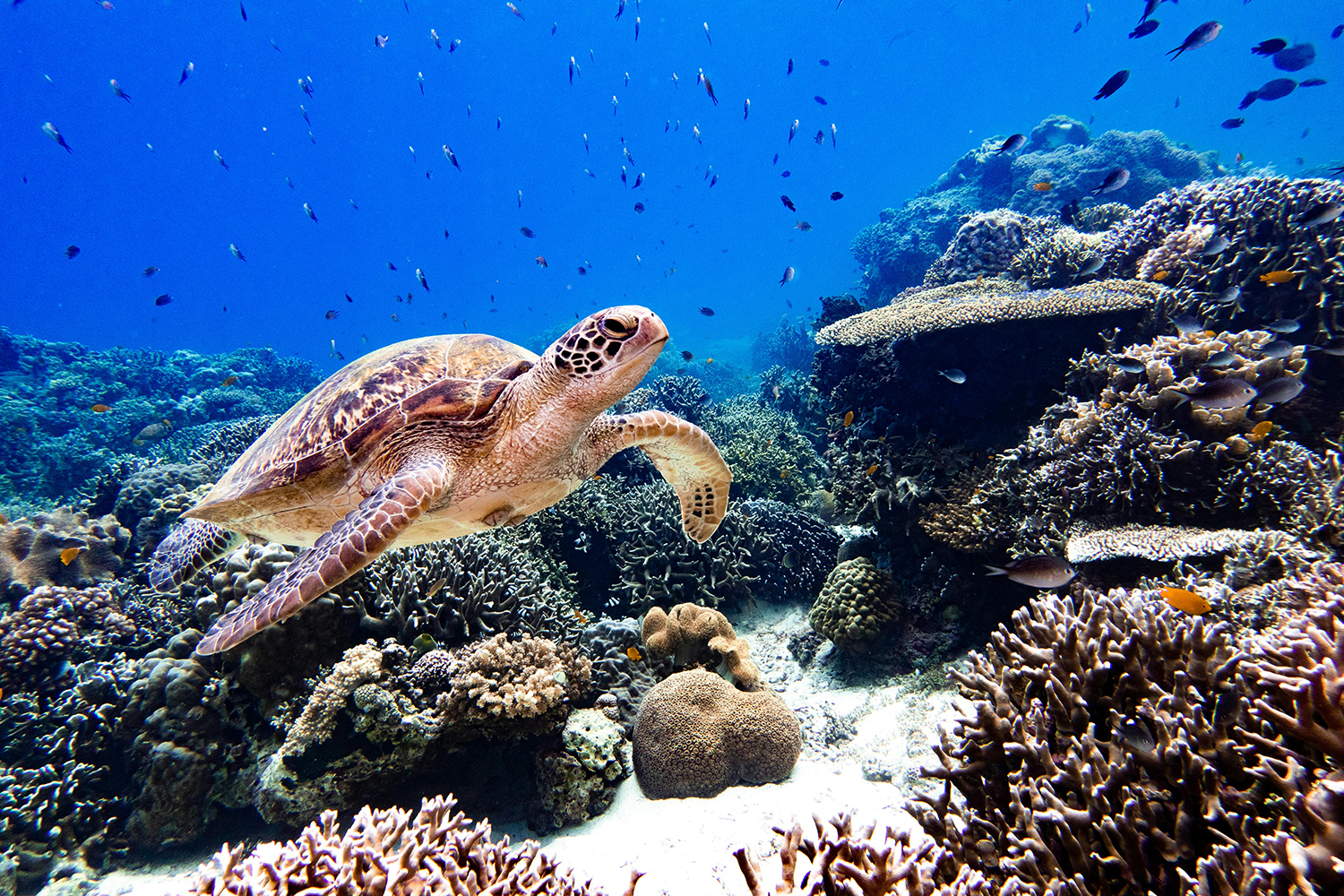
When more than 170 nations pledged to protect 30 percent of the world’s oceans by 2030 at the 2025 UN Ocean Conference, the commitment was lauded as a major achievement for biodiversity, high seas regulation and efforts to curb plastic pollution. But recent studies suggest that, given the scale of human-inflicted damage, ocean conservation alone may fall far short of saving our seas.
In April, the Wildlife Conservation Society (WCS) and the University of Queensland released a study showing that nearly three out of four of the world’s marine protected areas (MPAs) are impacted by sewage pollution. The problem is worse in regions vital to coral reefs and tropical marine life, where up to 92 percent of MPAs are affected and pollution levels are 10 times higher than in surrounding, unprotected waters.
The findings raise a difficult question: How effective are marine protected areas from fishing pressure and other commercial activity if sewage pollution continues to flow in?
“There’s a massive funding shortfall in sanitation,” said Dr. Amelia Wenger, global water pollution lead for WCS. “Three billion people lack access to safe sanitation, and in areas without good sanitation systems, the adage ‘dilution is the solution for pollution’ means that waste often ends up in water bodies.”
![Ad for [BSP]](https://www.globalseafood.org/wp-content/uploads/2025/07/BSP_B2B_2025_1050x125.jpg)
Wastewater – the used water discharged from homes and businesses that flows through sewage systems into rivers and the ocean – contains nutrients, pathogens and chemicals that damage coral reefs, seagrass ecosystems and coastal wildlife. Its presence has been linked to the decline of coral reefs worldwide, the spread of harmful algae blooms and even brain disease in dolphins. And its presence in MPAs is not isolated to developing nations.
“When we looked at the global footprint of pollution, we realized this is a very widespread problem,” Wenger said. “Take the United Kingdom, for example, which has had a massive sewage crisis for the last several years. Sanitation services in the UK are privatized, and because those companies have not invested in maintenance, there are really high levels of pollution and raw sewage being dumped into the Lake District. This is a country that can afford to invest in its sewage system – but isn’t.”
Even for those countries who treat their wastewater before releasing it, the different minimum standards for treatment mean that harmful nutrients may still be present.
“Dump all those nutrients into the ocean and you start getting issues,” Wenger said. “Treatment needs to be about advanced nutrient removal and then reusing that water, not dumping it into the ocean. Treated water is a valuable resource and the ocean doesn’t want it!”
While climate change can be an overwhelming problem, pollution is solvable, she emphasized.
“We know how to do this locally and at scale, and one of the added benefits is that it’s a huge climate resilience strategy,” she said. “The problem is that pollution is very under-resourced. Our Shared Seas did an analysis of the global ocean funding landscape and found that between 2015 and 2024, only 2.36 percent of all ocean financing went towards pollution. “
In contrast, Wenger said marine protected areas received almost 25 percent of the funding, adding that “we cannot continue ignoring and under-resourcing this huge threat.”
“30 by 2030 has gained so much attention that we forget it’s one target in 20 that we’re trying to achieve, all of which are needed to recover biomarine diversity,” she continued. “Wastewater management is one tool, fishing restrictions are another, but many interventions are required.”
Roberto Danovaro, a professor at Marche Polytechnic University in Italy, agrees. He was one of the authors of a global analysis of 764 marine restoration projects that found that passive protection – defined as simply ceasing harmful activity – can take up to 200 years to produce recovery.
What’s needed, he argues, is active restoration: interventions designed to accelerate ecosystem recovery, such as stabilizing the seabed or reintroducing habitat-forming organisms like seagrass meadows, mangroves, kelp forests and coral reefs. These ecosystems foster habitats for other marine species.
“Passive restoration means, let’s remove the stressors and then exploit the resilience of the nature of the ecosystems, so they might recover. It’s about removing stressors and monitoring,” he said. “By contrast, active restoration is about removing stressors, and then intervening and monitoring, which is necessary to accelerate the recovery. The best solution is a combination of the two because we have destroyed or critically damaged 75 percent of marine ecosystems.”
The idea for the future is creating nursery grounds and farms of habitat-forming species in MPAs. These can then be exported to other regions, where these habitats were removed or destroyed, to repopulate.
Danoravo pointed to the Redress Project, launched by the European Union to restore deep sea systems like coral and sponge fields damaged by trawling.
“One solution is about developing artificial structures to recover larvae and translocate them in different areas where they might continue to grow,” he said. “Another is to collect deepwater coral fragments and multiply them in laboratories before reintroducing them at sea. These are strategies we’re using from Ireland to the Mediterranean Sea, and they’re working well. But because corals don’t grow fast, recovering an impacted coral reef might take several decades. The first solution is to prevent the damage.”
How technology is improving seafood quality and consumer satisfaction
Danoravo cautioned that fishing should be restricted in areas with vulnerable ecosystems and permitted in others.
“If we fish everywhere, we are providing no option for recover,” he said. “In an ideal world, we should move from hunting seafood to cultivating and rearing marine species – but this can’t be done all at once. So, a good transition is to restrict and limit the areas and depths where trawling can occur.”
Permitting fishing to a depth of 400 to 500 meters could be a good solution to start restocking species, he suggested.
“This would be a simple measure of ecosystem-based management, and where these measures have been adopted, the results have been outstanding within a couple of years,” Danoravo said. “In the Adriatic Sea, establishing a new, restricted area to restock cod had such good results that even the fishermen were requesting an extension of the restricted area. The same happened with restrictions on octopus fishing in the Basque Country in northern Spain. After a while, fishermen see more fish, and they appreciate the effort.”
In general, however, he said bottom trawling is descending 50 meters deeper each year, because fishermen aren’t finding sufficient fish at shallower depths.
“We’re continuing to erode the natural capital and existing stocks by overfishing,” Danoravo lamented. “We’ve shown that when you restrict a fishery, you sustain fishing in the surrounding areas. The problem is regulation: You can create borders and establish marine protected areas, but illegal fishing continues to cause damage.”
Now that you've reached the end of the article ...
… please consider supporting GSA’s mission to advance responsible seafood practices through education, advocacy and third-party assurances. The Advocate aims to document the evolution of responsible seafood practices and share the expansive knowledge of our vast network of contributors.
By becoming a Global Seafood Alliance member, you’re ensuring that all of the pre-competitive work we do through member benefits, resources and events can continue. Individual membership costs just $50 a year.
Not a GSA member? Join us.
Author
-

Vancouver-based correspondent Lauren Kramer has written about the seafood industry for the past 15 years.
Related Posts

Intelligence
AI is becoming an ‘integral part’ of fisheries management and seafood processing
Artificial intelligence (AI) is playing a larger role in seafood, as data is at the heart of the so-called fourth industrial revolution.
Fisheries
An inverted management strategy allowing limited fishing of endangered marine fish species in marine protected areas
If implemented correctly, endangered species would recover in the larger areas outside MPAs and fishers would benefit from the conservation value.
Innovation & Investment
‘We want change’: How a seafood database aims to influence seafood investment decisions
Planet Tracker’s seafood database evaluates seafood companies’ exposure to sustainability risks like overfishing and IUU fishing.
Fisheries
Can repurposing fish aggregating devices make MPAs more effective?
A new study suggests that fish aggregating devices could be repurposed to enhance marine protected areas (MPAs).