


Responsible Seafood Innovation Award finalist: Why using 100% of Great Lakes fish is ‘the right thing to do’

The 100% Great Lakes Fish Initiative is a 2026 Responsible Seafood Innovation Award finalist for turning fish byproducts into economic opportunity
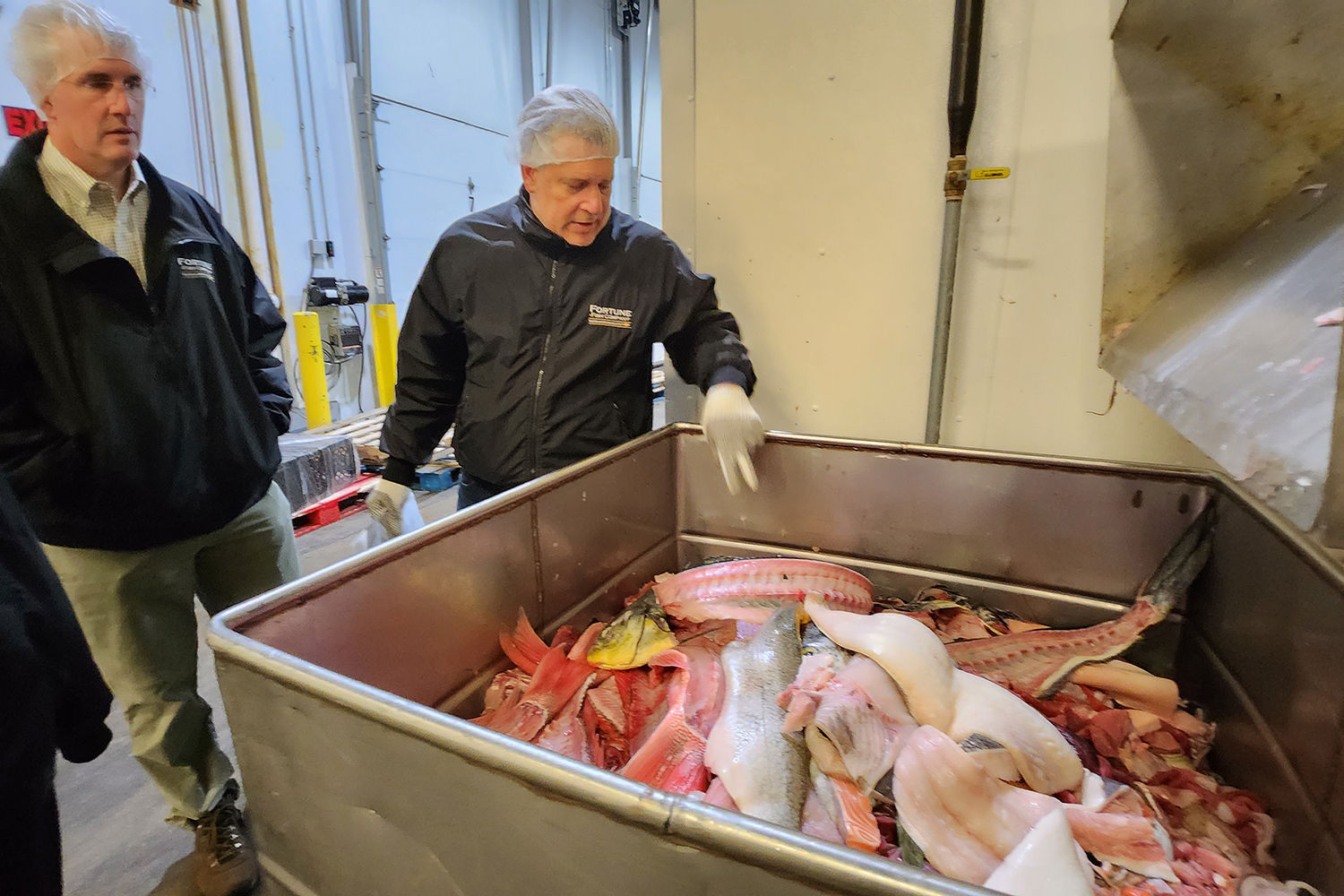
Fish heads, skins, scales and guts may not look like valuable commodities. But across the Great Lakes region (USA), an initiative is working to prove that what was once treated as fish waste can instead become everything from pet food and fertilizer to collagen, leather and fish oil.
The 100% Great Lakes Fish Initiative, a program of the Great Lakes St. Lawrence Governors & Premiers (GSGP), aims to fully utilize every fish caught, raised or processed in the region. By finding productive uses for fish byproducts that might otherwise be discarded, the initiative is creating new economic opportunities while reducing waste and its environmental impact.
That work has made the 100% Great Lakes Fish Initiative a finalist for the 2026 Responsible Seafood Innovation Award in the fisheries category.
GSGP estimates that full utilization across the Great Lakes commercial fish processing industry could generate up to U.S. $36 million in annual economic benefits, create up to 90 jobs and avoid emissions of up to 7.9 million pounds of carbon dioxide and 265,000 pounds of methane annually.

And the idea behind it came from an island nation thousands of miles away.
Inspiration from Iceland
The 100% Great Lakes Fish Initiative began in 2022, inspired by Iceland’s pioneering 100% Fish model.
That year, GSGP staff traveled to Iceland to see the concept in action. John Schmidt, program manager for GSGP, which works on behalf of the eight Great Lakes state governors and the premiers of Ontario and Quebec, was struck by one figure, in particular. An Icelandic cod that once generated about $12 from its fillet can now generate more than $5,000 in total value from products made from the whole fish.
“That figure really stuck with us,” Schmidt said. “It made us start thinking about what a Great Lakes version of that model could look like.”
He was also struck by the vibrancy of Iceland’s fishing sector.
Circular economy: Hydrolysates of aquaculture byproducts as feed
“It’s young, full of startups and is a fun, interesting sector to work in,” he said. “The Great Lakes sector is structured differently, but there is a real opportunity to build more of that entrepreneurial activity here and attract new people and ideas to the industry.”
Seeing that ecosystem firsthand, he added, “reinforced for me what could be possible in our region.”
The concept was a natural fit with GSGP’s mandate to support the Great Lakes economy while improving the region’s environmental performance.
At that time, the region was generating 30 million pounds of fish byproduct annually, with up to 60 percent of processed fish remaining outside the human-food market. Heads, frames, skins, scales, viscera and milt were often sold into low value markets or discarded altogether.
Processors also footed the bill for storing and disposing of material that potentially had value. Moreover, there was no shared data, coordination, logistics or product-development capacity for converting these side streams into reliable inputs. That meant lost revenue and increased landfill emissions at a time when fishing communities were weakened by rising costs and changing stocks.

Turning byproducts into products
Over the next four years, the 100% Great Lakes Fish Initiative built an integrated system that treats byproducts as traceable raw materials in a regional portfolio.
The initiative examines each byproduct stream based on its composition, seasonality, handling requirements, volume, market demand and value, and then builds partnerships around the best fit. Its research and implementation toolkit provides a coordinated, streamlined structure designed to make it easier for the commercial sector to adopt new practices.
So far, 44 companies and organizations have signed the 100% Fish Pledge, representing around 90 percent of the Great Lakes commercial catch by volume. Their commitment means the practice of landfilling commercial fish byproducts in the region has effectively ended.
GSGP works with participating companies to inventory the volume, location, timing and condition of the material they generate, while laboratory research helps identify technically feasible products. Market-demand and value-chain analyses then match those streams with potential outlets, from immediate uses like fertilizer, pet food and bait to higher-value products like protein hydrolysates, collagen, gelatin, leather, fishmeal and oil.
“By forming one commercialization pipeline, we’ve enabled small, geographically dispersed fish businesses to pool supply and access markets that none could serve alone,” Schmidt said. “This is a rural economic development story in a region where some commercially important fish stocks have declined. By creating more value from material that’s already being harvested, it’s a win for everyone.”
A model beyond the Great Lakes
The initiative’s ambitions extend beyond the Great Lakes. Schmidt said that, to his knowledge, 100% Great Lakes Fish is the first initiative to apply a full-utilization model across a freshwater fishery. But the underlying approach could potentially be replicated elsewhere, particularly in regions where seafood byproducts are spread among smaller producers that individually may not generate enough volume to access new markets.
“It can be adapted wherever seafood side streams are fragmented among smaller producers,” said Schmidt. “The species, regulations and markets will be different everywhere, but the basic process is transferable: understand what material you have, identify the best markets for it, and build the partnerships and logistics needed to connect the two.”
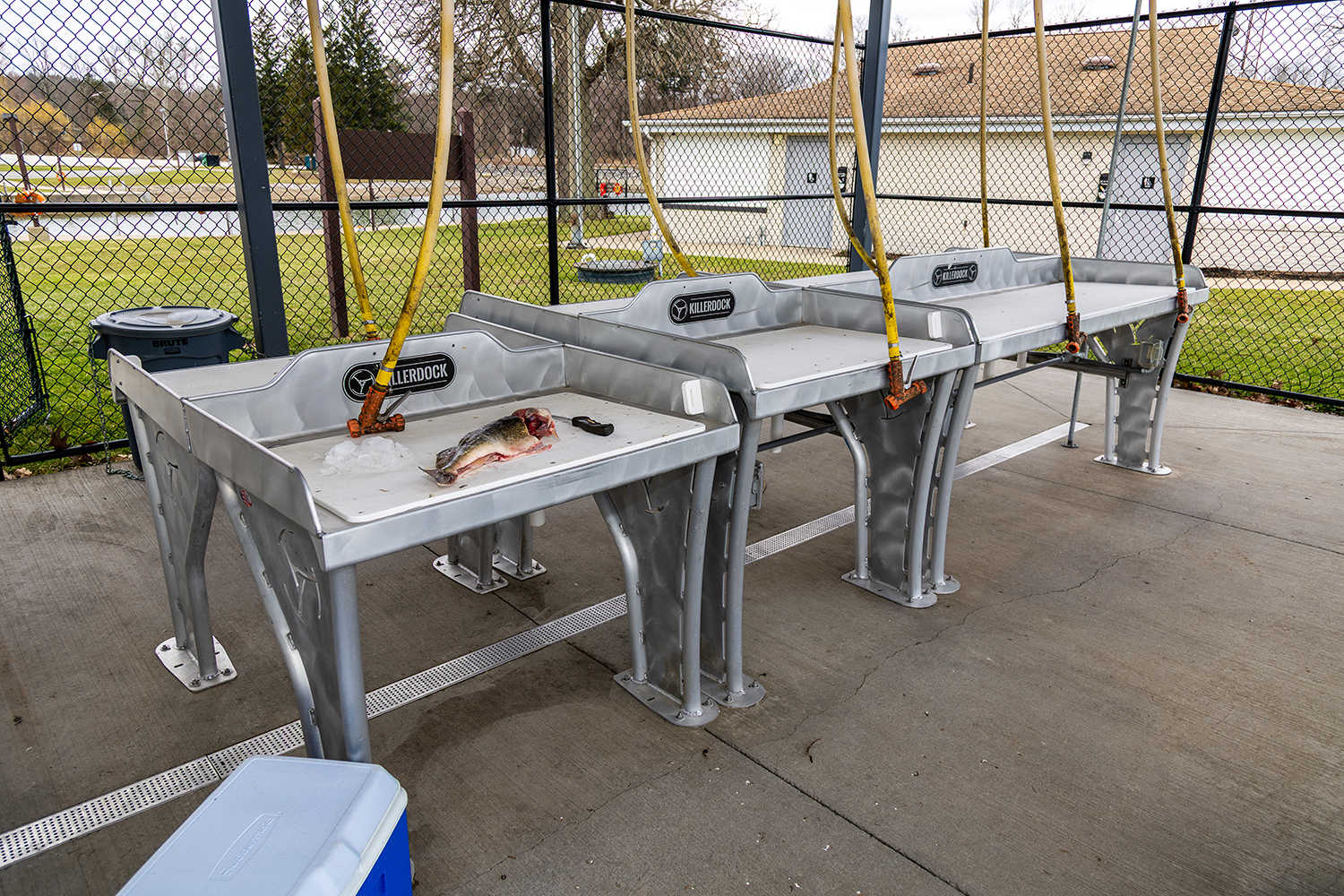
100% Great Lakes Fish is now expanding its work with aquaculture and recreational fisheries, which account for two-thirds of the region’s fish harvest and production. In the recreational sector, the challenge is turning sport fish cleaning stations into miniature processing hubs, where fish byproducts can be refrigerated until they’re collected and put to productive use.
“If you’re in the middle of nowhere and two fishermen are coming to your cleaning station a week, this might not make sense,” said Schmidt. “But for larger volumes, it can create savings for the cleaning station operators.”
Schmidt said much of the waste ends up in dumpsters, resulting in disposal fees, bad smells and rodents.
“You have fishermen gutting fish out on the water or grinding it and putting it into the wastewater system, which shifts the waste management cost to municipalities,” he said. “So, it can actually be cheaper to make your cleaning station a processing hub, and it’s the right thing to do.”
Schmidt said a Michigan operator has made a living collecting fish byproducts from cleaning stations and hauling them to processors, where the material is converted into pet food. Another entrepreneur in Minnesota is converting byproducts into fish leather.
“100% Great Lakes is helping create the conditions for these new opportunities to flourish,” Schmidt said. “There is a lot of groundwork involved, from understanding the material and its volume to building logistics and buyer relationships, but we’re starting to see those pieces come together.”
GSA’s 2026 Responsible Seafood Innovation Awards in the aquaculture and fisheries categories will be presented at the Responsible Seafood Summit in Bangkok, Thailand.
Now that you've reached the end of the article ...
… please consider supporting GSA’s mission to advance responsible seafood practices through education, advocacy and third-party assurances. The Advocate aims to document the evolution of responsible seafood practices and share the expansive knowledge of our vast network of contributors.
By becoming a Global Seafood Alliance member, you’re ensuring that all of the pre-competitive work we do through member benefits, resources and events can continue. Individual membership costs just $50 a year.
Not a GSA member? Join us.
Author
-

Vancouver-based correspondent Lauren Kramer has written about the seafood industry for the past 15 years.
Related Posts
Intelligence
As sturgeon farming grows, demand concerns emerge
Caviar, or lightly salted sturgeon roe, has been enjoyed for centuries as an expensive gourmet delicacy. After a drastic decline in wild sturgeon stocks, aquaculture stepped in to fill the void. But can farmed supply find lasting balance with market demand?
Responsibility
Seafood’s best friend: Once wasted fish byproducts are now a bounty for cats and dogs
Alaska seafood processors are turning fish skins and heads into pet products, heeding environmental mandates for greater utilization of byproducts.
Intelligence
Is the most valuable part of shrimp typically thrown away? How seafood byproducts offer new revenue streams
Shrimp byproducts may unlock new revenue streams as shells and heads are turned into feed ingredients and biomaterials.
Aquafeeds
Aquaculture’s input efficiency shines as FIFO ratios improve
The latest Fish In:Fish Out (FIFO) ratios calculated by IFFO – The Marine Ingredients Organisation shows that every kilogram of wild fish utilized in aquafeeds results in a total of 4.55 kilos of farmed fish produced.