


Shrimp bioacoustics: New insights into feeding behavior and precision aquaculture

With computer vision, AI and automated feeding systems, bioacoustics deliver strategies to improve feeding efficiency, optimize production and support profitable, sustainable shrimp farming
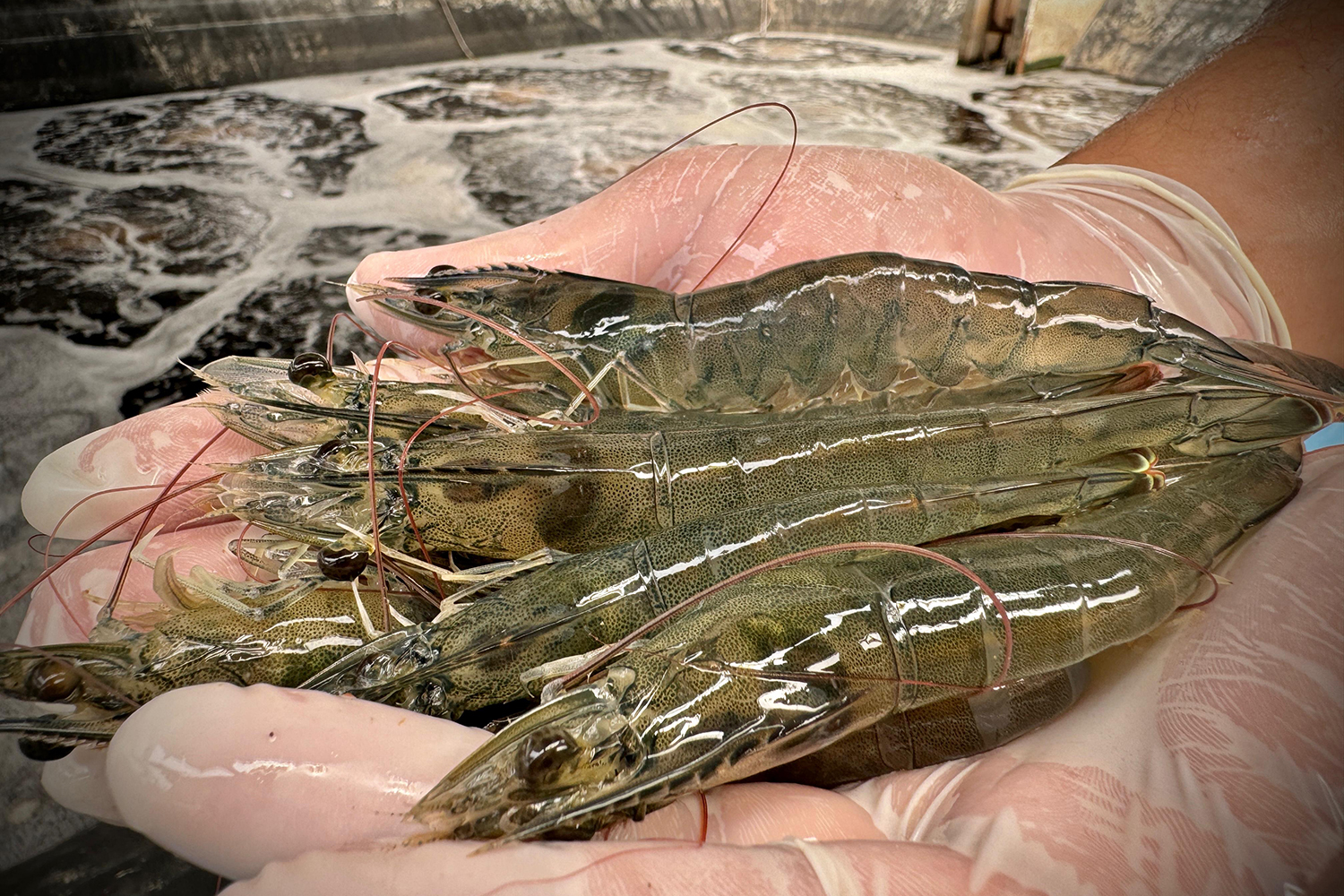
Modern shrimp farming depends on a clear understanding of feeding behavior to optimize feeding strategies, improve production efficiency and enhance sustainability. Because feed represents the largest operating cost in shrimp production, accurately assessing feed consumption is critical to both profitability and environmental stewardship. To overcome the challenges of visually monitoring shrimp feeding activity, researchers and technology companies have increasingly turned to Passive Acoustic Monitoring (PAM). Unlike active sonar, PAM passively records sounds throughout the aquatic environment, including the distinctive clicking sounds produced by shrimp during feeding, without emitting acoustic signals. This non-invasive technology is providing new insights into shrimp feeding behavior while driving the development of smarter, more precise, automated feeding systems.
This technology has expanded rapidly across the world’s major shrimp-producing regions, helping farmers improve feeding precision while reducing feed waste. In these systems, highly sensitive underwater hydrophones capture the sounds produced by feeding shrimp, and signal-processing algorithms identify feeding-related clicks in real time. Based on this acoustic information, feed delivery is automatically adjusted to match the animals’ appetite, improving feed efficiency while reducing reliance on traditional empirical feeding practices.
Although commercial acoustic feeding systems have advanced rapidly, the datasets and algorithms that drive these technologies remain largely proprietary and inaccessible to the scientific community. As a result, PAM has become an increasingly valuable research tool for investigating shrimp feeding behavior under controlled conditions. Today, commercial producers, feed manufacturers and research institutions are investing in dedicated acoustic laboratories to evaluate feeding strategies, optimize feed formulations and validate new technologies. By accelerating the development of precision feeding strategies, PAM is helping drive a more efficient, profitable and sustainable shrimp farming industry.
Advancing shrimp acoustics through laboratory research
As acoustic-based feeding systems continue to demonstrate positive results on shrimp farms, laboratory research on PAM is advancing in parallel, providing fundamental insights that continue to drive improvements in commercial applications. Over the past several years, the Aquaculture Technology Laboratory (LTA) at the Federal Rural University of Pernambuco (UFRPE), Brazil, has emerged as an internationally recognized research center investigating the use of PAM to study the feeding behavior of Pacific white shrimp (Penaeus vannamei) under controlled experimental conditions.
![Ad for [BSP]](https://www.globalseafood.org/wp-content/uploads/2025/07/BSP_B2B_2025_1050x125.jpg)
Research conducted by the group has demonstrated the potential of bioacoustics not only for developing automated feeding technologies but also for improving our understanding of how nutrition, environmental conditions and management practices influence shrimp feeding behavior.
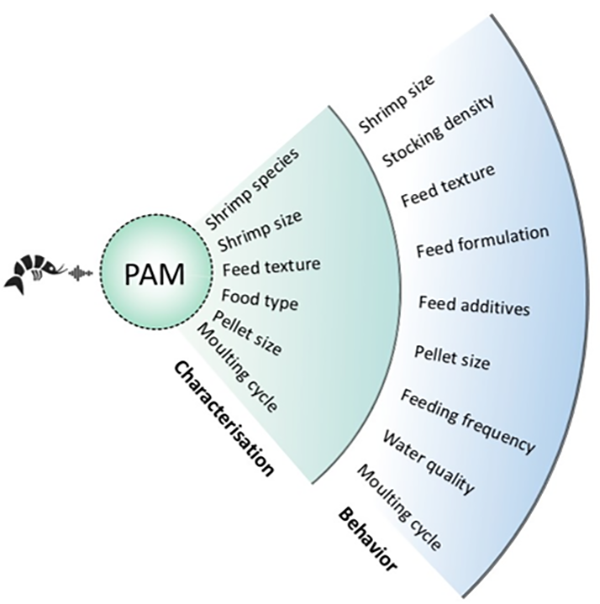
Current research at LTA focuses on two complementary areas. The first examines the acoustic characteristics of feeding clicks produced by shrimp and how these signals vary with factors such as mandible size, molt stage and feed pellet texture (Fig. 1). The second uses acoustic activity as a behavioral indicator of feeding intensity, allowing researchers to evaluate how variables such as shrimp size, stocking density and diet composition influence feeding activity.
Together, these studies have shown that shrimp feeding sounds provide a sensitive, non-invasive indicator of feeding behavior, enabling researchers to quantify behavioral responses under a wide range of experimental conditions. By linking controlled laboratory experiments with commercial applications, PAM is emerging as a powerful research tool that is helping advance precision shrimp aquaculture.
Experimental setup for acoustic studies
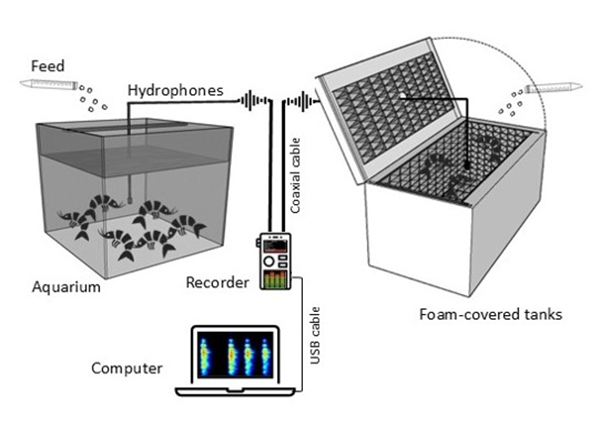
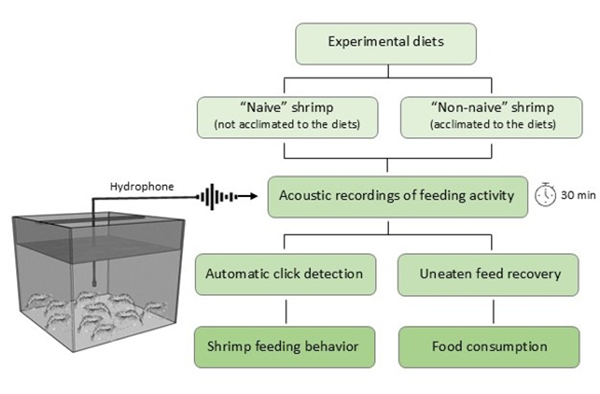
Acoustic trials at LTA typically employ a monitoring system consisting of underwater hydrophones, multichannel digital recorders and high-performance computers (Fig. 2). Hydrophones, the underwater equivalent of microphones, capture sounds propagating through the water, while digital recorders preserve these acoustic signals with high temporal resolution for subsequent analysis. The recordings can then be archived for detailed offline analysis or processed in real time using computational algorithms.
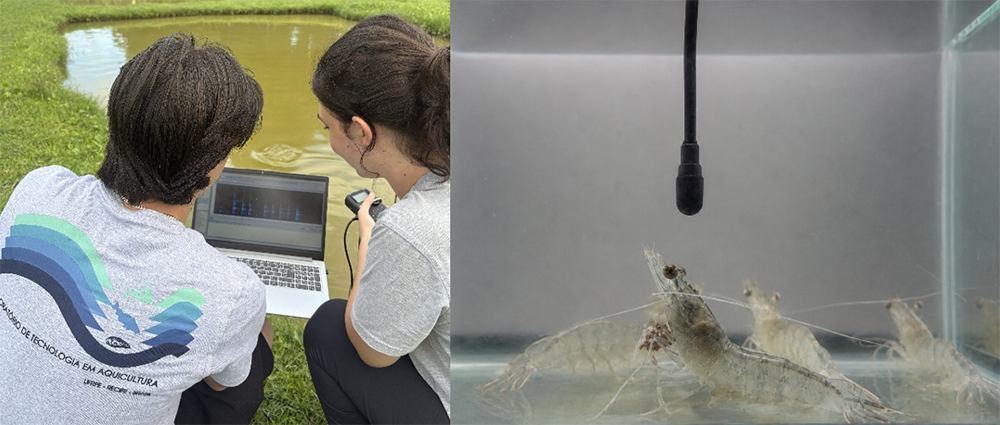
The experimental setup varies according to the objectives of each study. Investigations aimed at characterizing the acoustic properties of shrimp feeding clicks are conducted in tanks lined with sound-absorbing acoustic foam, which minimizes sound reflections and reduces distortions caused by tank walls (Fig. 3). This controlled environment enables more accurate characterization of click acoustic properties.
In contrast, experiments focused on feeding behavior, particularly those evaluating click production rates over time, are conducted in conventional tanks with varying sizes and shrimp stocking densities (Fig. 3). These conditions more closely resemble commercial production systems, allowing researchers to investigate how nutritional, biological and environmental factors influence shrimp feeding activity.
Do shrimp produce sounds only when feeding on pellets?
To answer this question, a recent study investigated the sounds produced by juvenile P. vannamei while consuming a variety of food items, including polychaetes, fish, shrimp, bivalves, artemia, insects and commercial feed pellets (Fig. 4). During the experiment, synchronized audio and video recordings were used to confirm that the characteristic clicking sounds originated from the shrimp’s mandibles during feeding. The acoustic signals were subsequently analyzed using specialized sound analysis software.
The results showed that all food items generated acoustic signals during ingestion. However, the texture and composition of the food had a clear influence on the acoustic signature of the feeding clicks. Harder food items, including commercial pellets, shrimp tissue and insects (Fig. 4B, D), required greater mechanical force during mastication, producing clicks with higher acoustic energy. In contrast, softer foods such as artemia and bivalves (Fig. 4C) generated weaker acoustic signals.
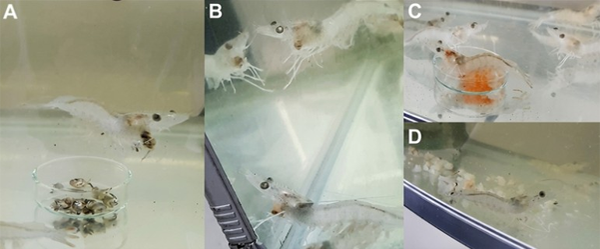
These findings have important practical implications. They demonstrate that acoustic analysis can distinguish feeding sounds associated with different food types, providing valuable information for the development of algorithms capable of recognizing changes in the acoustic characteristics of shrimp feeding activity. Beyond feed management, this approach could also help identify other biologically relevant events within culture systems, including cannibalistic behavior.
Using acoustics to evaluate feed attractants
Successful feed management involves more than simply delivering the correct amount of feed. Feed acceptance depends on how efficiently shrimp detect, locate and consume feed particles. For this reason, feed attractants are widely incorporated into commercial diets to enhance palatability and stimulate feeding activity.
Environmental stressors such as sudden drops in temperature or changes in salinity can substantially reduce shrimp appetite and negatively affect production performance. Under these conditions, feed attractants have been shown to help maintain feed intake. Their effectiveness, however, depends on proper inclusion levels. Higher concentrations do not necessarily stimulate greater consumption and may even interfere with the shrimp’s ability to recognize feed, ultimately reducing feeding activity.
A recent experiment illustrates this relationship. Juvenile P. vannamei were fed diets containing an aromatic attractant at inclusion rates of 1, 3 and 5 grams per kg under low-temperature conditions (24 degrees-C). Acoustic monitoring revealed that the lowest inclusion level (1 g/kg) consistently produced the highest initial click rates and maintained greater feeding activity throughout the 30-minute observation period, indicating a stronger feeding response than the higher dosages (Fig. 5).
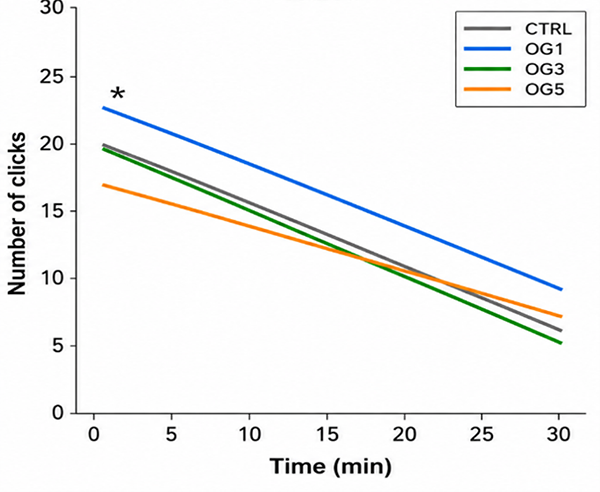
This experimental approach has been applied to a wide range of nutritional studies, including the evaluation of feed attractants, organic salts, partial or complete fishmeal replacement, and specialized diet formulations designed for challenging production conditions. In addition, feeding behavior has been compared between “naive” shrimp exposed to a diet for the first time and “non-naive” shrimp previously acclimated to the same diet (Fig. 6).
Together, these studies demonstrate that PAM provides a practical and objective tool for assessing feed acceptance, optimizing diet formulations and supporting more informed feeding strategies in commercial shrimp farming.
When sound meets vision
While feeding clicks provide valuable information about feed consumption, video analysis adds another dimension by revealing how shrimp move, occupy space and interact while feeding. When synchronized with acoustic recordings, video makes it possible to directly link sound production with observed behavior, providing a more complete picture of feeding as an integrated biological response to the culture environment.
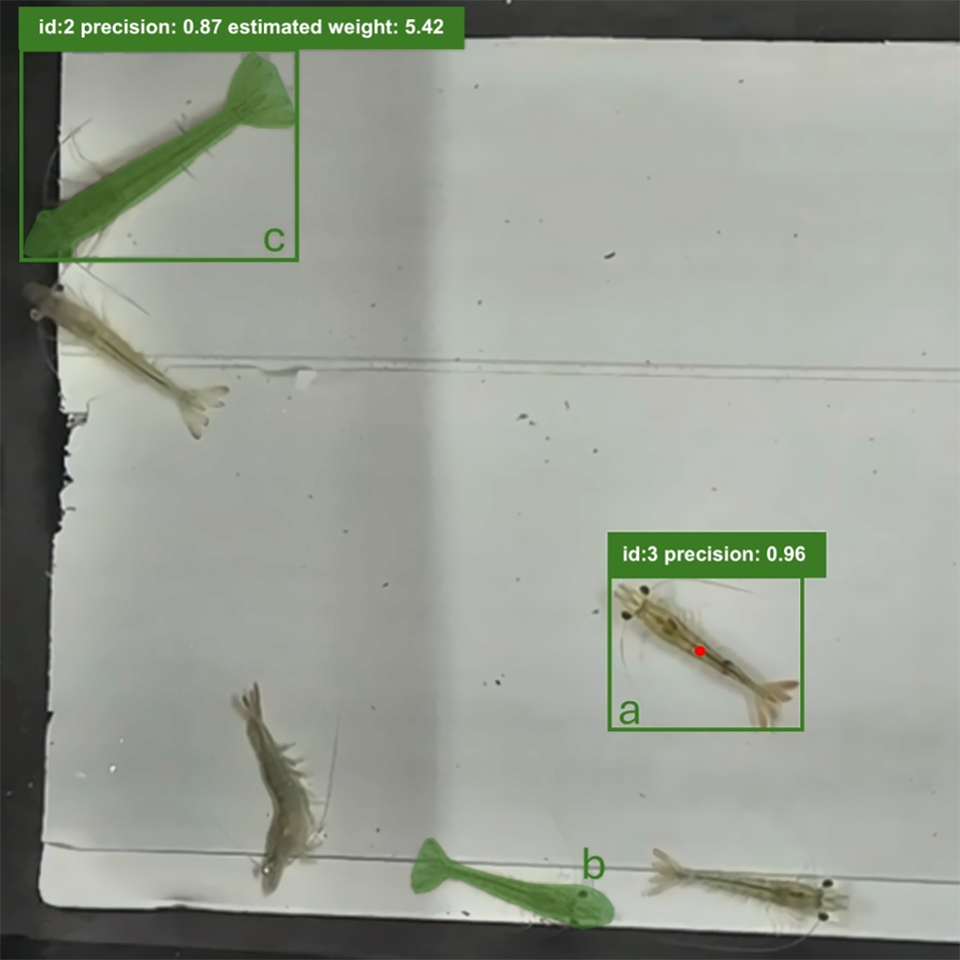
Following data collection, videos can be processed using computer vision software capable of detecting individual shrimp frame by frame and tracking their movements over time. Rather than serving as a simple visual record, video becomes a quantitative source of information on swimming activity, spatial distribution and use of the feeding area.
Computer vision can also support automated biometric monitoring. By calibrating the apparent size of shrimp in video images against measured biometric data, algorithms can estimate body weight and length without handling the animals. As a result, a single recording can simultaneously provide information on feeding behavior and growth performance (Fig. 7).
When integrated with PAM, video analysis offers valuable insights into how water quality, animal health and diet influence shrimp movement, aggregation patterns and feeding responses. These combined data streams can be incorporated into real-time monitoring systems, enabling the early detection of stress-related behavioral changes and supporting proactive management decisions before production losses occur.
Artificial intelligence for automated click detection
Recent studies have clearly demonstrated the potential of PAM to evaluate shrimp feeding behavior under controlled conditions and to support acoustic-based automated feeding in commercial shrimp farming. However, its broader application remains constrained by the lack of standardized methods for detecting and quantifying feeding clicks in continuous audio recordings. Current approaches often rely on manual or semi-automated spectrogram software analysis, making the processing of the large acoustic datasets generated in both laboratory and commercial production systems time-consuming and difficult to standardize.
For automated acoustic monitoring to be both scientifically reliable and practically applicable, detection algorithms must be transparent, rigorously validated against manually annotated reference data, and capable of performing consistently under the complex and noisy acoustic conditions typical of aquaculture systems. Artificial intelligence is expected to play a central role in overcoming these challenges. Within this framework, supervised machine learning provides a practical approach, using acoustic features extracted from labelled sound segments to train models capable of distinguishing shrimp feeding clicks from background acoustic events.
Can this ‘bio-inspired’ robotic fish improve aquaculture monitoring and animal welfare?
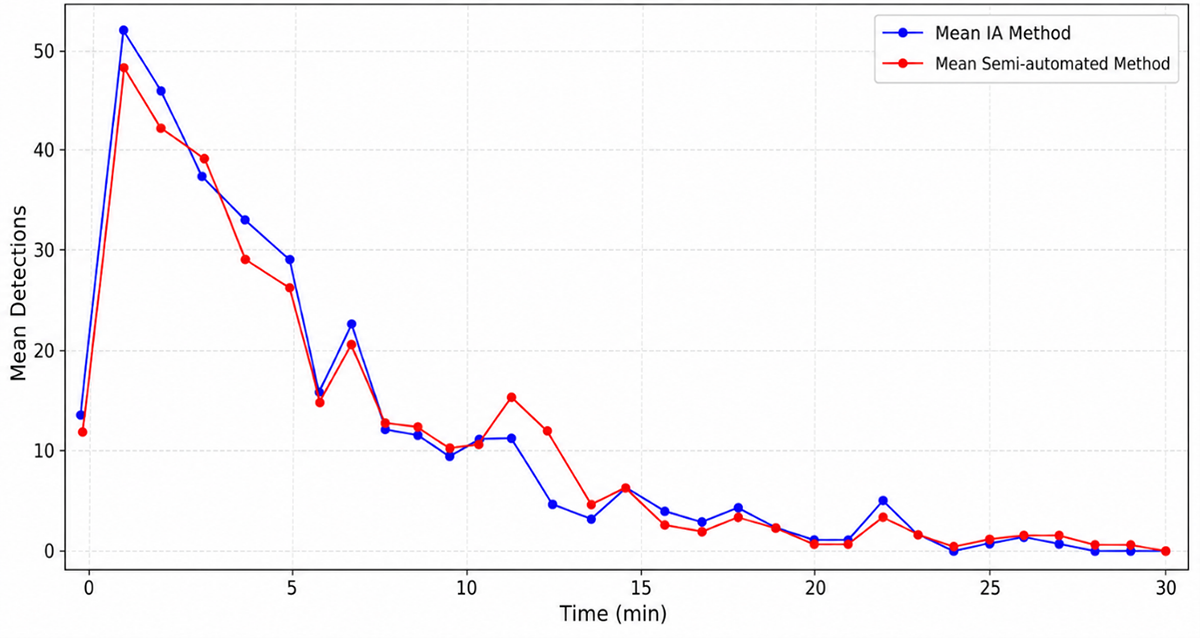
Recently, LTA has been developing an artificial intelligence (AI)-based system capable of automatically detecting P. vannamei feeding clicks and accurately reproducing the feeding activity patterns identified through semi-automated acoustic analysis (Fig. 8). The system successfully distinguished feeding clicks from other underwater sounds, and validation using laboratory and pond recordings confirmed its ability to track changes in shrimp feeding activity under different biological and environmental conditions.
By automating the analysis of acoustic recordings, this approach greatly reduces the time and effort required for manual or semi-automated data processing while providing a consistent and objective tool for shrimp feeding monitoring and precision aquaculture.
Perspectives
Bioacoustics is transforming our understanding of shrimp feeding behavior while creating new opportunities for precision feed management. Through PAM, feeding sounds can be converted into valuable information on shrimp appetite, feed consumption and responses to changing environmental conditions. As research advances and commercial adoption expands, PAM is evolving from a feeding management tool into a broader platform for innovation. Combined with computer vision, artificial intelligence and automated feeding systems, it is poised to deliver smarter management strategies that improve feeding efficiency, optimize production and support a more profitable and sustainable shrimp farming industry.
Now that you've reached the end of the article ...
… please consider supporting GSA’s mission to advance responsible seafood practices through education, advocacy and third-party assurances. The Advocate aims to document the evolution of responsible seafood practices and share the expansive knowledge of our vast network of contributors.
By becoming a Global Seafood Alliance member, you’re ensuring that all of the pre-competitive work we do through member benefits, resources and events can continue. Individual membership costs just $50 a year.
Not a GSA member? Join us.
Authors
-

Corresponding author
Full Professor and Research Coordinator for Shrimp Bioacoustics
Laboratory of Aquaculture Technology (LTA), Department of Fisheries and Aquaculture (DEPAq), Federal Rural University of Pernambuco (UFRPE), Recife, Pernambuco 52171-900, Brazil
-
Laboratory of Aquaculture Technology (LTA), Department of Fisheries and Aquaculture (DEPAq), Federal Rural University of Pernambuco (UFRPE), Recife, Pernambuco 52171-900, Brazil
-
Laboratory of Aquaculture Technology (LTA), Department of Fisheries and Aquaculture (DEPAq), Federal Rural University of Pernambuco (UFRPE), Recife, Pernambuco 52171-900, Brazil
-
Laboratory of Aquaculture Technology (LTA), Department of Fisheries and Aquaculture (DEPAq), Federal Rural University of Pernambuco (UFRPE), Recife, Pernambuco 52171-900, Brazil
-
Laboratory of Aquaculture Technology (LTA), Department of Fisheries and Aquaculture (DEPAq), Federal Rural University of Pernambuco (UFRPE), Recife, Pernambuco 52171-900, Brazil
-
Laboratory of Aquaculture Technology (LTA), Department of Fisheries and Aquaculture (DEPAq), Federal Rural University of Pernambuco (UFRPE), Recife, Pernambuco 52171-900, Brazil
-
Laboratory of Aquaculture Technology (LTA), Department of Fisheries and Aquaculture (DEPAq), Federal Rural University of Pernambuco (UFRPE), Recife, Pernambuco 52171-900, Brazil
Related Posts
Aquafeeds
Acoustic feedback improves automated feeding systems for shrimp
Updating Auburn University’s standard feeding protocol for shrimp into an optimized version for timer-feeders, recognizing the role of acoustic feedback.
Innovation & Investment
‘AI ticks all the boxes’ and is proving to be a perfect match for aquaculture
Artificial intelligence (AI) is rippling through the aquaculture industry, promising greater efficiencies and insights, as well as investor interest.
Responsibility
The sounds of settlement: Marine acoustics could revitalize ecosystems and enhance fisheries and aquaculture management
Researchers consider the implications of underwater acoustics in restoring marine ecosystems, rebuilding biodiversity and improving fisheries.
Aquafeeds
Listening to the pond bottom: How bioacoustics can transform shrimp feeding management
Bioacoustics shift shrimp farming to proactive, precision feed management to optimize shrimp growth and reduce feed waste costs as a biosensor.