


Marine oil fatty acid shows promise against psoriasis in lab study

Researchers found omega-11, a fatty acid found in marine oil from herring and mackerel, reduced psoriasis-related inflammation in skin cells
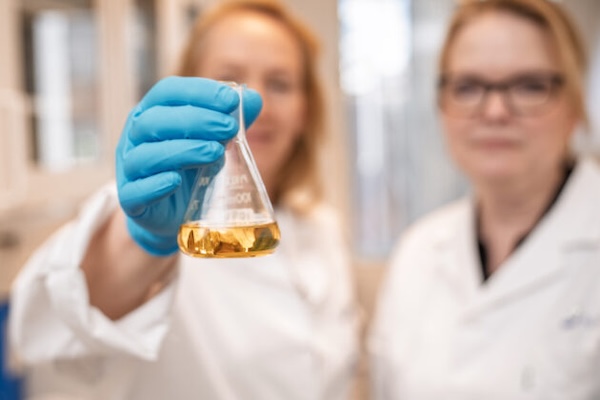
A fatty acid found in marine oil from herring and mackerel may help reduce inflammation associated with mild psoriasis, according to a Nofima study.
Researchers found that omega-11, also known as cetoleic acid, reduced signs of psoriasis-related inflammation in skin cells grown in the lab. The findings suggest the fatty acid may have potential for managing psoriasis-related inflammation, although the research has not yet been tested in people.
“Our lab studies show a clearly positive effect,” said Tone-Kari Østbye, a senior scientist at Nofima. “The next step will be to investigate whether these findings also apply to people with mild-to-moderate psoriasis. We look forward to exploring this further and hopefully collaborating with medical research groups in the field.”
Psoriasis is a chronic inflammatory skin disease that causes red, scaly patches on the body. To investigate whether omega-11 could influence the condition, researchers used laboratory-grown skin cell models designed to mimic psoriasis.

The researchers exposed skin cells to omega-11, as well as the omega-3 fatty acids EPA and DHA, before triggering inflammation similar to that seen in psoriasis. They then examined how the cells responded at different stages of the inflammatory process.
The study found that omega-11 reduced levels of molecules that drive inflammation in psoriasis and appeared to have the strongest effect during the early stages of inflammation. EPA and DHA appeared to play a larger role later in the process.
“A combination of omega-11, which gives an early response in the cells, and omega-3, which gives a later response, appears to have a beneficial effect against psoriasis-like inflammation in our models,” said Østbye.
The researchers said they do not yet fully understand how omega-11 influences the disease process. However, they observed that cells treated with the fatty acid showed characteristics more similar to healthy skin cells.
Østbye cautioned that the findings are limited to laboratory-grown cells and should not be interpreted as evidence that consuming specific fatty acids will treat psoriasis.
“Using cells is an important first step toward obtaining meaningful insights,” said Østbye.
The project was funded by FHF – the Norwegian Seafood Research Fund and carried out by Nofima in collaboration with Queen Mary University of London.
The findings could also have implications for the seafood industry. Marine oils from North Atlantic herring and mackerel contain relatively high levels of cetoleic acid, the fatty acid examined in the study.
“Marine oils from herring and mackerel in the North Atlantic contain relatively large amounts of cetoleic acid,” said Lars Lovund, head of section for pelagic industry and aquaculture at FHF. “This fatty acid is showing major positive health effects in the studies. It is important to highlight this, both for public health and to show the value of these fish resources.”
Learn more about the project here.
Now that you've reached the end of the article ...
… please consider supporting GSA’s mission to advance responsible seafood practices through education, advocacy and third-party assurances. The Advocate aims to document the evolution of responsible seafood practices and share the expansive knowledge of our vast network of contributors.
By becoming a Global Seafood Alliance member, you’re ensuring that all of the pre-competitive work we do through member benefits, resources and events can continue. Individual membership costs just $50 a year.
Not a GSA member? Join us.
Author

Related Posts

Intelligence
Diet rich in omega-3 fatty acids linked to eye and brain health, studies suggest
Recent studies show omega-3 fatty acids help protect against childhood myopia and Alzheimer’s in women, highlighting fish’s health benefits.

Intelligence
Global omega-3 fatty acid shortage puts public health at risk, study warns
Study finds 85 percent of world's population is deficient in omega-3 fatty acids, due partly to a shortage driven by environmental factors.

Intelligence
Can omega-3 fatty acids from fish eggs improve recovery and aging? Scientists aim to find out.
Norwegian scientists are exploring if omega-3 fatty acids derived from fish eggs can boost recovery and healthy aging.

Intelligence
Can omega-3s slow down the aging process?
Study suggests omega-3s, vitamin D and strength training can slow biological aging and boost health in older adults.