


ID check: Rapid DNA testing is altering the frontline war on seafood fraud

Originally intended to analyze the eel trade, a tool from Canada’s WildTechDNA can extract fish DNA samples in the field in just two minutes

Can tiny traces of genetic material reveal the true identity of a species? What might sound futuristic is already a reality. Advances in DNA testing are enabling scientists to identify species from minimal samples and efforts are underway to make these tools faster, more practical and widely accessible.
This growing potential has driven innovations like those developed by Natalie Schmitt, founder and CEO of Canadian firm WildTechDNA. Her team has developed a portable, ultra-rapid DNA detection platform that can identify targeted species in just 15 to 20 minutes. Already piloted in Canada and Japan for eel (Anguilla), the technology can detect targeted genetic signatures directly from processed products, enabling identification at the species level, with the flexibility to differentiate genus, populations, or even sex depending on the markers used. The platform also supports multiplex detection, allowing multiple species to be tested on a single strip, offering a practical, low-cost solution for traceability, supplier verification and regulatory compliance.
“My work grew out of my experience as a conservation geneticist,” Schmitt told the Advocate. “Genetic testing has traditionally been slow, expensive and limited to centralized labs, making it hard to access for those on the front lines. Realizing that the issue was less about conservation and more about accessibility, I joined a lab at McMaster University developing rapid DNA testing and began creating tests for caribou fecal detection, when we were approached by the Canadian government to develop diagnostics for European eel. At the time, lab identification took weeks, so we quickly built our first rapid testing prototype.”
This innovation is especially important as wild eel populations decline due to overfishing, habitat loss, climate change, pollution and disease. Despite protections, illegal trade remains widespread. A 2025 Europol assessment estimates that glass eel trafficking has generated up to €3 billion euros (U.S. $3.5 billion) in peak years.
![Ad for [BSP]](https://www.globalseafood.org/wp-content/uploads/2025/07/BSP_B2B_2025_1050x125.jpg)
In Japan, where eel is a prized delicacy, researchers have used DNA barcoding, a method that identifies species from short, standardized DNA segments, to analyze processed products by extracting DNA from grilled samples. Schmitt’s approach is simpler: A small sample such as eel tissue, a swab, or water from a bag that previously held glass eels is placed into a tube with a buffer solution. If the sample is tissue, it is gently massaged to release the DNA; this step is not needed for water samples. The extraction takes around two minutes.
A drop of the extracted DNA is then added to a second tube containing dried reagents and species-specific markers. After heating for about 10 minutes using a disposable heat pack, a lateral flow strip is inserted to deliver a clear visual result. Fully portable and electronics-free, and designed for use outside the lab, the platform has been piloted with enforcement officers in the Canadian Wildlife Enforcement Directorate to screen cargo.
Schmitt believes that the test could have wide-ranging applications across the broader seafood sector.
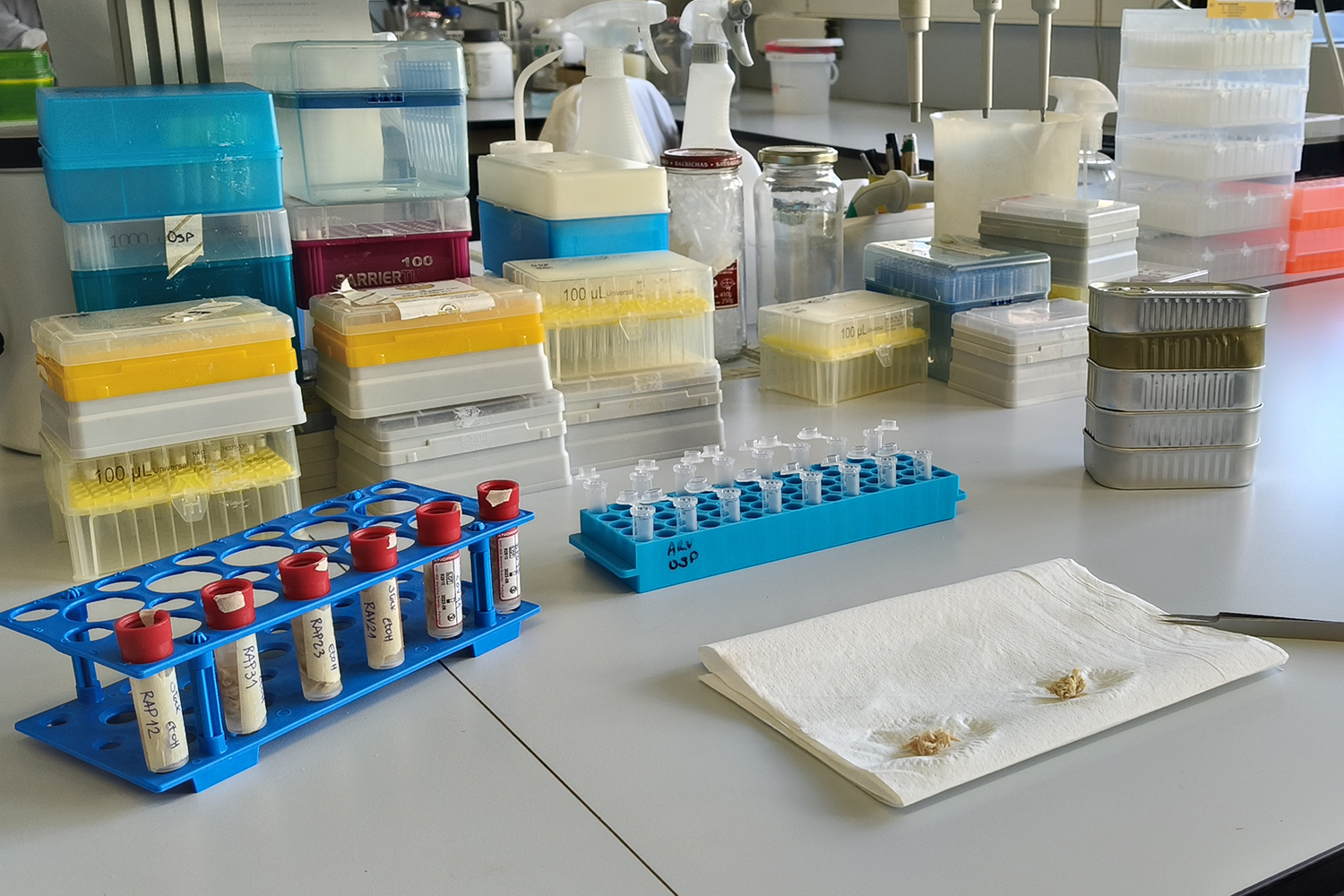
“Fisheries managers can verify species for sustainable harvests, aquaculture operators can confirm species identity, traders can strengthen product authenticity and regulators can support compliance and traceability,” she said. “We’re also exploring eDNA detection and would like to apply it to marine and freshwater environments by adding a simple filtration step. This would allow environmental samples to be processed and expand our test’s applications.”
The test could also support seafood certification and even allow consumers to verify species in restaurants, particularly in markets like Japan, said Schmitt, where consumers place high value on confirming that they are eating the correct species. More broadly, it can improve transparency across supply chains, where products like canned tuna may contain mixed or protected species. By enabling accurate identification, the test empowers consumers to make informed choices, and, in turn, encourages industry to strengthen sourcing practices and accountability.
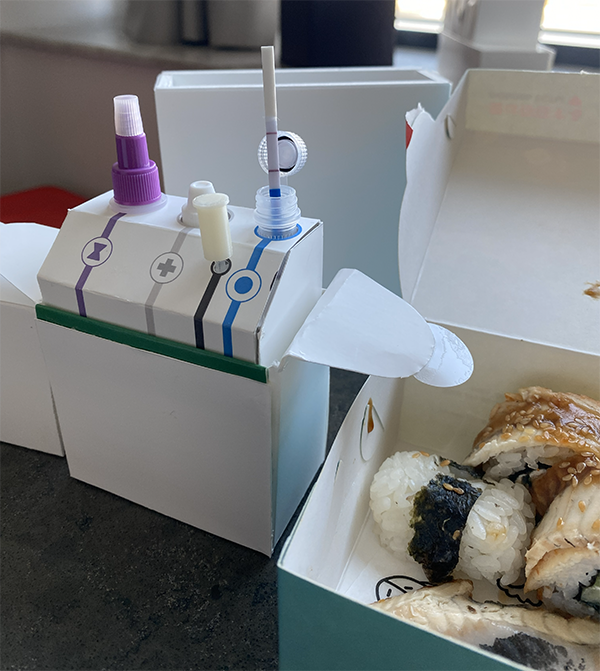
Research in Portugal highlights this issue. Researchers at the University of Lisbon carried out a study using DNA barcoding to analyze how tuna species vary across brands and seasons.
“Portugal has a strong tuna canning tradition, but may products lack information on the species used, limiting transparency,” said Ana Rita Vieira, assistant professor at the Faculty of Sciences, University of Lisbon. “Because tuna includes multiple species with different conservation statuses, market value and regulations, this raises concerns about labelling practices and compliance with European laws. We set out to assess whether labels on canned products matched the species they contained.”
DNA testing finds endangered European eels for sale around the world
Using molecular barcoding, the team identified tuna and tuna-like species to evaluate conservation status, detect seasonal patterns, and compliance with legislation. Molecular barcoding sequences a short, standardized DNA region – often mitochondrial – and is highly reliable for processed products like canned fish, where visual identification is impossible. It works well even with degraded DNA from heat processing and offers consistent, reproducible results across laboratories, making it ideal for routine species identification.
Several findings were particularly noteworthy, said Vieira. The team detected vulnerable species such as bigeye tuna (Thunnus obesus), some populations of which are still overfished. They also found non-“true” tuna species, such as Auxis spp., in products marketed as tuna, prompting questions about transparency and consumer expectations. In some cases, multiple species were found in a single can, which may conflict with European labelling rules. The study also revealed variation across brands and seasons, suggesting species composition changes due to factors like availability, sourcing strategies and market or seasonal influences.
Vieira agrees with Schmitt that species-level DNA identification can improve the management of fisheries, aquaculture and seafood processing.
“At the policy and management level, it enables more accurate monitoring of species being caught and traded, supporting stock assessments and ensuring compliance with quotas and conservation measures,” she said. “It also helps enforce labelling requirements, combat fraud, and improve traceability and transparency, ultimately supporting more sustainable fisheries management.”
Looking ahead, Schmitt is aiming to integrate her test with digital traceability systems. Each test could carry a unique barcode or number that links species identification data directly into supply chain documentation, creating a seamless connection between testing and traceable records.
There is also growing interest in multi-species testing platforms that can verify several species simultaneously. While Schmitt’s test was initially designed for single-species detection, she and her colleagues see a strong demand for multiplexing. Current laboratory methods allow high-throughput testing, said Schmitt, but she plans to develop ways to make her test more efficient in the field. This includes expanding multiplex capabilities and increasing throughput, enabling multiple samples to be processed efficiently by personnel such as customs officers in field settings.
“I think that in the future, species authentication will become a routine part of responsible seafood trade, much like food safety testing today,” said Schmitt. “As supply chains become more transparent, rapid species verification will be an important part of supporting sustainable fisheries and aquaculture, with key steps including technological improvements, integration with digital traceability, and collaboration between industry, regulators and technology providers.”
“Over the next decade, DNA identification techniques are expected to become faster, more portable, and increasingly automated,” said Vieira. “Advances may enable real-time or near real-time identification in the field. Portable platforms, such as those being developed by WildTechDNA, are especially promising. These tools are also likely to integrate more closely with digital traceability systems, linking genetic data with supply chain information in a seamless, transparent way. Overall, this will make DNA-based identification more accessible and scalable.”
Schmitt and her team are now focused on expanding their test to cover more species and applications, with trials planned with Interpol at ports across Europe and with Japanese industry partners. The team has also developed an AI-based software tool for genetic marker design that streamlines test development for new species. By accessing global genetic databases, it identifies the optimal markers for a given species, reducing the need for multiple rounds of trial and error. This innovation will allow the test to be adapted quickly and efficiently to a range of species and applications, greatly expanding its utility in conservation and other fields.
“Seafood supply chains are increasingly global and complex and many species look identical once processed, creating challenges for traceability and labelling,” said Schmitt. “We’re seeing a shift to rapid, on-site verification from farms and processing facilities to trade points and restaurants, enabling real-time identification that strengthens transparency and supports responsible seafood supply chains.”
Now that you've reached the end of the article ...
… please consider supporting GSA’s mission to advance responsible seafood practices through education, advocacy and third-party assurances. The Advocate aims to document the evolution of responsible seafood practices and share the expansive knowledge of our vast network of contributors.
By becoming a Global Seafood Alliance member, you’re ensuring that all of the pre-competitive work we do through member benefits, resources and events can continue. Individual membership costs just $50 a year.
Not a GSA member? Join us.
Author
-

Senior Writer Bonnie Waycott became interested in marine life after learning to snorkel on the Sea of Japan coast near her mother’s hometown. She specializes in aquaculture and fisheries with a particular focus on Japan, and has a keen interest in Tohoku’s aquaculture recovery following the 2011 Great East Japan Earthquake and Tsunami.
Related Posts
Intelligence
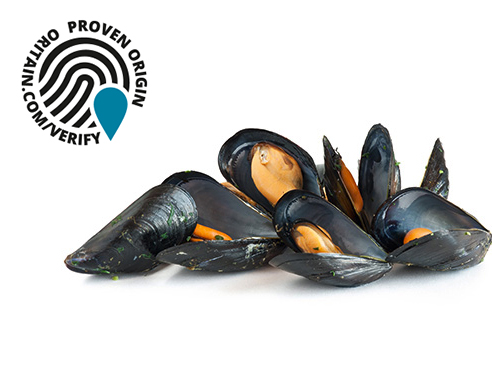
Can a ‘chemical fingerprint’ deter seafood fraud?
Because paper trails aren’t perfect, some food producers are going beyond written or digital records to prove their products’ authenticity and prevent economic fraud. Is farmed seafood a perfect fit for forensic-science traceability?
Intelligence
Can handheld DNA testing technology stand up to seafood fraud?
The MasSpec Pen, developed to diagnose tumors, can identify fish species by touching the tip to a sample. But the species database is lacking.

Intelligence
‘Through science, there’s no question’: How evidence-based transparency is changing seafood traceability
ORIVO, a science-based testing and certification service for the global feed and supplement industry, aims to change seafood traceability.
Intelligence
What will it take to make tilapia great again?
Once a darling of the sustainable seafood crowd for its vegetarian diet and potential to feed the world’s growing population, mild-mannered tilapia now has an image problem that may be causing a dip in consumption levels.