


Could triploid kelp cultivars expand seaweed farming in the face of climate change?

A breakthrough breeding method from China creates heat-tolerant, fast-growing sterile kelp to protect yields and expand seaweed farming as oceans warm
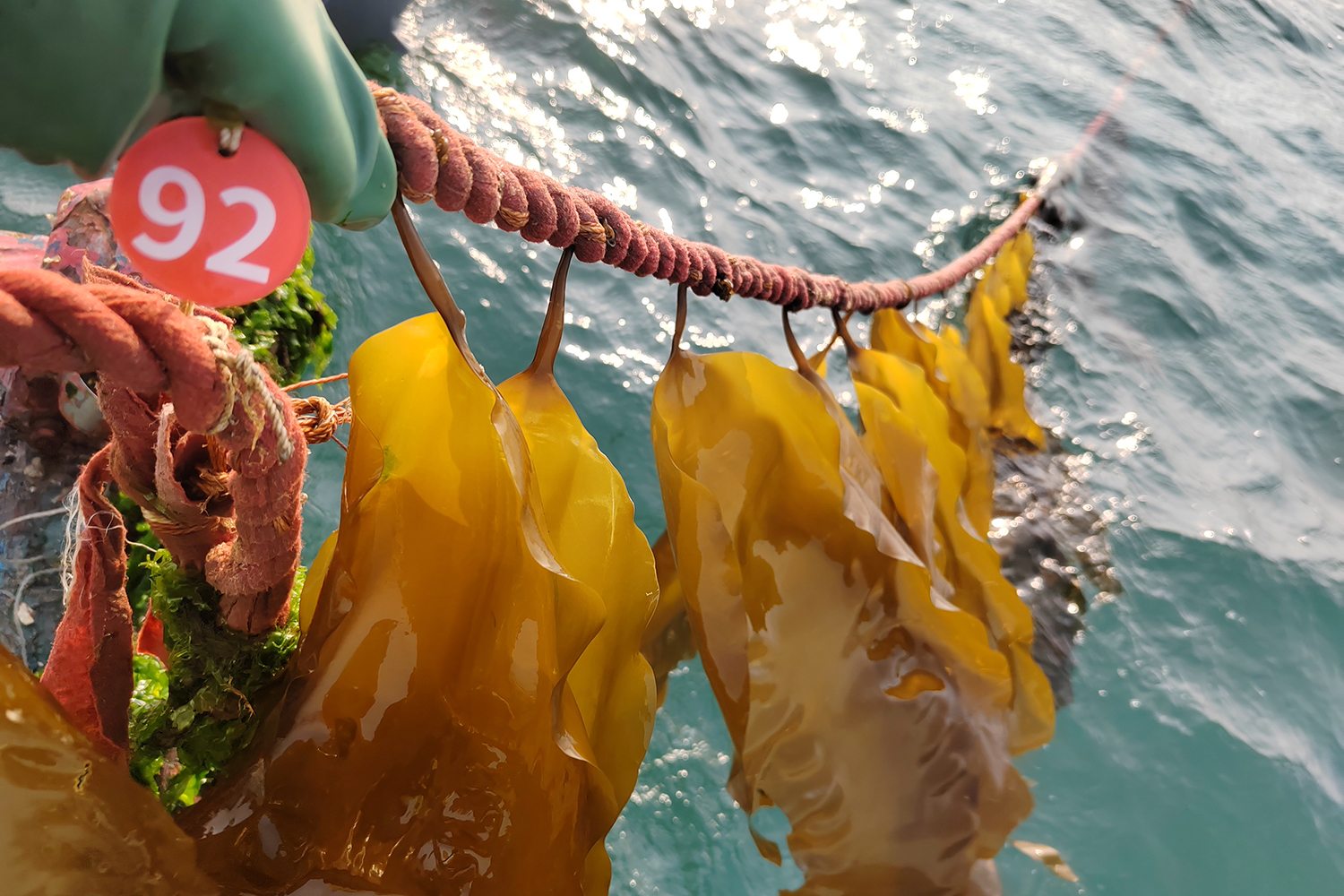
Like most aquatic vegetation, kelp is feeling the pressure of climate change. Rising sea temperatures have caused a significant reduction in the size of kelp forests, shorter growing and harvesting seasons and a declining quality in farmed seaweed. Species such as Japanese kelp (Saccharina japonica) and wakame (Undaria pinnatifida), which serve as critical global economic resources, are among those most affected.
To give kelp a chance against climate change, a research team led by Professor Tifeng Shan of the Institute of Oceanology, Chinese Academy of Sciences (IOCAS) in Qingdao, has developed a new method for breeding triploid kelp cultivars. Hopes are high that the method will help accelerate the development of hardier, faster-growing kelp strains that can better withstand warming oceans, ultimately supporting marine ecosystems, and improving food and carbon sequestration potential in a changing climate.
Triploid breeding is a commonly used strategy to breed elite varieties in terrestrial crops and marine animals, such as oysters. Triploid individuals usually have superior traits – greater biomass, better quality and stronger stress resistance – compared to diploids. However, while a common practice in terrestrial crops, triploid breeding has rarely been applied to seaweeds.
“To our knowledge, all farmed kelp cultivars are diploid,” Shan told the Advocate. “Kelp includes many economically and ecologically important species, such as Japanese kelp, wakame and giant kelp (Macrocystis pyrifera). Our research focuses on breeding new kelp cultivars. The goal of this study was to establish a precise, stable method to obtain triploid sporophytes and develop triploid cultivars with desirable traits.”
![Ad for [membership]](https://www.globalseafood.org/wp-content/uploads/2025/07/membership_web2025_1050x125.gif)
The idea is to deliberately cross kelp with sought-after traits to create new varieties with those traits, one of which is a naturally higher tolerance to rising ocean temperatures. Shan and his team derived single-sex (male) diploid gametophytes and crossed them with three female haploid clonal lines, successfully producing three triploid hybrid lines. Their target species, wakame, is prized for its longer blades, higher quality, and most importantly, its ability to continue growing into April when typical diploid cultivars begin to age and decay.
“We usually breed heat-resistant diploid kelp cultivars through cross and selection methods,” said Shan. “We obtain a large number of crossing lines, expose them to high temperatures and select more heat-resistant cultivars. Now we can screen heat-resistant triploid cultivars using similar methods. Our triploid cultivars keep growing and show no signs of aging in mid-April when temperatures rise. In comparison, common diploid cultivars start to decay between late March and early April in northern China.”
Trials show that compared to conventional diploid cultivars, the triploids exhibit superior traits, including faster growth, longer blades, enhanced resistance to higher temperatures and aging and sterility. The work provides a practical tool for breeding hardier, more adaptable kelp varieties, which Shan believes could meaningfully support seaweed farming.
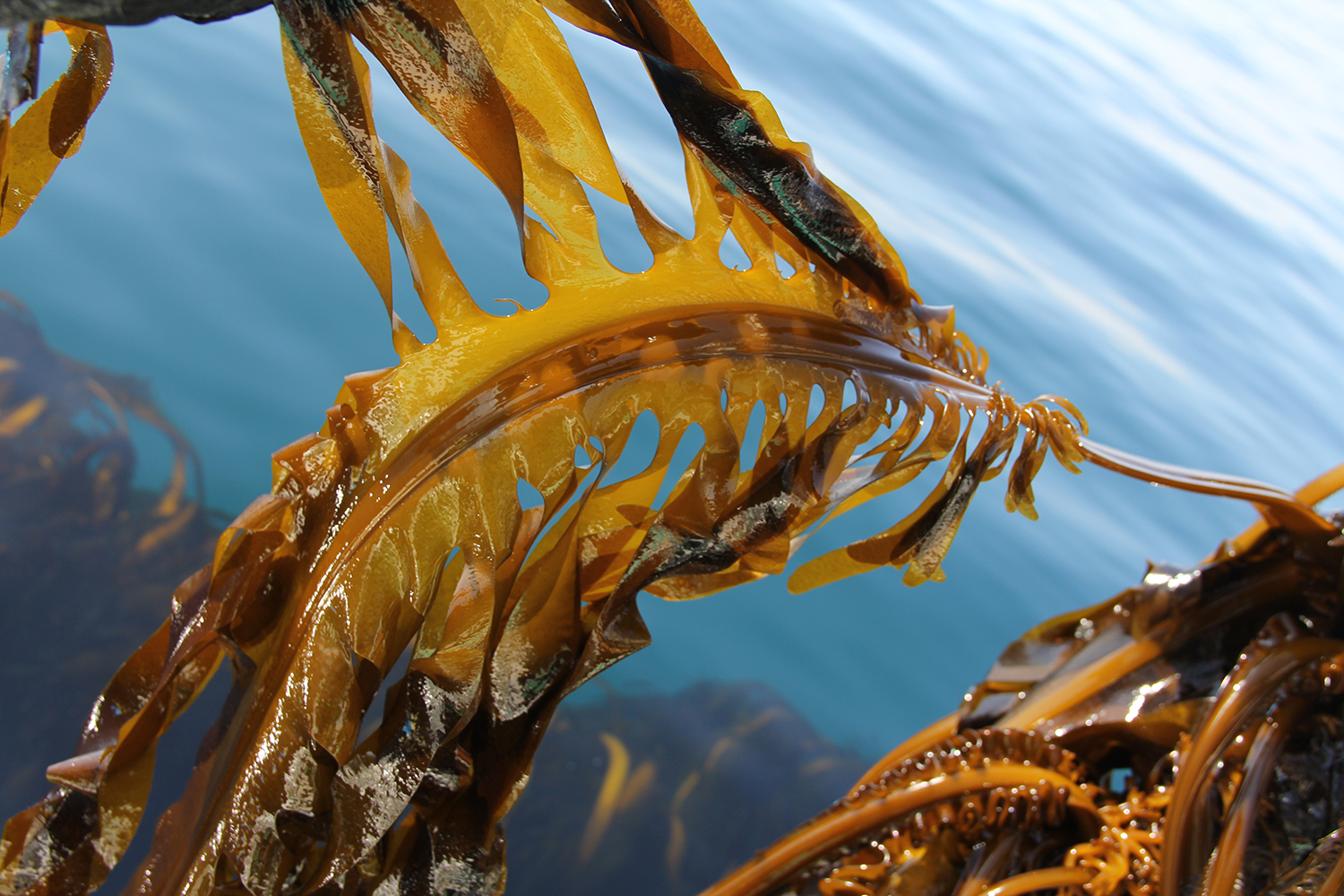
“We may be able to improve the ability of farmed kelp to adapt to ongoing ocean warming, but we still need to determine the maximum temperature that triploid kelp cultivars can tolerate,” he said. “This is the next step in our work. In terms of the impact on seaweed farming, triploid cultivars could increase profits due to higher quality and yields, and farmers may benefit from enhanced growth rates and longer cultivation periods. Also, because triploid kelp can’t reproduce, breeders can better protect their unique varieties. It also means that farmers need to purchase new triploid seedlings from breeders at the beginning of every farming season instead of growing their own.”
Are giant kelp forests carbon sinks? Environmental DNA technology offers clues
Sterility offers another advantage: It mitigates ecological concerns over the introduction of heat-resistant cultivars into farms. Because triploid kelp cultivars cannot reproduce, they cannot spread into nearby wild populations and therefore have no influence. Diploid cultivars, by contrast, release spores that may cause genetic pollution in surrounding waters, said Shan, so ecological risks must be considered when deploying them on farms.
“Seaweed farming is restricted in many countries, largely due to fears over ecological risks to wild populations,” said Shan. “However, because of their sterility, triploid kelp cultivars could be farmed in many countries that have no seaweed farming at present. Therefore, this research may help expand seaweed farming globally, without triggering any ecological concerns.”
The study by Shan and his team marks an important step toward breeding heat-tolerant kelp and helping seaweed farmers increase reliability in their yields in warming ocean waters. More recently, the team has successfully obtained triploid sporophytes of Japanese kelp and begun cultivation tests in the sea.
Looking ahead, the team plans to apply its method to other species of kelp, develop large-scale triploid seedling production, facilitate and expand the farming of triploid cultivars and explore whether other traits such as disease resistance and nutrient uptake can also be enhanced.
“We look forward to collaboration with scientists and seaweed companies worldwide to promote triploid kelp farming and more,” said Shan.
Now that you've reached the end of the article ...
… please consider supporting GSA’s mission to advance responsible seafood practices through education, advocacy and third-party assurances. The Advocate aims to document the evolution of responsible seafood practices and share the expansive knowledge of our vast network of contributors.
By becoming a Global Seafood Alliance member, you’re ensuring that all of the pre-competitive work we do through member benefits, resources and events can continue. Individual membership costs just $50 a year.
Not a GSA member? Join us.
Author
-

Correspondent Bonnie Waycott became interested in marine life after learning to snorkel on the Sea of Japan coast near her mother’s hometown. She specializes in aquaculture and fisheries with a particular focus on Japan, and has a keen interest in Tohoku’s aquaculture recovery following the 2011 Great East Japan Earthquake and Tsunami.
Related Posts
Innovation & Investment
20,000 lettuces under the sea: Could underwater agriculture be the future of farming?
Preliminary research suggests that emerging mariculture methods could provide alternatives to land-based agriculture and within recirculating systems.
Intelligence
Exploring the relevancy, resiliency and scalability of seaweed farming at Seagriculture
Seagriculture, the first international seaweed conference, covers all angles of seaweed farming for food, energy and climate change solutions.
Intelligence
Kelp is the climate-friendly crop that could
Kelp aquaculture is poised for growth on both U.S. coasts, but one grower network in Maine is building a brand and demand for domestic seaweed.
Responsibility
Can ranching ‘zombie urchins’ boost uni, save kelp forests?
With Norwegian knowledge and a partnership with Mitsubishi, Urchinomics aims to turn worthless empty urchins into valuable seafood while restoring kelp forests and creating jobs.