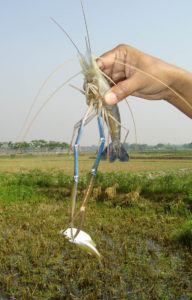
Bangladesh study examines potential for prawn cage farming
While Bangladesh's prawn industry is based on pond culture, a feasibility study was conducted to establish prawn cage culture to benefit resource-poor fishers and landless people.



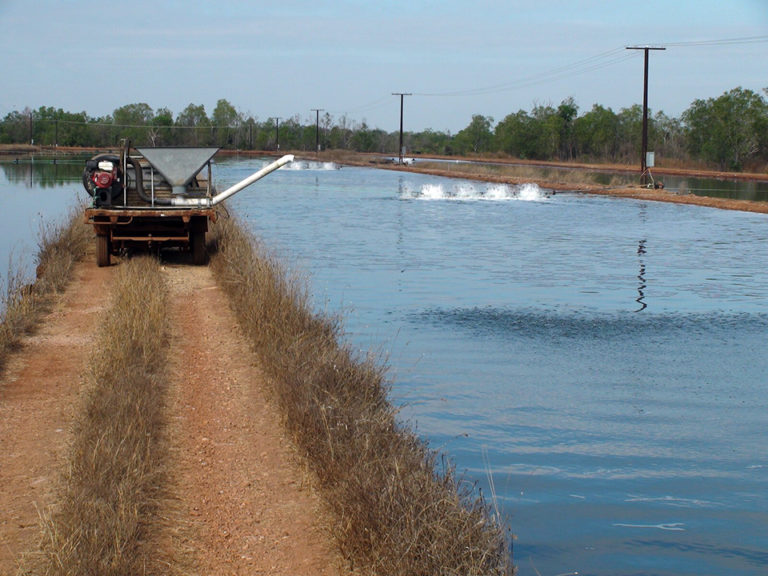
Pond pH had a strong effect on the effectiveness of a product applied to remove excess phosphate to control algal blooms in eutrophic aquaculture ponds.
While Bangladesh's prawn industry is based on pond culture, a feasibility study was conducted to establish prawn cage culture to benefit resource-poor fishers and landless people.
Farm cages should be sited where water quality is good and water velocity is adequate. The size, shape and position of cages should be selected to favor rapid flushing.
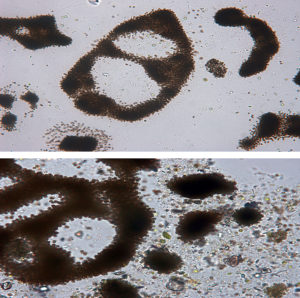
The most promising microcystin control in aquaculture is flocculation and sedimentation of harmful algal blooms with clay.
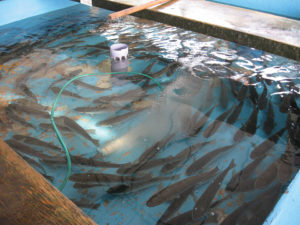
Aerator designs and mixing are key components of biofloc production systems. Diffuser aerators work primarily in smaller systems by moving deeper waters to the surface and creating constant mixing.
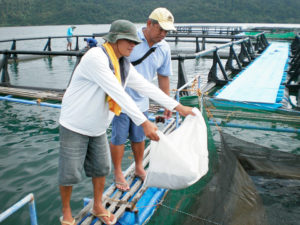
A low-volume, high-density culture technology developed through the Soy-In-Aquaculture Program helped show farmers that extruded floating feeds can be used in the cage culture of high-value marine fish.
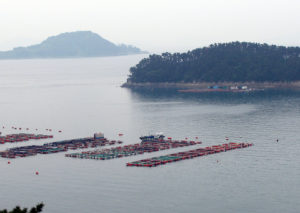
Culture cages should be installed in areas with good water circulation and not placed in embayments with narrow openings or very shallow water.
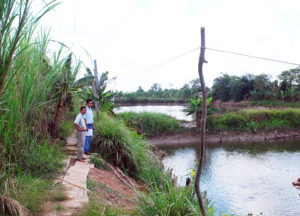
Readily available energy has supported expanded seafood production. Feed production is the major energy-consuming aspect of finfish and crustacean culture.
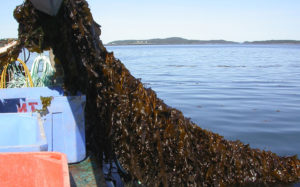
Regulatory frameworks and financial incentives may be required to fully realize the benefits of integrated multi-trophic aquaculture systems.
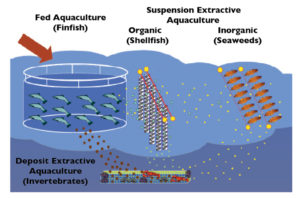
Integrated multi-trophic aquaculture involves cultivating fed species with extractive species that utilize inorganic and organic wastes for their growth.
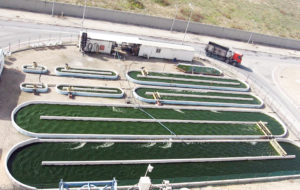
Algae offer advantages over terrestrial plants for biofuel production: short generation cycles and fast population growth. Algal fuel production would spare corn and soybeans for consumption as food for humans.
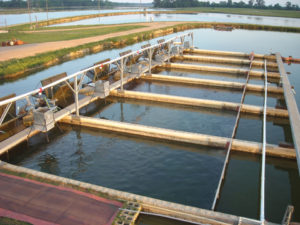
Auburn University researched how to improve economic efficiency and profitability of catfish production with in-pond raceway systems. IPRS systems help achieve high levels of feed performance and fish survival, and lower production costs.
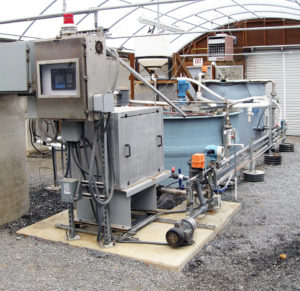
Membrane biological reactors provide wastewater treatment by utilizing activated sludge to remove nitrogen, phosphorus and biological oxygen demand. The reactors also have the potential for nearly complete water recovery in fish culture systems.
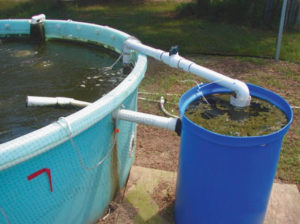
A study examined the effects of removing suspended solids using side-stream settling chambers in a superintensive biofloc shrimp system. The chambers reduced nitrate-nitrogen and phosphate concentrations and improved shrimp growth rate and biomass.
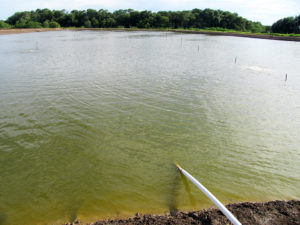
Although higher rates have been promoted, pond fertilization ratios of 2:1 or 1:1 nitrogen to phosphorus should be maintained in older ponds for food fish production.
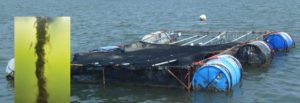
Production of Pacific white shrimp in near-shore floating cages at sea was shown technically and economically feasible at small scale for several growing cycles, as managed by artisanal fishers and their families on the Pacific coast of Costa Rica.