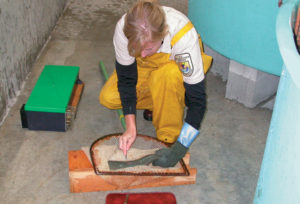
New aquaculture drugs under FDA review
Only eight active pharmaceutical ingredients available in 18 drug products have been approved by the U.S. Food and Drug Administration for use in aquaculture. The approval process can be lengthy and expensive.



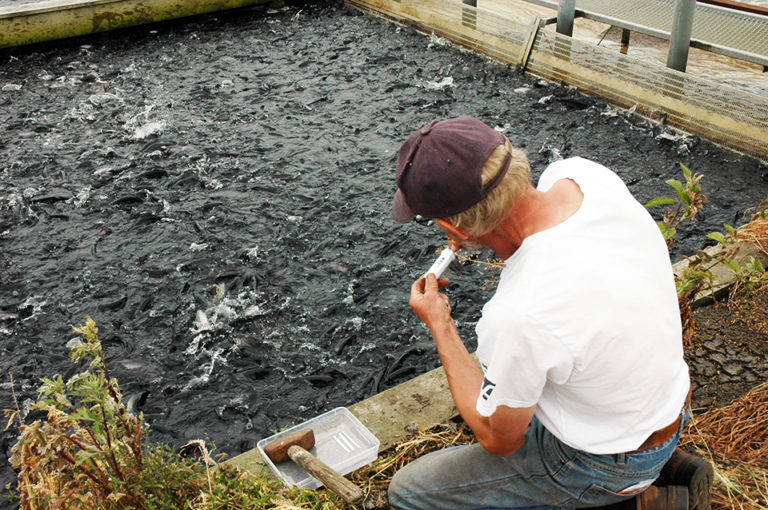
Formalin use is a common fish parasite control, but the chemical’s potential work safety and ecological impacts are leading to a search for alternatives.
Only eight active pharmaceutical ingredients available in 18 drug products have been approved by the U.S. Food and Drug Administration for use in aquaculture. The approval process can be lengthy and expensive.

The authors are exploring alternative models for shrimp breeding that address genotype-environment interactions with solutions that could advance breeding in South and Central America.
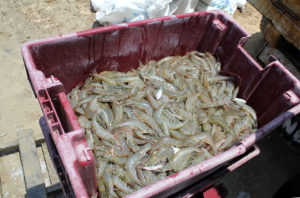
A proposed new metric, the production productivity index, or PPI, reports daily production for shrimp postlarvae. The new metric converts production data into relative terms, allowing meaningful comparisons across farms and individual ponds regardless of production days, pond size or stocking density.
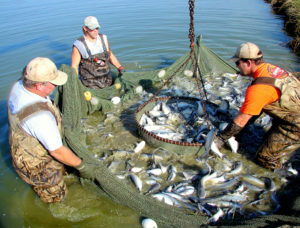
Although there is increasing interest in blue catfish, a potential disadvantage of the fish when compared to channel catfish is their reported poorer tolerance of low dissolved-oxygen concentrations.
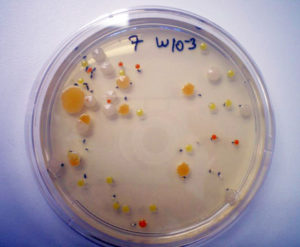
Research has shown that probiotics and prebiotics can help mediate stress responses and improve disease resistance, growth performance, feed utilization, carcass composition and other traits by stimulating animals’ innate immune systems.
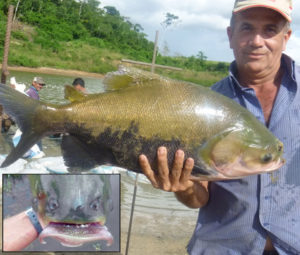
Many fish species that live in the Amazon basin have great potential for aquaculture. The main species currently cultured in the region is tambaqui, a fast-growing, omnivorous fish that tolerates poor water quality.
Early Mortality Syndrome is a new disease that has been detected at shrimp farms in Asia. It appears within 30 days of stocking and causes symptoms that include lethargy; soft, darkened shells and mottling of the carapace.
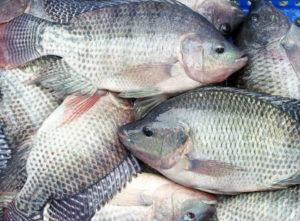
Salinity tolerance in tilapia can be improved by optimizing acclimation protocols, adding salt to the diet or hybridization between fast-growing and salt-tolerant species.
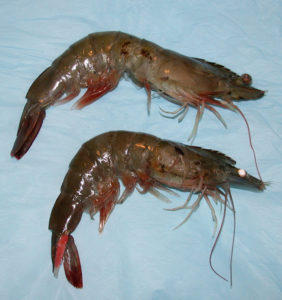
Shrimp exposed to high concentrations of nitrate exhibit shorter antennae, gill abnormalities and hepatopancreas lesions. Nitrate toxicity is more of an issue for shrimp raised in lower-salinity waters.

With a hatchery system that involves collection of eggs and larvae, and hormonal sex reversal, it is possible to produce billions of monosex tilapia (all-male) fry to satisfy demand and accelerate aquaculture development.
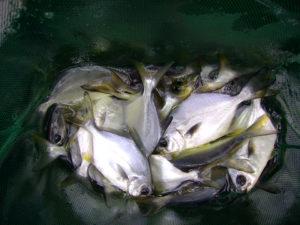
Taurine may not only improve growth and performance, but also is required to reduce nutritional diseases such as green liver disease and low hematocrit levels in some fish.
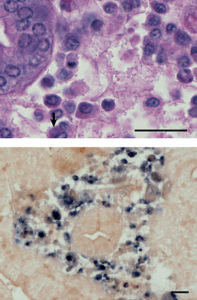
An in situ hybridization procedure can be used to diagnose blue crabs from Chesapeake Bay infected with a reovirus.
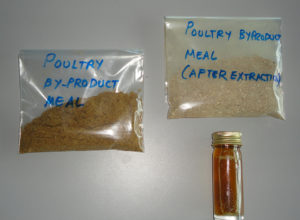
Poultry byproduct meal can replace much of the fishmeal in shrimp diets. To better understand the nutritive value of its fat, the authors analyzed the fat components and conducted a feeding trial.
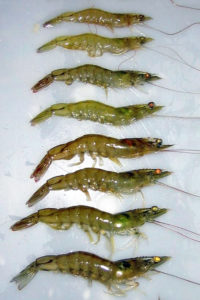
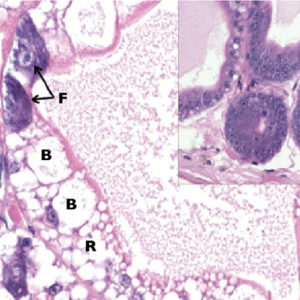
Necrotizing hepatopancreatitis is a disease of shrimp that causes slow growth, low survival and poor feed conversion. Wet mount analysis is commonly used to diagnose NHP in ponds in Brazil.

To develop probiotics for marine shrimp, authors chose a bacterium with high growth velocity and great capacity to inhibit pathogens, among other traits.