


Monitoring finds sea lice persist on wild salmon after BC salmon farm closures

Data show sea lice persist on wild juvenile salmon in two BC regions after farm closures, with further research planned for peer review
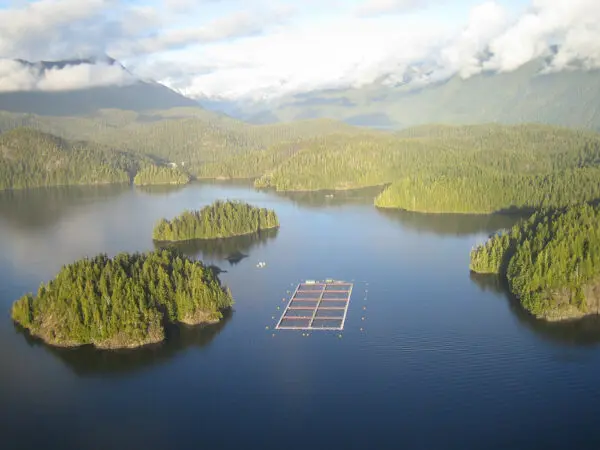
Sea lice continue to be detected on wild juvenile salmon in two regions of British Columbia where salmon farms have been removed, according to the latest monitoring data released by Mowi Canada West and highlighted by the BC Salmon Farmers Association (BCSFA).
The association said findings from the Broughton Archipelago and Discovery Islands challenge claims that salmon farms are a primary driver of sea lice infestations in wild Pacific salmon. However, the monitoring results alone don’t establish what drives sea lice levels or rule out contributions from salmon farming.
“Another year has passed, marking ten years of sea lice monitoring in the Broughton Archipelago and nine years in the Discovery Islands, and the data continue to confirm that BC salmon farms are not driving sea lice levels in wild Pacific Salmon,” the BCSFA said in a press release.
Salmon farms were removed from the Discovery Islands in 2022 and the Broughton Archipelago in 2024 amid concerns that sea lice from farmed salmon could affect migrating wild juvenile salmon.
![Ad for [BSP]](https://www.globalseafood.org/wp-content/uploads/2025/07/BSP_B2B_2025_1050x125.jpg)
Monitoring has continued in both regions following the removals, providing information about sea lice infestations in the absence of operating salmon farms.
According to a 2026 monitoring report prepared for Mowi Canada West by Mainstream Biological Consulting, researchers examined 508 wild juvenile salmon collected from 17 sites in the Broughton Archipelago during April and May.
Of those fish, 182 (or 35.8 percent) carried at least one sea louse. Researchers identified 340 lice in total, with an average of 1.9 lice per infected fish.
The sample included 200 chum salmon, 292 pink salmon, 15 coho salmon and one sockeye salmon. Sea lice were detected on 37 percent of the chum salmon and 33.2 percent of the pink salmon examined.
The report identified two types of sea lice, Lepeophtheirus salmonis and Caligus clemensi. The latter can infest a wide range of marine fish species, while L. salmonis is primarily associated with salmonids.
The BCSFA also released graphs comparing sea lice prevalence and infestation intensity in wild juvenile pink and chum salmon with salmon farm production in the Broughton Archipelago from 2016 to 2026 and the Discovery Islands from 2017 to 2026.
“As evidenced in the attached graphs, the prevalence of sea lice (the percentage of juvenile salmon that are infected with sea lice) and the intensity of sea lice (the average number of sea lice on infected fish), do not decrease or disappear, as is repeatedly reported to the public by anti-salmon farming activists,” the association said in its release.
The association attributed the patterns to natural year-to-year variability. However, the Broughton Archipelago monitoring report did not include a statistical analysis of changes over time or differences among sampling locations, limiting the conclusions that can be drawn about the causes of infestation.
Researchers conclude B.C. salmon farms pose minimal risk to wild salmon populations
The BCSFA said independent scientists are analyzing the monitoring data to investigate relationships between salmon farm stocking levels, ocean conditions and other factors that could influence sea lice infestations. The association said the research will be submitted for peer review.
“BC Salmon Farmers are committed to ensuring that salmon farms coexist with wild salmon in coastal British Columbia,” said Brian Kingzett, Executive Director of BCSFA. “Sea lice monitoring and innovation to ensure that sea lice levels on farmed salmon cannot spread to wild salmon are a critical part of operations.”
The association also highlighted the economic effects of salmon farm closures, citing estimates of 1,500 fewer jobs, $640 million in lost economic activity and more than $1 billion in canceled investment. It further noted that Canada imported more than $765 million worth of farmed Atlantic salmon in 2025, citing Statistics Canada, as domestic salmon production declined.
While the monitoring data document the continued presence of sea lice after salmon farm removals, further analysis is needed to determine how aquaculture activity, environmental conditions and other factors influence infestation levels in wild Pacific salmon.
Now that you've reached the end of the article ...
… please consider supporting GSA’s mission to advance responsible seafood practices through education, advocacy and third-party assurances. The Advocate aims to document the evolution of responsible seafood practices and share the expansive knowledge of our vast network of contributors.
By becoming a Global Seafood Alliance member, you’re ensuring that all of the pre-competitive work we do through member benefits, resources and events can continue. Individual membership costs just $50 a year.
Not a GSA member? Join us.
Author

Related Posts
Innovation & Investment
International review questions scientific basis for BC salmon farm ban
Researchers say Canada’s ban on ocean-based BC salmon farms overlooks decades of science and offers limited gains for wild salmon.
Responsibility
B.C. First Nations release scientific review of salmon farming in British Columbia
The 500-page collaborative review sheds light on salmon farming in British Columbia, covering everything from sea lice to fish health.
Health & Welfare
Government of Canada science report says salmon farms don’t spread sea lice to wild fish
A scientific report has concluded that sea lice on farmed salmon do not impact sea lice levels on wild juvenile salmon in British Columbia.
Responsibility
Leading scientists defend Canada’s peer-reviewed science advisory process on salmon farming
Nine top scientists are publicly defending the science and advice presented on salmon farming by the Canadian Science Advisory Secretariat.