


New technique could give fisheries advance warning before harmful algal blooms

Tracking chemical signals from tiny marine predators could predict harmful algal blooms up to seven weeks before toxins reach dangerous levels
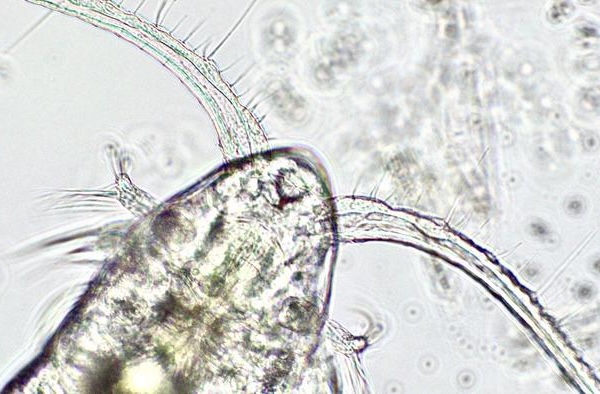
A new monitoring technique could give shellfish fisheries and coastal managers up to seven weeks of warning before harmful algal toxins reach dangerous levels, according to a study led by researchers at the University of California (UC) Santa Cruz.
The NOAA-funded study, published in the Proceedings of the National Academy of Sciences, tested a method that tracks chemical signals released by copepods, tiny crustaceans that feed on phytoplankton. The compounds, known as copepodamides, can trigger toxin production in certain harmful algae.
Researchers found that monitoring these chemical cues could predict blooms of toxin-producing Pseudo-nitzschia six weeks in advance and domoic acid contamination in mussels above safety thresholds seven weeks in advance. Models that tracked domoic acid directly were most accurate at just one week of lead time.
“By capturing the chemical signals of biological predators, we’ve opened up a vital top-down window into ecosystem dynamics,” said Raphael Kudela, senior author and professor of ocean sciences at UC Santa Cruz. “By ‘listening’ to chemical interactions between marine grazers and algae, we can add a new and reliable monitoring technique to our early-warning toolbox.”
![Ad for [Aquademia]](https://www.globalseafood.org/wp-content/uploads/2025/07/aquademia_web2025_1050x125.gif)
Pseudo-nitzschia is a genus of microscopic algae that can produce domoic acid, a neurotoxin that can accumulate in shellfish and other marine species. High toxin levels can lead regulators to close fisheries and shellfish harvesting areas to protect human health.
To test the approach, researchers adapted a passive sampling technology known as Solid-Phase Adsorption Toxin Tracking, or SPATT. The system uses porous resin beads suspended in mesh rings to absorb dissolved compounds from seawater over time.
During a 28-month monitoring project at the Santa Cruz Municipal Wharf in Monterey Bay, the samplers captured copepodamides that correlated with zooplankton counts. Laboratory experiments also found that exposing local strains of Pseudo-nitzschia to copepodamides increased cellular toxin production tenfold.
“Globally, researchers are continuing to find new instances of predator-induced toxin production in different species of harmful algae,” said Aubrey Trapp, the study’s corresponding author and postdoctoral scholar at Northwest Indian College.
FAO issues ‘roadmap’ for early harmful algal bloom warning systems
Researchers then used the Monterey Bay data to develop statistical models for predicting harmful algal blooms and domoic acid contamination. The copepodamide models identified 22 percent of high-toxin events seven weeks in advance, compared with 14 percent identified one week in advance through conventional toxin tracking, according to the study.
The additional warning time could be particularly useful for fisheries and shellfish operations because domoic acid can accumulate through marine food webs. When concentrations exceed federal safety thresholds, regulators can close affected fisheries and harvesting areas.
The researchers said the approach could potentially be incorporated into existing monitoring programs because SPATT samplers are already used by monitoring networks along the Pacific coast and elsewhere.
“By simply analyzing those existing resin samplers for grazer chemical signals alongside target toxins, coastal agencies can plug top-down information directly into our current warning networks without needing expensive new infrastructure,” Kudela said. “Looking ahead, our goal is to adapt this passive sampling technology for deployment on autonomous underwater vehicles and gliders that would deliver real-time, high-resolution predictive risk maps across the entire California Current System.”
Now that you've reached the end of the article ...
… please consider supporting GSA’s mission to advance responsible seafood practices through education, advocacy and third-party assurances. The Advocate aims to document the evolution of responsible seafood practices and share the expansive knowledge of our vast network of contributors.
By becoming a Global Seafood Alliance member, you’re ensuring that all of the pre-competitive work we do through member benefits, resources and events can continue. Individual membership costs just $50 a year.
Not a GSA member? Join us.
Author

Related Posts

Intelligence
Artificial intelligence analysis reveals global rise in floating algal blooms
Artificial intelligence helped researchers uncover a global rise in floating algal blooms that could affect marine ecosystems and fisheries.
Intelligence
Can AI tool from NASA track harmful algal blooms from space?
A NASA-developed artificial intelligence tool uses satellite data to detect harmful algal blooms in U.S. coastal waters.

Intelligence
Researchers uncover giant enzymes in marine algae responsible for deadly fish-killing toxins
A new study shows that massive enzymes in marine algae that produce neurotoxins cause mass fish deaths during harmful algal blooms.
Intelligence
Artificial intelligence successfully predicts toxic algae in UK seafood
Molecular biology-based approach with artificial intelligence can predict a rise in toxic algae weeks earlier than the microscope method.