


WildTechDNA and 100% Great Lakes Fish win the 2026 Responsible Seafood Innovation Awards

WildTechDNA’s rapid DNA testing technology and the 100% Great Lakes Fish Initiative take top honors at the 2026 Responsible Seafood Summit in Bangkok
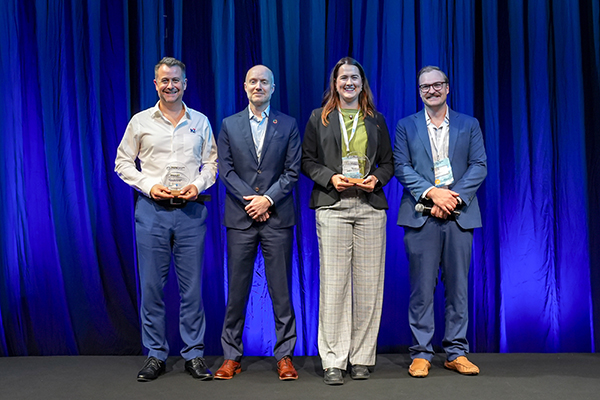
Each year, the Responsible Seafood Innovation Awards recognize new approaches to some of the seafood industry’s most persistent challenges, from improving aquatic animal health to reducing waste and creating more value from seafood resources.
At the 2026 Responsible Seafood Summit in Bangkok, Thailand, WildTechDNA won the Responsible Seafood Innovation Award in the aquaculture category for ORYA – its portable DNA testing technology designed to identify pathogens and species in the field in minutes.
The 100% Great Lakes Fish Initiative, a program of the Great Lakes St. Lawrence Governors & Premiers (GSGP), won the fisheries category for its work to find productive uses for every part of fish caught, raised or processed across the Great Lakes region.
WildTechDNA brings DNA testing to the farm
For aquaculture producers, identifying the cause of a disease outbreak can traditionally mean sending refrigerated samples to a laboratory and waiting days for results. WildTechDNA is working to move that process directly to the farm.
![Ad for [BSP]](https://www.globalseafood.org/wp-content/uploads/2025/07/BSP_B2B_2025_1050x125.jpg)
The Hamilton, Ontario-based company developed ORYA, a field-ready DNA testing system designed for use by non-experts. The test can identify target DNA in less than 20 minutes without conventional laboratory equipment.
“For a technology like this to be really useful, it needs to be highly portable,” WildTechDNA CEO and founder Natalie Schmitt told the Advocate ahead of the Summit. “It needs to be ultra-rapid, affordable, easy to use and specific for your target species of interest.”
Users collect a sample, such as a swab from a fish, release its DNA into a liquid and add that material to a tube containing dried reagents. A small reusable “heat book” and disposable heat pack provide the temperature required to amplify the target DNA, while a lateral-flow strip provides the final result.
The technology can be configured to detect aquaculture pathogens, and it can also be multiplexed to test for multiple targets at once. Earlier versions of the technology were developed for species identification, including work to distinguish eel species and help detect the illegal trade of endangered eels. WildTechDNA has since expanded the platform toward aquaculture health, where faster identification of pathogens could allow farmers to respond sooner and make more targeted treatment decisions.
“We’re so thrilled that we’ve been nominated as a finalist for this award,” she said ahead of the Summit.
100% Great Lakes Fish turns waste into opportunity
In the fisheries category, the 100% Great Lakes Fish Initiative won for an idea that is simple in principle but complex in practice: use the whole fish.
Fish heads, frames, skins, scales, viscera and other byproducts have traditionally been discarded or sold into relatively low-value markets. The 100% Great Lakes Fish Initiative instead treats those materials as raw materials that can become products ranging from fertilizer, bait and pet food to fish oil, collagen, gelatin and leather.
The initiative began in 2022 after GSGP staff visited Iceland and saw the country’s 100% Fish model in action. Program manager John Schmidt said one number was particularly memorable: an Icelandic cod that once generated about U.S. $12 from its fillet can now generate more than $5,000 in total value through products made from the whole fish.
“That figure really stuck with us,” Schmidt told the Advocate ahead of the Summit. “It made us start thinking about what a Great Lakes version of that model could look like.”
At the time, the Great Lakes region was generating approximately 30 million pounds of fish byproducts annually, with as much as 60 percent of a processed fish remaining outside the human food market.
Today, 44 companies and organizations have signed the initiative’s 100% Fish Pledge, representing roughly 90 percent of the Great Lakes commercial catch by volume. According to GSGP, that participation means the practice of sending commercial fish byproducts to landfill has effectively ended among participating operations in the region.
“By creating more value from material that’s already being harvested, it’s a win for everyone,” said Schmidt.
Sponsored by BlueCarbon+, the Responsible Seafood Innovation Awards include aquaculture and fisheries categories and have been held annually since 2012, when GSA launched the program to recognize innovations supporting a more responsible and sustainable seafood industry.
Now that you've reached the end of the article ...
… please consider supporting GSA’s mission to advance responsible seafood practices through education, advocacy and third-party assurances. The Advocate aims to document the evolution of responsible seafood practices and share the expansive knowledge of our vast network of contributors.
By becoming a Global Seafood Alliance member, you’re ensuring that all of the pre-competitive work we do through member benefits, resources and events can continue. Individual membership costs just $50 a year.
Not a GSA member? Join us.
Author

Related Posts

Innovation & Investment
Responsible Seafood Innovation Award finalist: Giving shrimp farmers an edge with traceability and AI
Aquapulse is a 2026 Responsible Seafood Innovation Award finalist for combining farm data, seafood traceability and AI-powered trade intelligence.
Innovation & Investment
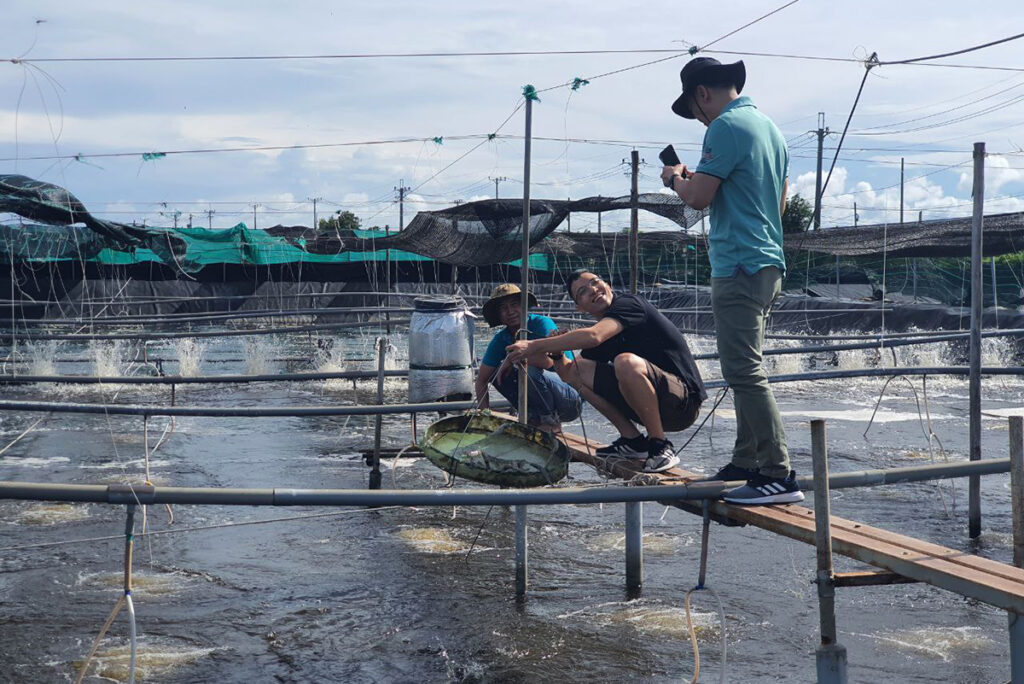
Responsible Seafood Innovation Award finalist: Learning from farm failures to develop an on-site rapid test to detect shrimp diseases
2026 Responsible Seafood Innovation Award finalist Forte Biotech’s rapid test helps farmers detect shrimp diseases on-site in about an hour, giving them more time to respond.
Innovation & Investment
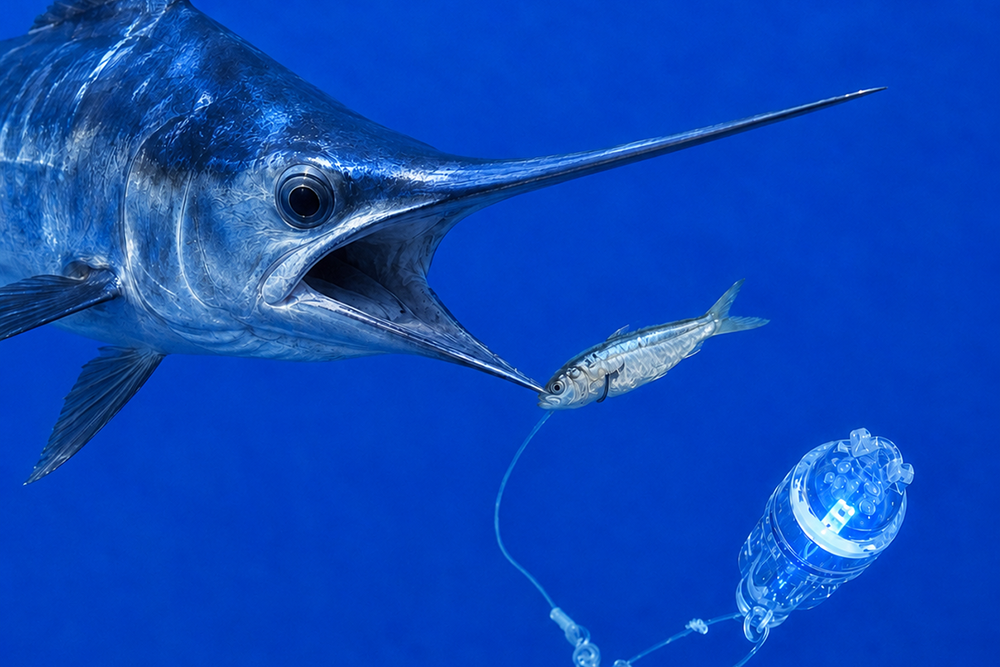
Responsible Seafood Innovation Award finalist: How blue-violet LED lights could help longline fisheries reduce bycatch
2026 Responsible Seafood Innovation Award finalist's LED fishing lights can reduce bycatch in longline fisheries and single-use lightsticks.
Innovation & Investment
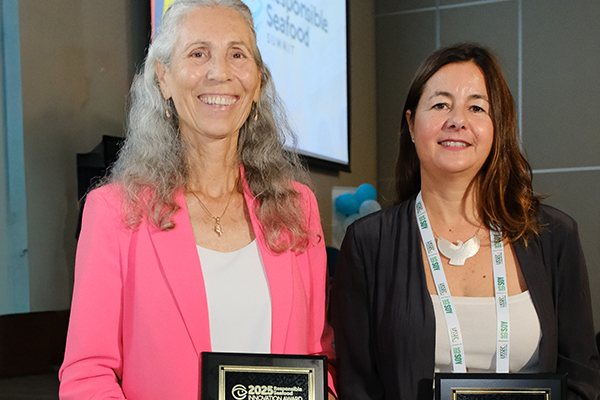
FAU’s Queen Conch Lab and ISSF’s Jelly-FAD win the 2025 Responsible Seafood Innovation Awards
FAU’s Queen Conch Lab and ISSF’s jelly-FAD win top honors at the Responsible Seafood Summit, advancing sustainable aquaculture and fisheries.