


Responsible Seafood Innovation Award finalist: Giving shrimp farmers an edge with traceability and AI

Indian startup Aquapulse wants to end distress sales by connecting smallholder shrimp farmers to a seafood traceability and AI-powered trade platform
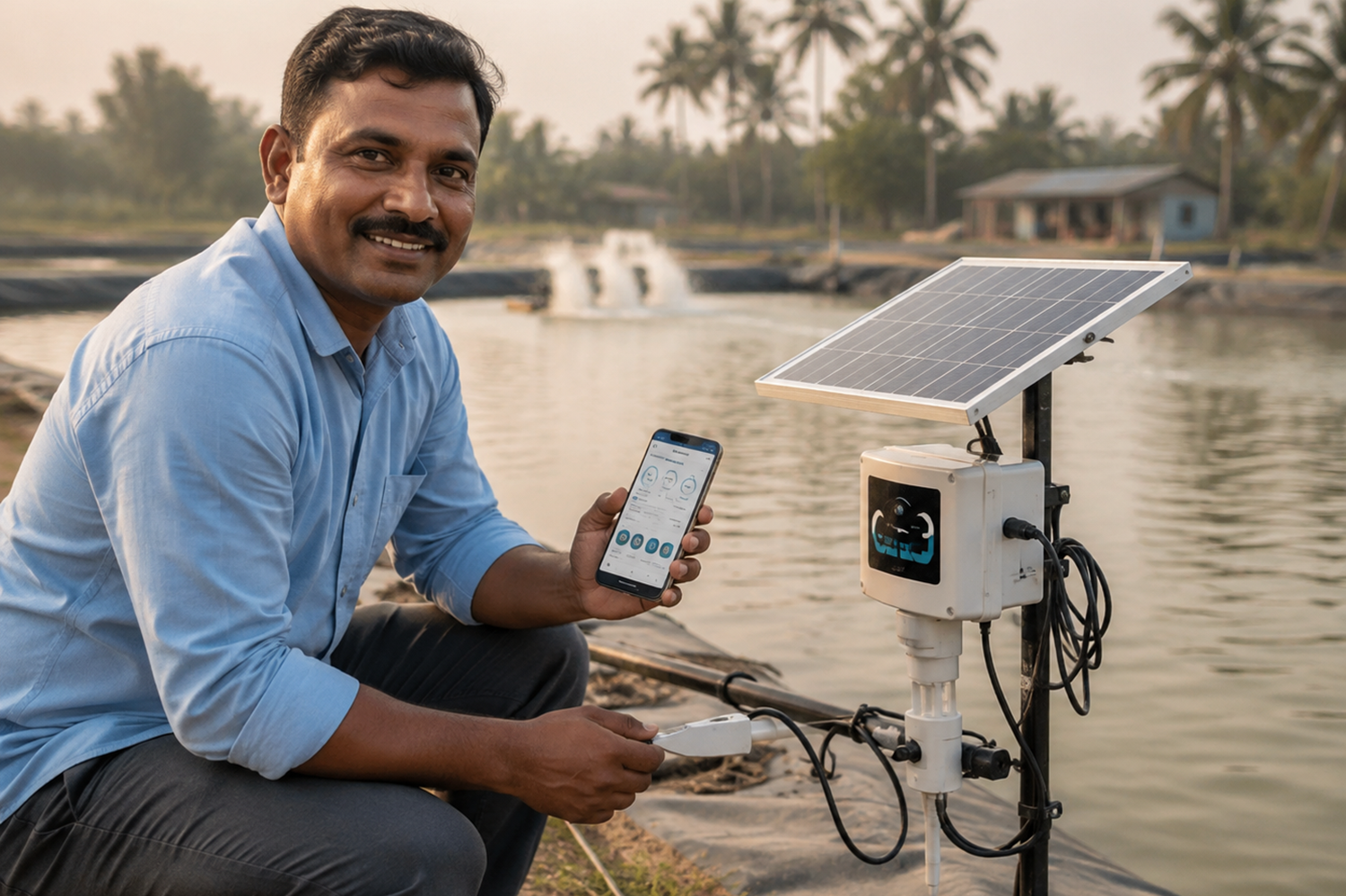
Along the eastern coast of India, a small shrimp farmer’s harvest cycle can end in a distress sale. Faced with financial difficulties or the threat of disease, small-scale farmers may be forced to sell off their product at below-market rates. Poor logistics can aggravate those losses, further tamping down India’s share of a global market valued at U.S. $28.42 billion.
To overcome these hurdles, brothers Abhishek and Abhilash Dwivedy and Ananya Mohapatra founded Aquapulse. The startup operates out of Bhubaneswar, the capital of Indian state of Odisha, located along that same eastern coast.
With operations stretching into the neighboring states of West Bengal and Andhra Pradesh, Aquapulse has brought more than 6,000 smallholder shrimp farms under its umbrella. Over the last two years, the company has built a pond-to-port model that allows buyers to trace the shrimp through every stage of the supply chain – all the way back to the pond where they were raised.
“We can trace the shrimps from the pond to the processing unit, then from the processing unit out to the factory level, so that end-to-end mapping can be done of the same commodity,” said Abhilash Dwivedy, co-founder and chief growth officer.
![Ad for [membership]](https://www.globalseafood.org/wp-content/uploads/2025/07/membership_web2025_1050x125.gif)
For its achievements and potential, Aquapulse was named a finalist for the 2026 Responsible Seafood Innovation Award in the aquaculture category.
Building a network from the ground up
Having only begun farming Pacific white shrimp (Penaeus vannamei) in 2009, India is second only to Ecuador in global shrimp exports, with 804.20 million metric tons (MT) in 2025, a 10 percent year-on-year increase. The species is central to Aquapulse’s current business model, which relies on both a physical presence and digital analyses to drive exports to China, Vietnam, Japan and other countries amid global economic shifts impacting the industry.
Abhishek Dwivedy’s experience in seafood has helped Aquapulse cultivate farmer relationships now numbering in the thousands. To oversee farms spread across hundreds of miles, the company developed a Grassroot Level Training Program that recruits rural youth leaders, calling them “aquapreneurs.”
“We started a hub-and-spoke model where we created clusters, 75 to 80-odd farmers in one cluster, and these farmer interest groups (or the FIs), you can say, were led by one aquapreneur,” said Abhishek Dwivedy, the co-founder, MD and CEO.
These aquapreneurs help train farmers in Aquapulse’s operating procedures, he said, guiding them through the entire pipeline from culture through harvest. Building its initial network has taken time, even when working in Aquapulse’s home state of Odisha.
“It took us around two, two and a half years to build these models, to sensitize, train and onboard these farmers, and then create a guided process so that the end-to-end uses can happen, the transactions can happen, the operations can happen,” added Abhilash Dwivedy.
From the outset, the company has taken a hands-on approach. Initial interactions depend on a physical playbook in a local language before farmers can be introduced to a digital setup.
“We engage, interact and we develop their ecosystem,” Abhilash Dwivedy said. “Once that is developed, then we start from the second crop itself, so that these farmers are ready.”
From pond to port
Aquapulse’s involvement continues throughout the production cycle. Before harvest, the company’s app analyzes images of the pond across several parameters, including water quality and clarity, and whether all equipment and infrastructure related to feeding and biosecurity are in place and functioning properly.
Throughout the culture cycle, the company also monitors water chemistry based on eight different factors, such as dissolved oxygen, salinity and hardness. Those data help determine whether the pond is healthy and cleared for harvest, after which transport can be organized.
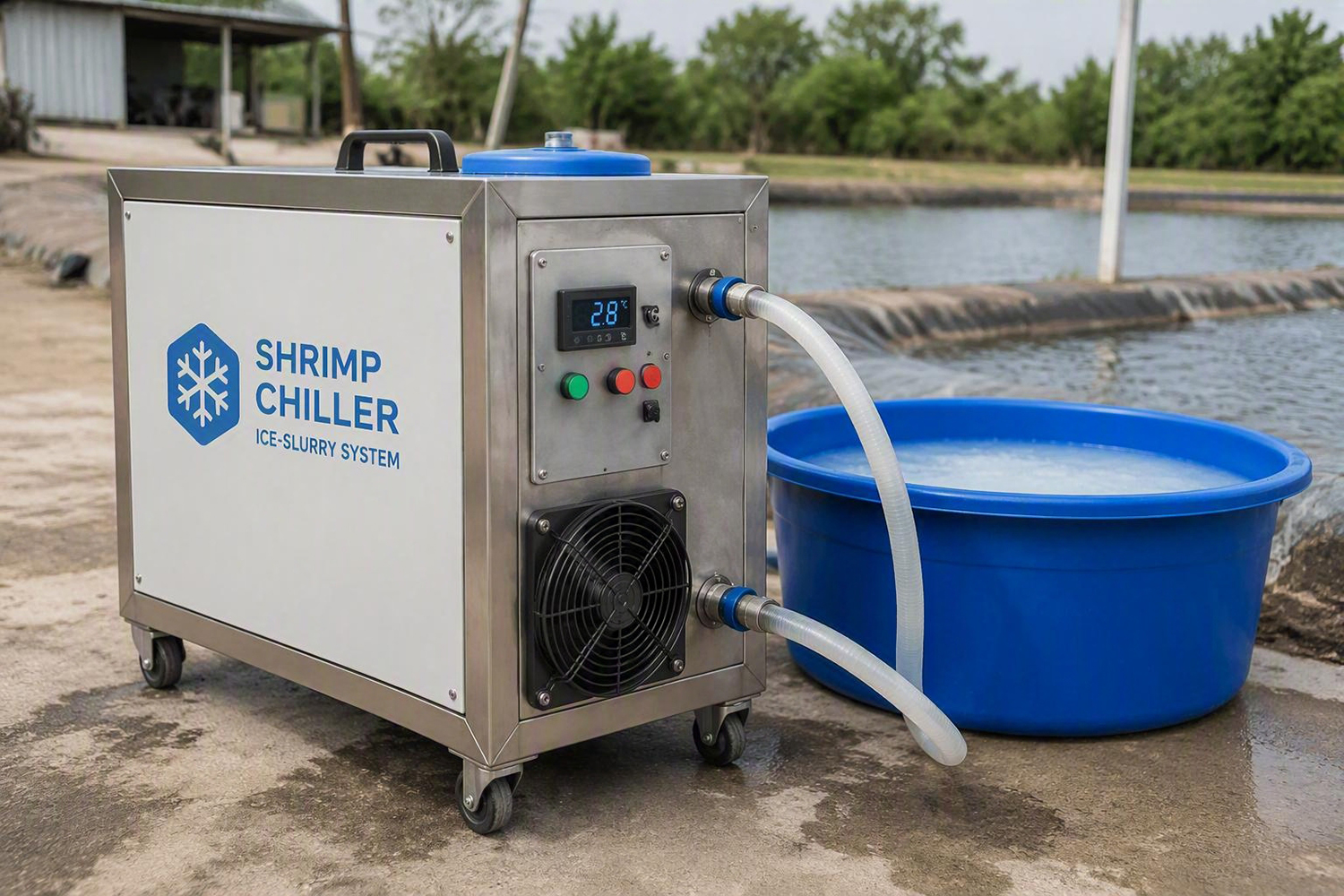
Farmers are given a week or two to prepare for harvest, which follows a cluster- or lagoon-based harvesting model. Once harvested, the shrimp are rapidly chilled using a specialized ice slurry and transported to processing facilities within eight to 12 hours. An external laboratory tests the shrimp for residual antibiotics.
The goal is to create an export-ready product whose journey through the supply chain can be traced back to the farm.
But Aquapulse’s model goes beyond traceability.
Indian shrimp researchers earn a patent for WSSV diagnostic tool
Matching production with the market
What sets Aquapulse apart from its competitors is its trade intelligence portal, which the company uses to help match production and harvest decisions with market demand.
“That is what helps us to make and take decisions for our farmers, for our importers and for every player involved in this ecosystem or associated with us,” said Abhilash Dwivedy.
Using artificial intelligence (AI) and machine learning, the platform analyzes market and trade data to predict prices, demand, product grades and counts, processing and packaging options and consumption patterns.
“We very well understand at any given point of time, which are the best-suited markets for each commodity type and for each packing type,” Abhilash Dwivedy said.
With this information, farmers can plan their culture cycles and harvests more strategically in response to actual demand and orders.
Careful planning and aligning harvests with market demand can also help farmers in the Aquapulse network avoid unnecessary expenses. For instance, farmers are given accurate advice on when to stop feeding before harvest, which helps lower feed costs while ensuring the shrimp have a clean gut, resulting in a better-quality product.
The company also conducts surprise checks during the culture cycle and required quality screening for water chemistry and biosecurity infrastructure. According to Aquapulse, this can help qualifying, export-ready farmers garner an additional fee per kilogram above the market price on harvest day.
Over the next three to five years, the company plans to add more farmers to their network. A new processing facility for ready-to-cook and ready-to-eat products is also in the works, as well as the addition of black tiger shrimp (Penaeus monodon) to its product line.
“To augment the socioeconomic livelihood condition of the farming community was the No. 1 objective vision of Aquapulse,” said Abhishek Dwivedy.
GSA’s 2026 Responsible Seafood Innovation Awards in the aquaculture and fisheries categories will be presented at the Responsible Seafood Summit in Bangkok, Thailand.
Now that you've reached the end of the article ...
… please consider supporting GSA’s mission to advance responsible seafood practices through education, advocacy and third-party assurances. The Advocate aims to document the evolution of responsible seafood practices and share the expansive knowledge of our vast network of contributors.
By becoming a Global Seafood Alliance member, you’re ensuring that all of the pre-competitive work we do through member benefits, resources and events can continue. Individual membership costs just $50 a year.
Not a GSA member? Join us.
Author
-

Originally from Mumbai, Sukanya Charuchandra is a freelance science writer drawn to reporting on biomedical research, archaeology, and climate science. She holds Master’s degrees in science journalism and biotechnology.
Related Posts
Innovation & Investment
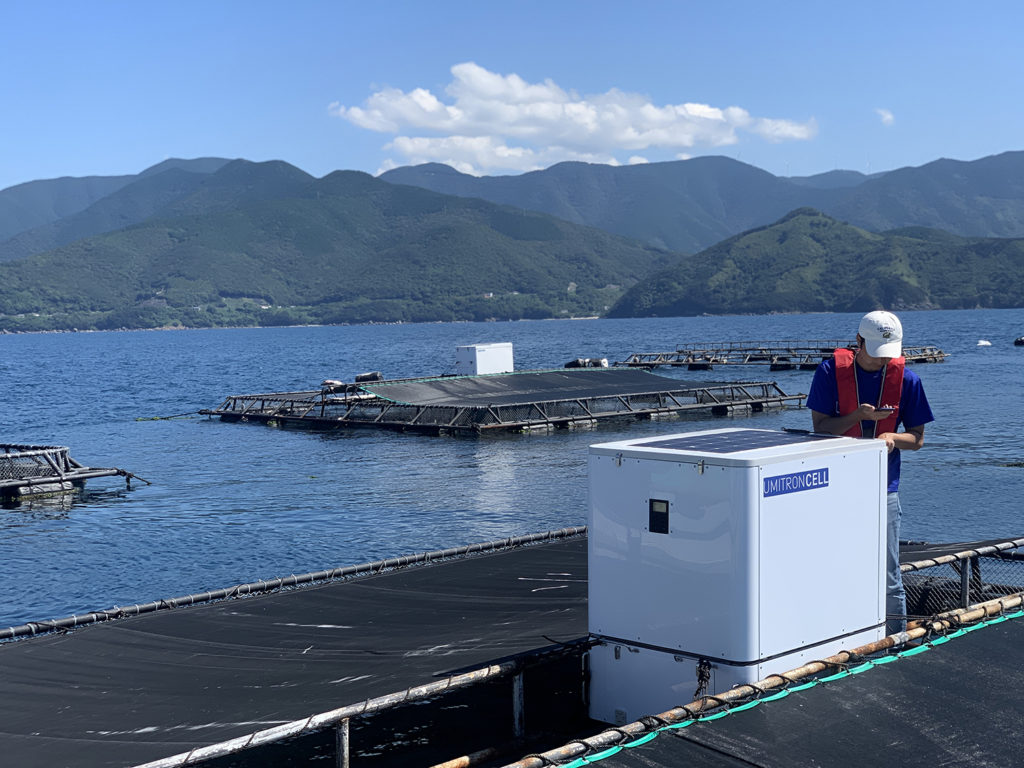
Can aquaculture go all-in on AI?
Progressive aquaculture companies are harnessing the power of artificial intelligence (AI) from firms like Umitron and Aquaconnect to improve operations.
Intelligence
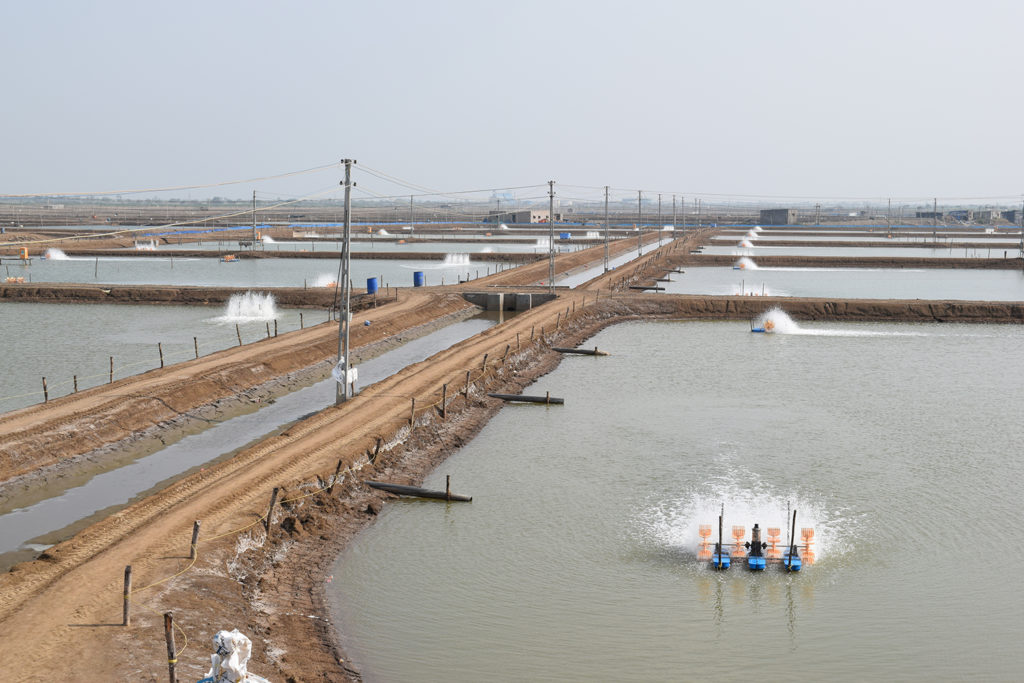
Can India sustain its farmed shrimp boom?
Long a global leader in farmed fish production, India has transitioned into an aquaculture powerhouse. Can its expanding shrimp sector keep the rapid pace?

Intelligence
10 takeaways from GOAL 2019 in Chennai, India
The Global Aquaculture Alliance held its GOAL conference in Chennai, India, and recruited a host of experts in various fields to share their expertise.
Innovation & Investment
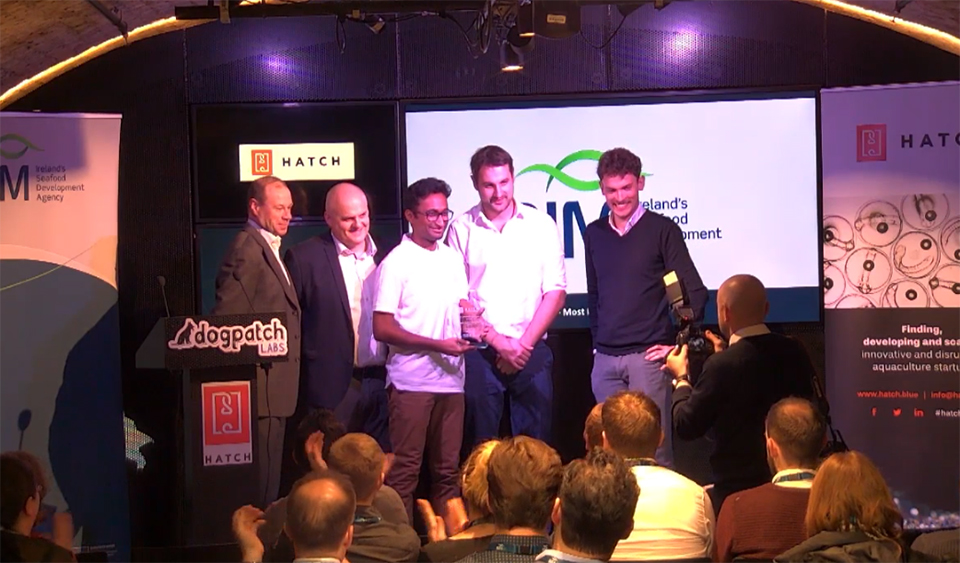
Hatch opens six-pack of winning aquaculture innovators at Demo Day
Demo Day in Dublin, Ireland, last week marked the conclusion of the Hatch aquaculture business accelerator’s second cohort in 2018.