


Responsible Seafood Innovation Award finalist: Learning from farm failures to develop an on-site rapid test to detect shrimp diseases

Forte Biotech is a Responsible Seafood Innovation Award finalist for an on-site rapid testing system that detects shrimp diseases in about one hour
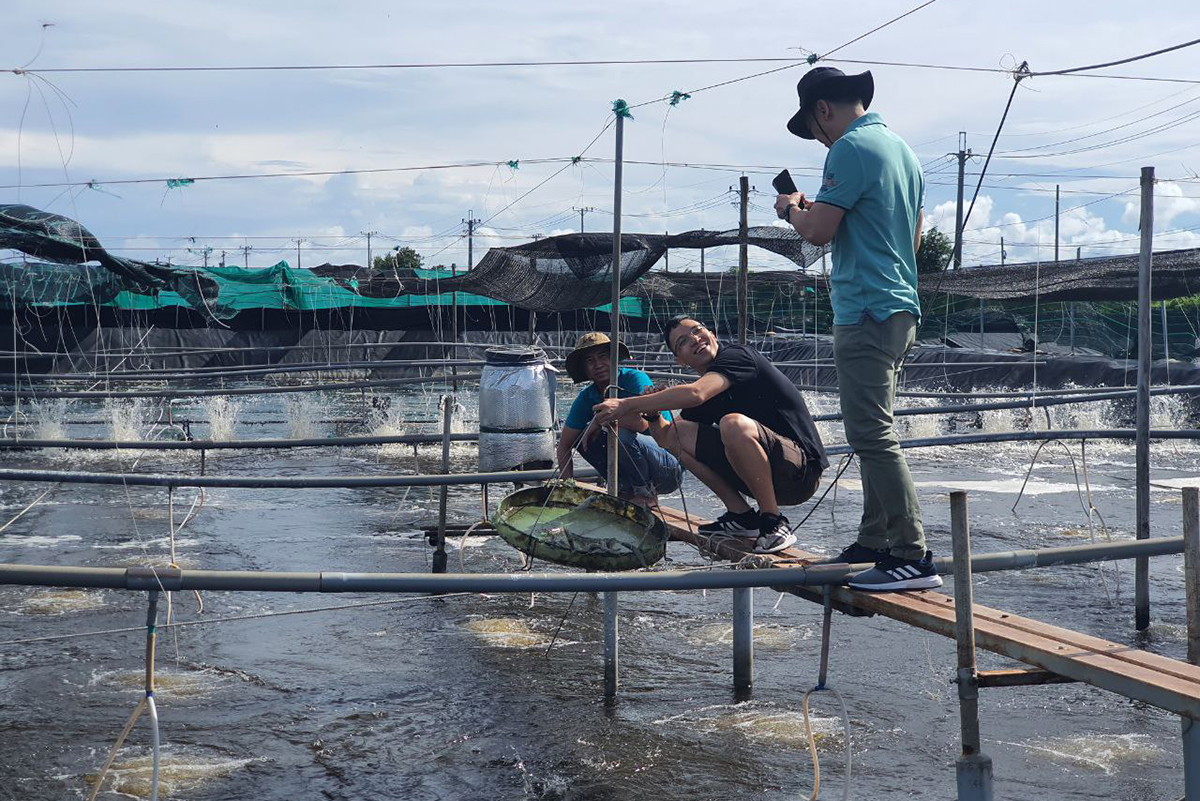
Shrimp farmers face myriad challenges that can impact performance and profit, including crop loss due to disease, weather or a host of other variables largely outside their control. Unlike conventional small businesses, they may also have limited access to risk-management tools like insurance and financing.
For Kit Yong, co-founder of Singapore-based Forte Biotech, those hurdles are personal. The startup’s origins were rooted in the struggles of his uncle, who faced a succession of setbacks farming 10 mud-lined ponds in Malaysia – initially producing Pacific white shrimp (L. vannamei) before moving into grouper, giant freshwater prawns (Macrobrachium spp.), and eventually, a small hatchery operation.
As a student, Yong helped his uncle with translation work, an experience that left a lasting impression on him about the financial risks facing small-scale shrimp farmers.
“If [they] do get loans, it’s often at a prohibitive interest rate,” Yong said. “We’re talking about 4 percent per month, or even more than that, which is really tough.”
![Ad for [BSP]](https://www.globalseafood.org/wp-content/uploads/2025/07/BSP_B2B_2025_1050x125.jpg)
These experiences helped sow the seeds for Forte Biotech, which launched in 2021 to improve small producers’ prospects. The Singapore-based company seeks to make molecular disease testing more accessible to shrimp farmers and to develop a broader farm management tool that can help them not only survive but grow and thrive.
Spun out of National University of Singapore, Forte developed the underlying technology for the RAPID Plus testing kit – a molecular diagnostic system designed to give farmers on-site disease-testing results in about an hour. The technology has led Forte Biotech to be named a finalist for the 2026 Responsible Seafood Innovation Award in the aquaculture category.
From disease detection to risk management
Forte’s initial concept was to develop what Yong describes as a “stop loss” mechanism for shrimp farmers.
As he reflects, if a shrimp farmer detects White Spot Syndrome Virus on day 60 or 70 of the grow-out cycle, for example, there may still be time to harvest smaller shrimp and recover a meaningful proportion of the investment. Wait until shrimp are floating and dying, however, and the economics change dramatically.
“You’re basically playing catch up,” Yong explains. “Maybe you only get 20 or 30 percent of your capital back if you’re lucky.”
The idea was simple: Identify disease before it causes serious damage and allow shrimp farmers to respond while they still have options.
The problem? Conventional molecular testing was poorly suited to that goal. With conventional polymerase chain reaction (PCR) testing, farmers typically collect samples, send them to a laboratory and wait for the results. By the time those results arrive, a disease outbreak may have progressed considerably.
The company, therefore, set out to simplify the testing process sufficiently for farmers and farm technicians to use it on site.
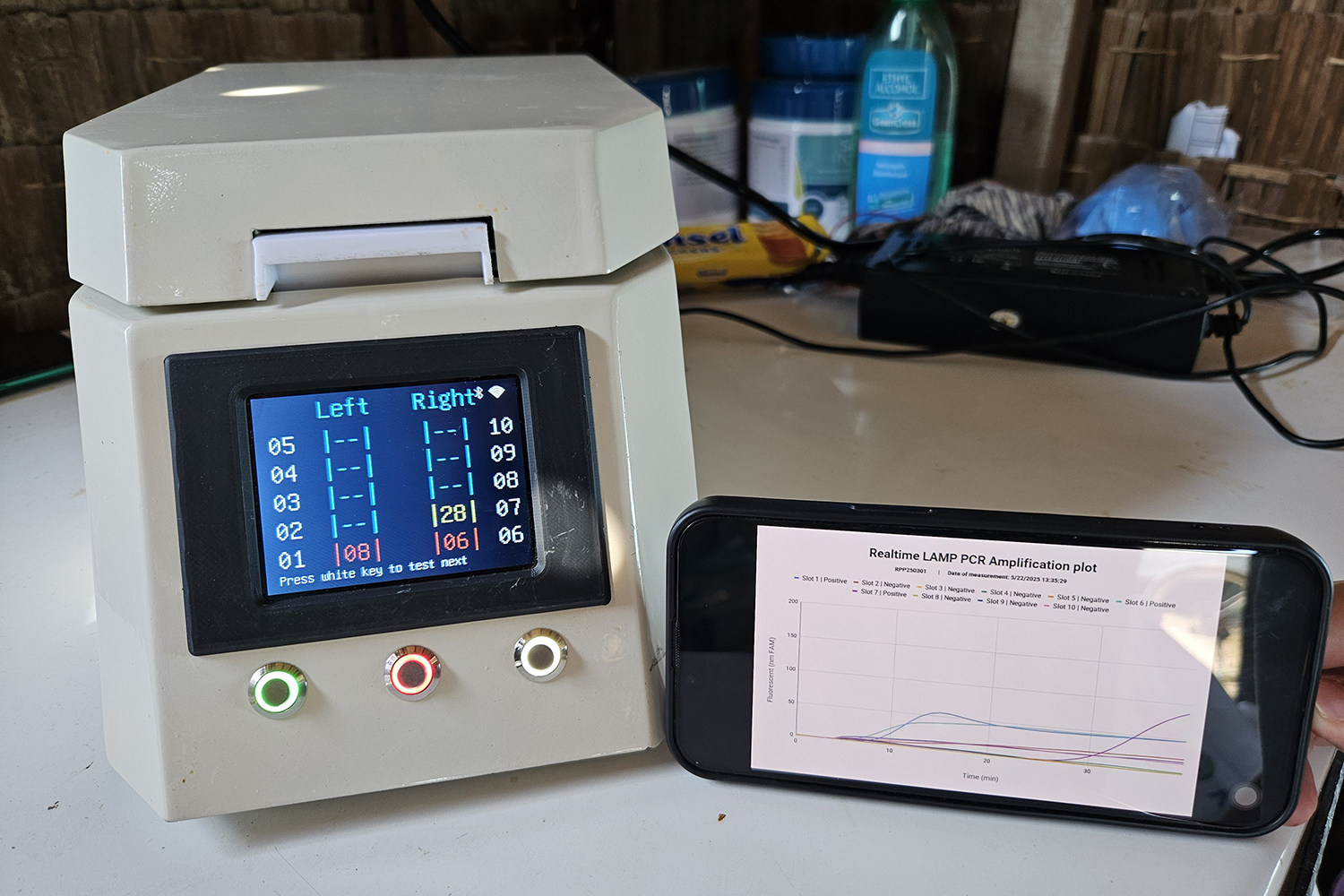
Making PCR-style testing accessible
Forte’s RAPID Plus system is a quantitative molecular diagnostic platform that Yong describes as being “akin to a qPCR,” but engineered to remove much of the cost and complexity associated with conventional equipment.
According to Yong, the machine sells for around U.S. $1,000 to $1,300, compared with approximately $5,000 for the cheapest comparable PCR equipment and $15,000 or more for a conventional qPCR system.
At the same time, Forte set out to make the testing system more user-friendly. Tissue samples – which can include parts of the hepatopancreas, feces, pond water or whole post-larvae – don’t need equipment such as a centrifuge to prepare, while the reagents are supplied by the company in a pre-mixed, freeze-dried format.
Yong likens the conventional PCR process to making “a very expensive cup of espresso.” On the flip side, Forte’s approach is more like a “3 in 1” coffee: the ingredients are already prepared, and the user simply adds the tissue sample. The consumables also don’t require cold storage or special handling, making them easier to distribute to remote farming areas.
Once a sample is placed in the RAPID Plus machine, testing for shrimp diseases takes approximately an hour, with the molecular result generating a value that can be converted into a PCR Ct value. Each lightweight machine can currently process two samples simultaneously, testing for up to four diseases per sample at the same time.
Meanwhile, Forte is developing workflows that could increase throughput without necessarily requiring a larger device. The machines are Wi-Fi enabled, with results transmitted online or viewed through an accompanying phone-based application.
The combination of quantitative results, relatively low equipment costs and field usability is intended to place molecular diagnostics within reach of farms and businesses that would otherwise rely on external laboratories.
Forte’s proposition sits between two main alternatives: costly PCR laboratories, which Yong calls “the current gold standard” that the company needs to match, and lower-cost antigen kits, which generally lack the same degree of sensitivity and quantification.
Giving shrimp farmers information when it matters
For Yong, the value of RAPID Plus isn’t necessarily in preventing the spread of shrimp diseases. It’s in giving farmers information early enough to decide what to do when a pathogen is detected.
According to Yong, the technology has been most effective for shrimp farmers who use it as a routine management tool rather than simply as an emergency diagnostic. Forte’s most successful users tend to test routinely during the crucial first 60 days of a production cycle.
The company’s observed best practice is to test approximately once a week or every 10 days during that period, followed by testing only when required.
“If they can mitigate it, good: It [the shrimp] grows, they get profit,” Yong says. “If they can’t mitigate it, then, they can cut their losses, harvest and be done with it.”
In areas where disease is endemic, the demand for rapid information can be particularly strong. Yong cites one user who established a small testing facility serving neighboring farms and runs around 100 EHP (Enterocytozoon hepatopenaei) tests every few weeks.
This has parallels with Forte’s commercial strategy: Rather than trying to sell directly to every smallholder, the company increasingly sees bigger players – such as feed mills, distributors and animal-health businesses – as the route to scale.
From diagnostic tool to farm-management platform
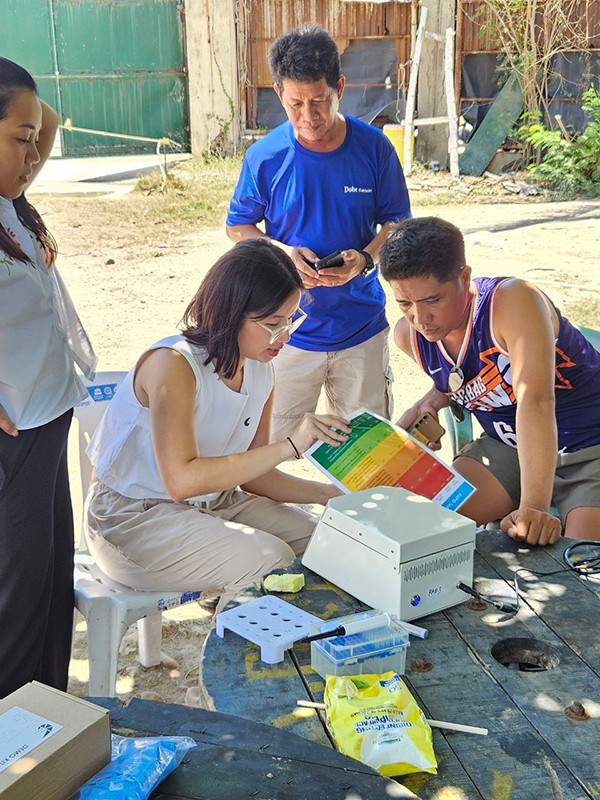
Forte is also looking beyond disease testing.
The company is looking to use the diagnostic technology to establish a broader farm-management platform, combining diagnostic test results with information about weather, water quality, feed, feeding rates, antibiotics and supplements.
The longer-term goal is for farmers to enter information into a mobile app and receive recommendations about production decisions, including target harvest size and timings of interventions.
Ultimately, Yong envisions a system that could suggest strategies to a farmer when a problem emerges and then connect them with the appropriate expertise if additional help is required.
The approach could also have implications for sustainability. Early disease detection could help farmers avoid unnecessary antibiotic use by allowing them to respond sooner and potentially use alternatives such as probiotics. Reducing crop failures could also lessen pressure to clear mangrove forests for replacement production.
For feed companies and distributors, meanwhile, there is a commercial incentive. Businesses extending credit to farmers have a direct interest in helping them achieve a successful harvest and repay their loans.
Forte began commercial sales in January 2024 and has now placed around 130 machines with more than 100 customers in nine countries, according to Yong.
These include Vietnam – which is currently its largest market – Thailand, Malaysia, Indonesia, the Philippines and India. Meanwhile, Yong is exploring opportunities in Ecuador.
Forte currently offers shrimp tests for EHP, early mortality syndrome or EMS, White Spot Syndrome Virus and translucent post-larvae disease. It’s also developing tests for other species and sectors, including tilapia and swine.
Yong says Forte can potentially develop new tests within around three months, with AI-assisted research helping to accelerate development. The biggest constraints are funding and access to suitable samples, while the company’s production facility in Singapore can produce an impressive 50,000 test kits per month – considerably more than what is currently sold.
Filling this gap is central to Forte’s next phase and the company is seeking around $1.5 million – around 30 percent is planned for use in R&D and certification, with the majority directed towards commercial expansion and securing larger customers.
In terms of the latter, Forte is particularly interested in working with major aquaculture and seafood companies, including large feed and production businesses.
Catch & Culture Review: Is the shrimp disease AHPND spread by an airborne pathogen?
The obstacles to scale
Yong’s biggest challenge may not be the diagnostic science, so much as adapting that technology to the realities of farming environments – where electricity supplies can be inconsistent.
Training is another issue. While some users with relatively little technical education can operate the system successfully, others have struggled, so Forte continues to refine its procedures and user support.
Building trust with farmers is equally important and Forte is working with NGOs, dealerships and other partners to conduct workshops and provide trial machines.
Winning the faith of the investment community remains perhaps the most significant constraint, especially after the collapse of eFishery, so Forte has so far relied on angel investors, grants and Yong’s own funds to keep developing the business.
The technology may have been developed to warn farmers of the presence of shrimp diseases. The company’s next challenge is to make sure these farmers can react swiftly and decisively enough to save their crops.
For a technology born partly from seeing how vulnerable farmers can be when a crop fails, however, Yong measures success in more immediate terms.
“[The company’s] greatest achievement will be every harvest that we prevent from being lost,” said Yong. “Because that really makes a difference to the lives of the farmers out there.”
GSA’s 2026 Responsible Seafood Innovation Awards in the aquaculture and fisheries categories will be presented at the Responsible Seafood Summit in Bangkok, Thailand.
Now that you've reached the end of the article ...
… please consider supporting GSA’s mission to advance responsible seafood practices through education, advocacy and third-party assurances. The Advocate aims to document the evolution of responsible seafood practices and share the expansive knowledge of our vast network of contributors.
By becoming a Global Seafood Alliance member, you’re ensuring that all of the pre-competitive work we do through member benefits, resources and events can continue. Individual membership costs just $50 a year.
Not a GSA member? Join us.
Author
-

Rob Fletcher has been covering the international aquaculture industry since 2010, as editor of Fish Farmer, Fish Farming Expert and The Fish Site. Since the start of 2026 he has returned to freelance feature writing, editing and consulting. He has masters degrees in both history and aquaculture and lives off-grid on the west coast of Scotland.
Related Posts
Health & Welfare
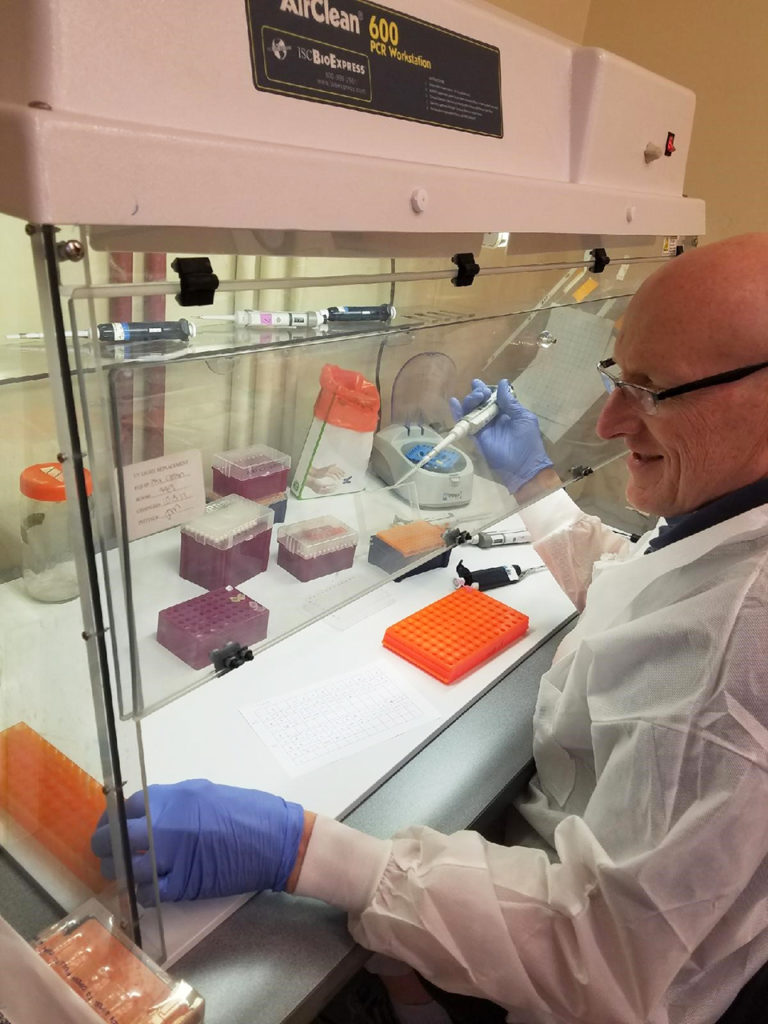
The unmet promise of pondside PCR
A new generation of technology, portable PCR, offers potential for affordable, immediate, pondside diagnosis in easy-to-use handheld kits. But will it live up to the hype?
Health & Welfare
A comprehensive look at the Proficiency Test for farmed shrimp
The University of Arizona Aquaculture Pathology Laboratory has carried out the Proficiency Test (PT) since 2005, with 300-plus diagnostic laboratories participating while improving their capabilities in the diagnosis of several shrimp pathogens.
Health & Welfare
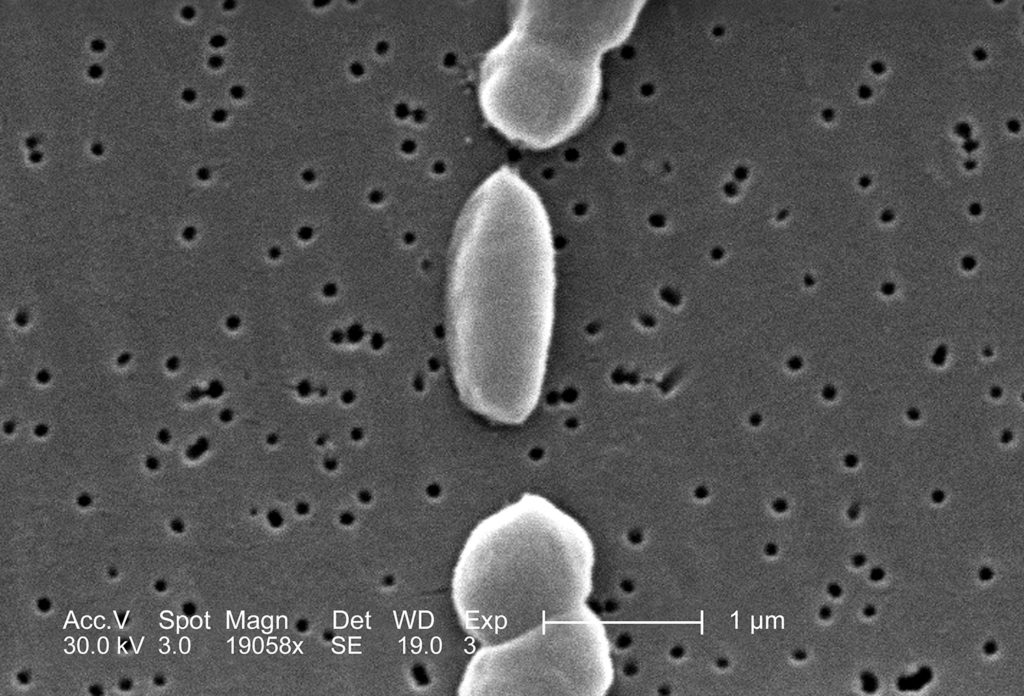
A rapid, sensitive RPA assay for detection of Vibrio parahaemolyticus in seafood
A real-time RPA method has been developed for the detection of Vibrio parahaemolyticus with high sensitivity and specificity.
Health & Welfare
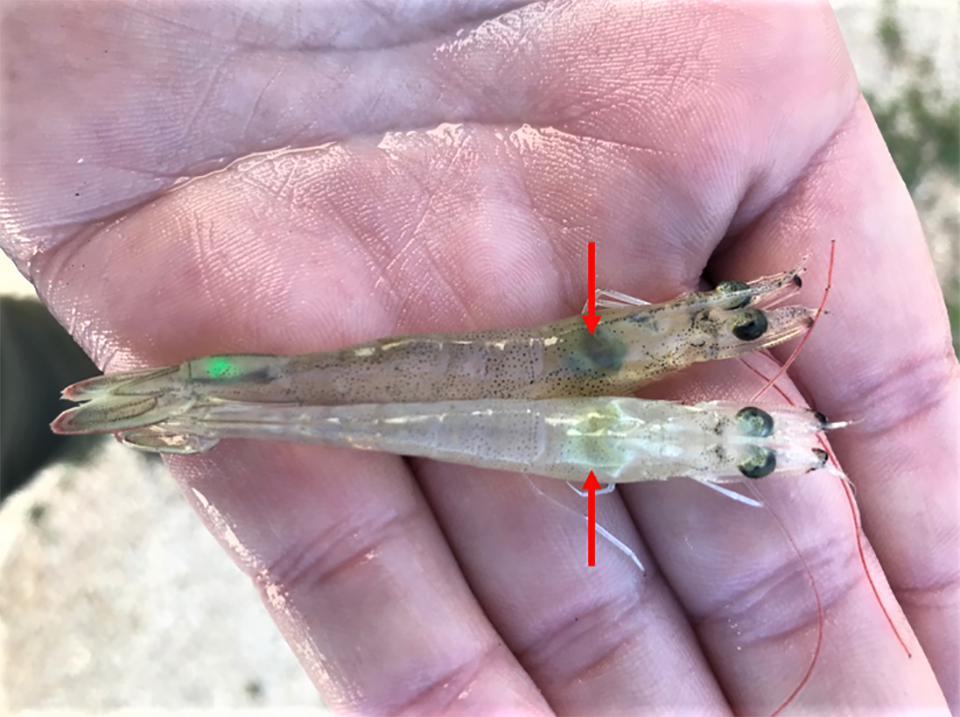
AHPND is a chronic disease in Pacific white shrimp from Latin America
There is a new phase of infection for Acute Hepatopancreatic Necrosis Disease on Latin American shrimp farms, a contrast to observations in Southeast Asia.