


Lab-grown corals could help scientists study resilience to ocean warming

New laboratory model could help scientists understand how corals respond to ocean warming and identify ways to improve coral resilience
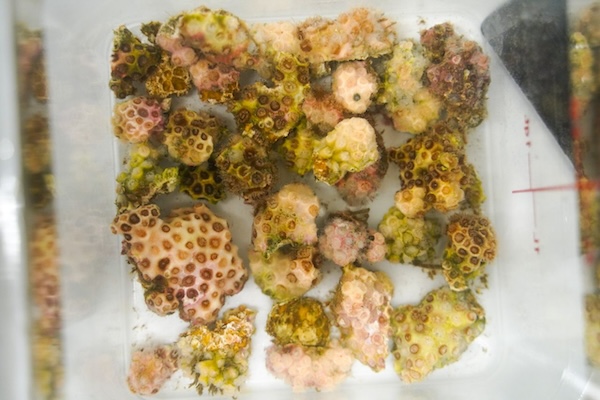
Researchers at Roger Williams University (Rhode Island, USA) have developed standardized methods to raise a temperate coral through its full life cycle in the lab, creating a model for studying coral resilience to ocean warming and other environmental pressures.
The methods allow researchers to reliably spawn, breed and culture Astrangia poculata, a temperate coral found in the northeastern United States. Researchers said establishing the species as a laboratory model could make it easier to study coral symbiosis, climate resilience and interactions between corals and microbes.
The findings, published in Frontiers in Marine Science, are the result of research conducted between 2016 and 2025 through a collaboration led by Roger Williams University’s Center for Economic and Environmental Development (CEED).
“Having an experimental model species like Astrangia – one that we can predictably raise in the laboratory – opens up opportunities for innovating and applying research solutions to the urgent global coral reef crisis,” said Koty Sharp, CEED director and associate professor of marine biology and environmental science.
![Ad for [BSP]](https://www.globalseafood.org/wp-content/uploads/2025/07/BSP_B2B_2025_1050x125.jpg)
Although A. poculata is a temperate species rather than a tropical reef-building coral, researchers are using it to investigate biological processes relevant to tropical corals, including their responses to rising ocean temperatures.
The work builds on research by Sharp and her colleagues dating to 2012 to establish A. poculata as an experimental organism for studying coral symbiosis. Reliably culturing the coral through its complete life cycle expands the types of laboratory experiments researchers can conduct.
Over the course of the project, scientists collected A. poculata from Rhode Island waters and brought the corals to CEED’s Wet Lab. Researchers then refined methods for inducing spawning, breeding the corals and supporting their development under laboratory conditions.
The work involved researchers from Tufts University, College of the Holy Cross, Cornell University, University of North Carolina Wilmington, Texas State University and the Marine Biological Laboratory. Scientists gathered each summer at Roger Williams University for an annual research effort known as “Spawnfest.”
A wider view: Conservation aquaculture anchors coral reef restoration
“Over the course of the 10 years, as part of our annual collaborative ‘Spawnfest’ on RWU campus, students participated in every aspect of the research activities and collaborations,” said Sharp. “The students’ efforts are incredibly important to this initiative, and it’s a fantastic opportunity for them to engage in authentic research and get experience connecting with experts in the field.”
The broader collaboration has also produced the first gene “knock-in” in a hard coral using CRISPR methods, according to the university. Researchers said the technique could help scientists investigate genes and metabolic processes involved in how corals respond to increasing ocean temperatures.
The newly standardized culture methods could now support further research into coral resilience and animal-microbe interactions. Researchers hope studying the temperate coral will provide insights into biological processes relevant to tropical corals as scientists seek ways to understand their response to increasingly frequent ocean warming and bleaching events.
Now that you've reached the end of the article ...
… please consider supporting GSA’s mission to advance responsible seafood practices through education, advocacy and third-party assurances. The Advocate aims to document the evolution of responsible seafood practices and share the expansive knowledge of our vast network of contributors.
By becoming a Global Seafood Alliance member, you’re ensuring that all of the pre-competitive work we do through member benefits, resources and events can continue. Individual membership costs just $50 a year.
Not a GSA member? Join us.
Author

Related Posts

Health & Welfare
Ocean warming could cut omega-3 levels in seafood, study finds
Ocean warming could reduce omega-3 levels in fish and other marine organisms, with potential implications for seafood nutrition.

Responsibility
Study: Marine heatwaves pose growing risks to seafood safety and human health
Marine heatwaves could disrupt seafood supplies, fuel harmful algal blooms and pose growing physical and mental health risks, a study finds.
Fisheries
Study outlines climate resilience strategy for U.S. seafood industry
Climate resilience could help U.S. fisheries reduce climate risks, recover faster and improve long-term competitiveness, researchers say.
Responsibility
Ocean warming is accelerating the loss of Maine’s kelp forests, study finds
Researchers found ocean warming is accelerating the shift from kelp forests to turf algae along the Maine coast.