


Latest Hatch Blue report identifies barriers to U.S. aquaculture investment

Report highlights regulatory uncertainty, limited commercial scale and financing challenges while identifying opportunities for U.S. aquaculture growth
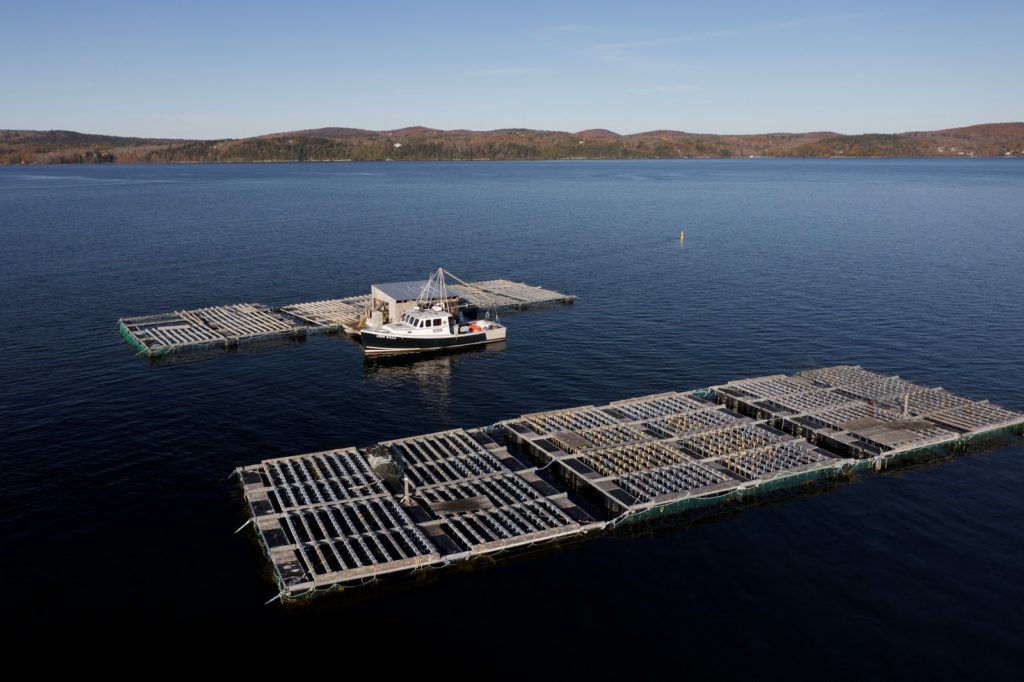
A new report from aquaculture investment firm Hatch Blue identifies regulatory uncertainty, limited commercial scale and a lack of proven investment returns as key barriers to investment in U.S. aquaculture, despite the country’s large seafood market and access to capital.
The report, Unlocking Investment in U.S. Aquaculture: Barriers, Opportunities and Pathways Forward, draws on interviews with industry founders, investors and other stakeholders, alongside publicly available research. It was developed with funding from the U.S. Small Business Administration’s Growth Accelerator Fund Competition.
Hatch Blue found that attracting investment depends not only on available capital but also on creating conditions that allow aquaculture businesses to demonstrate commercial viability and expand.
“The absence of a clear federal framework for offshore aquaculture, combined with fragmented state and local permitting processes, creates uncertainty over timelines and project approval,” Hatch Blue said in a press release. “Local opposition can add further delays and risks.”

Other challenges include limited domestic production scale, which restricts the customer base for aquaculture technology and service providers, and difficulties establishing reliable markets for emerging products such as seaweed.
The report also cites a limited record of successful investment exits and several high-profile business failures that have influenced investor perceptions.
Bergen becoming seafood startup city as accelerator Hatch sets up shop
“Aquaculture encompasses very different business models,” Hatch Blue said. “Some technology companies may be well suited to venture capital, while production businesses and infrastructure projects often require longer investment horizons and different financing structures.”
Hatch Blue recommends financing pathways tailored to different business models and growth stages, more predictable regulatory processes and the development of markets and infrastructure alongside production.
Despite these barriers, the report identifies opportunities in aquaculture technology, shellfish, seaweed and selected finfish production models.
“The U.S. has significant capabilities in areas such as artificial intelligence, genetics, feed technologies, and biotechnology,” Hatch Blue said. “Companies developing these solutions can serve established aquaculture markets worldwide, rather than relying solely on the relatively small domestic production base.”
For shellfish, established producers and consumer demand provide opportunities for premium products and regional branding. In seaweed, the report highlights downstream applications such as biostimulants, food and cosmetic ingredients and biomaterials, although reliable markets and processing capacity remain important challenges.
Finfish opportunities include smaller-scale, land-based production of high-value species near consumer markets.
“Offshore production could offer greater scale, but its prospects remain closely tied to permitting, capital requirements, and proven production economics,” said Hatch Blue.
The report also examines five regional aquaculture hubs – Hawaii, Alaska, California, Maine and Washington – highlighting differences in their industry strengths, research capabilities, infrastructure and market opportunities.
“Through Hatch Blue’s work across the aquaculture industry, we have seen the importance of the U.S. market firsthand, both as a source of innovation and entrepreneurship and as a major center of investment capital,” wrote Georg Baunach, CEO and co-founder of Hatch Blue, in the report’s foreword.
Baunach said the report aims to identify emerging opportunities and encourage discussion about what could help more U.S. aquaculture businesses attract investment.
Now that you've reached the end of the article ...
… please consider supporting GSA’s mission to advance responsible seafood practices through education, advocacy and third-party assurances. The Advocate aims to document the evolution of responsible seafood practices and share the expansive knowledge of our vast network of contributors.
By becoming a Global Seafood Alliance member, you’re ensuring that all of the pre-competitive work we do through member benefits, resources and events can continue. Individual membership costs just $50 a year.
Not a GSA member? Join us.
Author

Related Posts

Intelligence
U.S. agency announces 5-year aquaculture strategy
The NOAA Aquaculture Strategic Plan will guide the country's efforts to enhance the growth of sustainable aquaculture.
Intelligence
How does aquaculture contribute to U.S. seafood production and the economy?
Results of a recent study show that the U.S. aquaculture industry contributes about $4 billion annually and supports more than 22,000 jobs.

Intelligence
With executive order in hand, will USA get in the aquaculture game?
An executive order has prioritized marine aquaculture development in U.S. waters, leaving members of the seafood industry feeling hopeful for the future.
Intelligence
U.S. aquaculture faces nearly eight times more federal regulation than other food sectors, study finds
U.S. aquaculture faces significantly more federal regulation than other food sectors, raising questions about current policies.