


Selective breeding yields long-term genetic progress for gilthead sea bream aquaculture

Study quantifies two decades of genetic improvement for growth in gilthead sea bream with data from a large commercial breeding program in Greece.
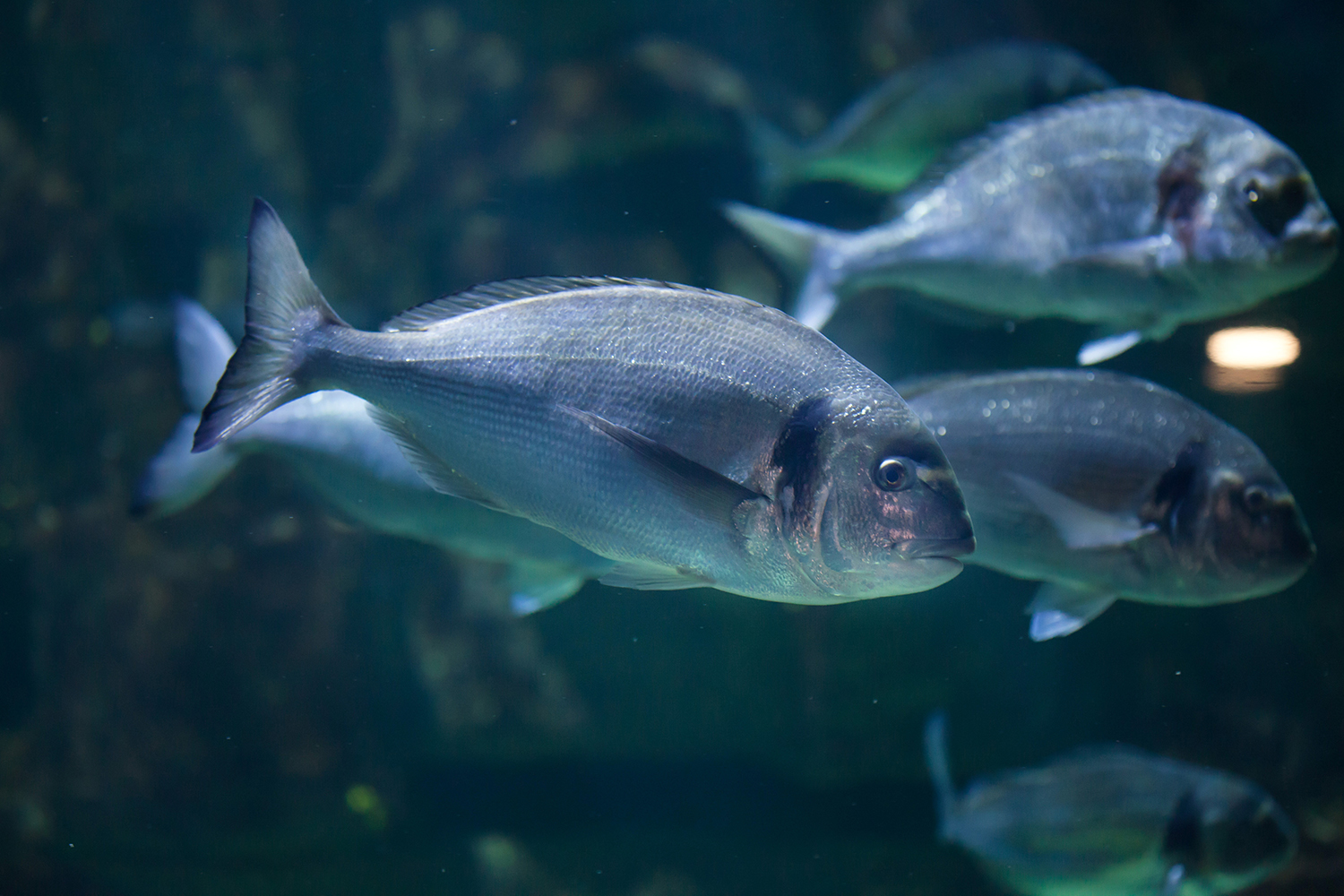
Scientists from Norway and Greece recently reported on research that quantifies two decades of genetic improvement for growth in gilthead sea bream (Sparus aurata), based on more than 20 years of data (2002–2023) from an ongoing large-scale commercial breeding program in Greece. It provides the first long-term evidence of sustained genetic progress in the species, showing that structured and carefully managed selective breeding can deliver continuous, economically important gains while preserving population integrity and supporting more efficient, sustainable aquaculture production.
The study – authored by Ingunn Thorland and several colleagues from Benchmark Genetics Norway SA in Norway and AVRAMAR Aquaculture SA in Greece – investigated how long-term family-based selection, combined with careful inbreeding management and sound statistical methods, can deliver continuous genetic gain while successfully integrating external genetic material. The depth and continuity of the dataset also create a strong foundation for moving to genomic selection, which is expected to improve accuracy, unlock within-family variation for sibling traits, and support better selection decisions in a breeding nucleus now operating under land-based biosecure conditions.
“The study documents a 76 percent genetic improvement in harvest weight in gilthead sea bream over more than twenty years of selective breeding – one of the most comprehensive long-term assessments of genetic progress ever conducted in a marine aquaculture species. It draws on data from almost 124,000 fish across 1,843 families produced between 2002 and 2023 and was conducted by Benchmark Genetics in collaboration with AVRAMAR. What makes it notable is the timescale: Long-term datasets of this quality are rare in aquaculture, and the results were achieved under commercial farming conditions while maintaining low inbreeding and genetic diversity. It’s a strong, evidence-based example of what sustained investment in breeding delivers,” said Ingunn Thorland, lead of the salmon breeding program at Benchmark Genetics Norway and corresponding author of the study.
The gilthead sea bream remains one of the core species of Mediterranean aquaculture, yet solid long-term evidence of what selective breeding can actually deliver has been scarce. The global aquaculture industry is growing, and within this context, genetic improvement is widely recognized as one of the most effective routes to higher productivity, better resource use and lower environmental impact.

The gilthead sea bream ranks third among European farmed finfish after Atlantic salmon and rainbow trout, with most production still concentrated in Greece and Turkey, where fish are typically harvested at 300–450 grams after 13–20 months. Interest in larger sizes of 800 grams to 1 kg is rising, but growth rate continues to limit efficiency and only about half of current production comes from genetically improved stocks.
Earlier studies reported selection responses for growth ranging from 5 to 22 percent per generation, averaging close to 14 percent. What has been missing is a continuous record spanning multiple generations under commercial conditions. Genetic trend analysis based on predicted breeding values across generations provides a reliable way to quantify such long-term progress.
The present work fills that gap by analyzing harvest-weight data from the Avramar breeding program in Greece across the full period 2002–2023. The data set comprises 123,992 fish from 1,843 full-sib families produced in 22 batches and spanning roughly five to six overlapping generations. Genetic parameters and trends were estimated with a multi-generation animal model that included genetic-group effects to accommodate the later introduction of Andromeda stock after the 2020 Avramar, S.A. merger with the companies Nireus, Andromeda and Selonda.
Results show that heritability for harvest weight was moderate at 0.35, a value that sits in the upper range of estimates previously reported for sea bream and comparable marine species. The predicted breeding values rose steadily and finished 248 grams above the 2002 base population, a cumulative genetic gain of 76 percent. This equates to an average annual improvement of 3.6 percent, or about 15 percent per generation.
At the same time, average inbreeding remained low, reaching only 1.3 percent by 2023 and increasing at 0.39 percent per generation. Maintaining low rates of inbreeding is essential because elevated relatedness can reduce performance, survival and the capacity to respond to future challenges. The combination of large family numbers, balanced parental contributions and controlled introductions of outside stock kept relatedness under control while progress continued.
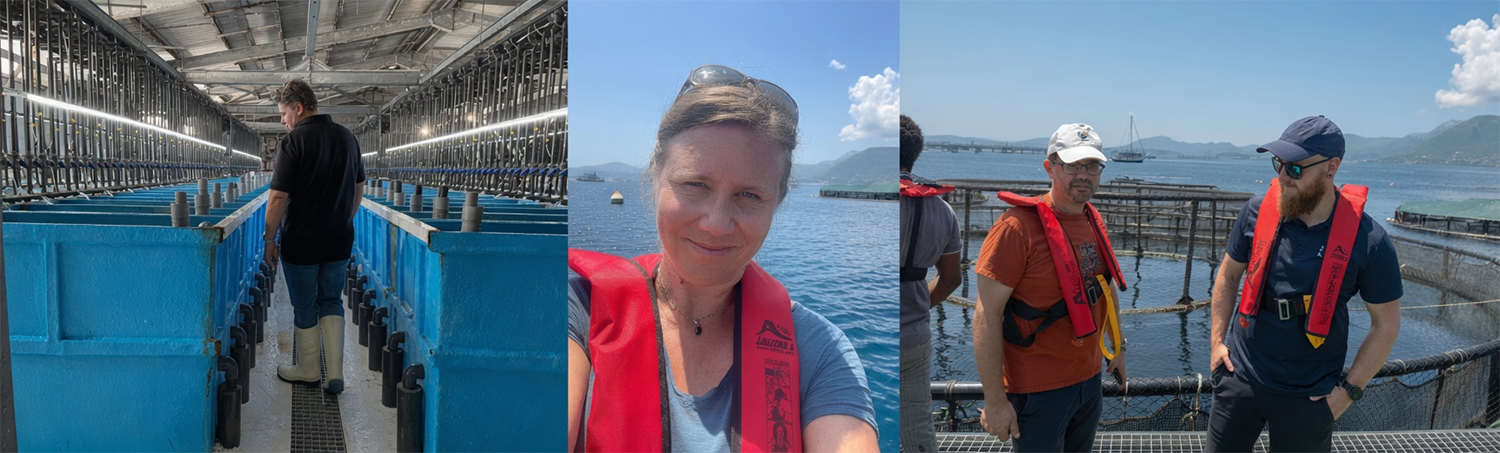
The genetic gains are visible in the commercial performance data. Mean harvest weight increased while the average age at harvest declined, confirming that the fish are simply growing faster under ordinary cage conditions rather than being held longer. Although genotype-by-environment, G x E interactions (gene-environment interactions means that the same genes can produce different results depending on the environment; e.g., a fish grows well in one farm but poorly in another) interactions cannot be ruled out entirely, the consistency of performance across batches and sites suggests that the nucleus captures much of the environmental variation encountered in Mediterranean farming, in line with the modest G × E reported for growth in other marine fish.
A major structural change occurred in 2021–2022 when substantial numbers of breeders from the Andromeda program were introduced. By fitting genetic groups in the evaluation model, the analysis avoided bias in the breeding-value trend and actually reduced average inbreeding after the merger. The episode shows that external genetic material can be integrated successfully when pedigree structure and statistical methods are handled carefully.
For the farmed seabream industry these results have clear practical value. Faster growth shortens production cycles, reduces the time fish are exposed to disease and environmental risk, and improves the return on cages, feed and labor. Improved growth may also contribute to a lower environmental footprint per kilogram of fish produced. Because the genetic progress has been expressed consistently across different sites and years, commercial farms can have reasonable confidence that nucleus gains will appear under ordinary Mediterranean conditions.
The same long-term data set now provides a practical foundation for the next phase of development. With the nucleus already operating under land-based biosecure conditions and a continuous pedigree in place, the program is well positioned to move toward genomic selection, which should further improve accuracy and open the door to additional traits such as disease resistance and feed efficiency.
More than twenty years of structured family-based selection, supported by careful inbreeding management and appropriate statistical tools, have delivered continuous and economically relevant genetic gain for growth in gilthead sea bream while preserving genetic diversity. The evidence confirms that this approach remains one of the most reliable routes to higher productivity and greater sustainability in the sector.
“The depth and continuity of the data set create a solid base for moving to genomic selection. This is expected to raise accuracy, capture within-family variation for traits measured on siblings, and support better selection decisions in a breeding nucleus that now operates under land-based biosecure conditions. Taken together, the results confirm the long-term effectiveness of the program and provide a firm foundation for the next stage of genetic improvement in Mediterranean sea bream aquaculture,” the study concluded.
Now that you've reached the end of the article ...
… please consider supporting GSA’s mission to advance responsible seafood practices through education, advocacy and third-party assurances. The Advocate aims to document the evolution of responsible seafood practices and share the expansive knowledge of our vast network of contributors.
By becoming a Global Seafood Alliance member, you’re ensuring that all of the pre-competitive work we do through member benefits, resources and events can continue. Individual membership costs just $50 a year.
Not a GSA member? Join us.
Author
-

Editor Emeritus
Related Posts
Health & Welfare
Advances in fish hatchery management
Advances in fish hatchery management – particularly in the areas of brood management and induced spawning – have helped establish aquaculture for multiple species.
Aquafeeds
Aquaculture Exchange: Giovanni Turchini, Deakin University, part 2
In the second part of our interview with the associate head of research at the School of Life and Environmental Sciences at Deakin University (Australia) he discusses the various alternative sources of omega-3 fatty acids coming on to the market and why research is crucial to advancing aquaculture.

Fisheries
FAO: Overfishing at 10-year low in Mediterranean and Black Sea
Overfishing in the Mediterranean and Black seas reaches a 10-year low, underscoring aquaculture’s growing role as demand for seafood rises.

Intelligence
Why are Europeans consuming less fish while paying more for it?
Fish consumption is down in Europe, as higher prices, changing habits and competition from cheaper proteins reshape demand.