


Ocean warming is accelerating the loss of Maine’s kelp forests, study finds

Study finds ocean warming is driving kelp loss and rapid ecosystem changes along Maine’s coast
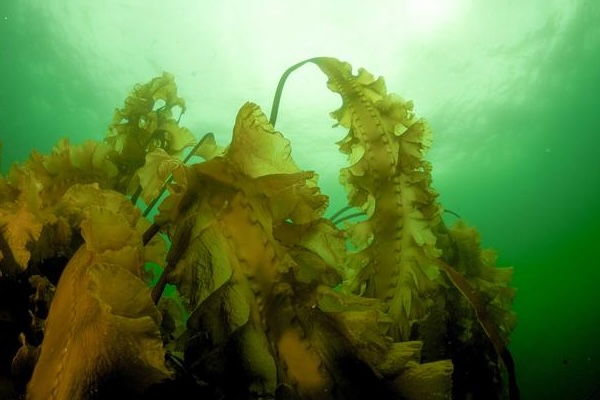
Dense kelp forests along the Maine coast are disappearing more quickly as ocean temperatures rise, according to new research from Bigelow Laboratory for Ocean Sciences.
The study, published in Ecology, found that ocean warming is accelerating a shift from kelp-dominated ecosystems to reefs covered by low-growing turf algae. Rising ocean temperatures are also allowing new species to move into the Gulf of Maine, contributing to rapid ecological changes in one of the world’s fastest-warming ocean regions.
“The progression of this shift from kelp forests to turf algae played out right before our eyes,” said senior research scientist Doug Rasher, the senior author on the paper. “We’re digging into what’s driving this transition, and what’s being gained or lost as a result, which allows us to speak more to the future of this ecosystem.”
The study builds on earlier work that linked kelp decline to rising ocean temperatures and documented a widespread shift toward turf algae in southern Maine. Researchers later found that this transition altered reef chemistry and food web dynamics.
![Ad for [membership]](https://www.globalseafood.org/wp-content/uploads/2025/07/membership_web2025_1050x125.gif)
The latest study examined which turf algae species are expanding and how they function within the ecosystem. Researchers monitored 11 coastal sites between 2021 and 2023, tracking changes in algae communities over time.
Their findings suggest the shift from kelp forests to turf algae has continued moving northward, reaching as far as Penobscot Bay. In some locations, turf algae coverage increased by up to 40 percent annually.
Ocean warming is pushing Gulf of Maine species deeper and farther north, decades of data show
The study also found that these turf communities are more diverse than they appear, consisting of native species growing more abundantly, warmer-water species moving north and invasive species from other ocean regions.
“These turf carpets can be made up of 20 to 30 different species, but they’re dominated by invasives like Dasysiphonia japonica, which comes from the Pacific,” said Shane Farrell, the study’s lead author and a former PhD student in Rasher’s group. “Even further north, where kelp forests are still thriving, we are seeing native turf algae in higher abundance than we’ve ever seen before, which could be an early warning sign of future change.”
Researchers found turf algae function differently from kelp forests, cycling nutrients more rapidly while providing less stable habitat and fewer refuges for marine organisms. These changes could reshape food webs and predator-prey relationships as kelp declines.
The study also identified warming waters, wave action and prior kelp loss as factors driving turf algae expansion. Rising ocean temperatures not only damage kelp directly but also create conditions that allow new species to establish, accelerating ecosystem change and raising concerns for northern regions where kelp forests remain.
“The silver lining is that we’ve untangled what’s driving change in our coastal reefs, so we can now forecast how these changes will progress up the coast,” Rasher said. “If we can understand and predict the shift, we can inform management and conservation strategies to combat it.”
Now that you've reached the end of the article ...
… please consider supporting GSA’s mission to advance responsible seafood practices through education, advocacy and third-party assurances. The Advocate aims to document the evolution of responsible seafood practices and share the expansive knowledge of our vast network of contributors.
By becoming a Global Seafood Alliance member, you’re ensuring that all of the pre-competitive work we do through member benefits, resources and events can continue. Individual membership costs just $50 a year.
Not a GSA member? Join us.
Author

Related Posts
Fisheries
NOAA scientists track massive marine heatwave affecting U.S. West Coast waters
NOAA scientists track a massive marine heatwave off the U.S. West Coast that could affect fisheries, species shifts and harmful algal blooms.
Responsibility
Ocean temperatures hit record highs in 2025, underscoring need for climate action
Ocean temperatures hit record highs in 2025, signaling accelerating climate change and its growing influence on weather worldwide.
Responsibility
Ocean warming increases worries of Vibrio-related foodborne illnesses
European researchers are investigating the prevalence of Vibrio, common bacteria in many types of shellfish, and identifying high-risk zones.
Fisheries
Catch & Culture Review: How climate change may alter the trajectory of North Sea demersal fisheries
Our monthly fisheries literature review examines fundamentals of fisheries management, fishery dynamics of squid and climate change impacts on Pandalus jordani.