


Seafood’s best friend: Once wasted fish byproducts are now a bounty for cats and dogs

Processors and entrepreneurs are turning seafood byproducts into premium pet food, reshaping the circular economy of Alaska’s fisheries
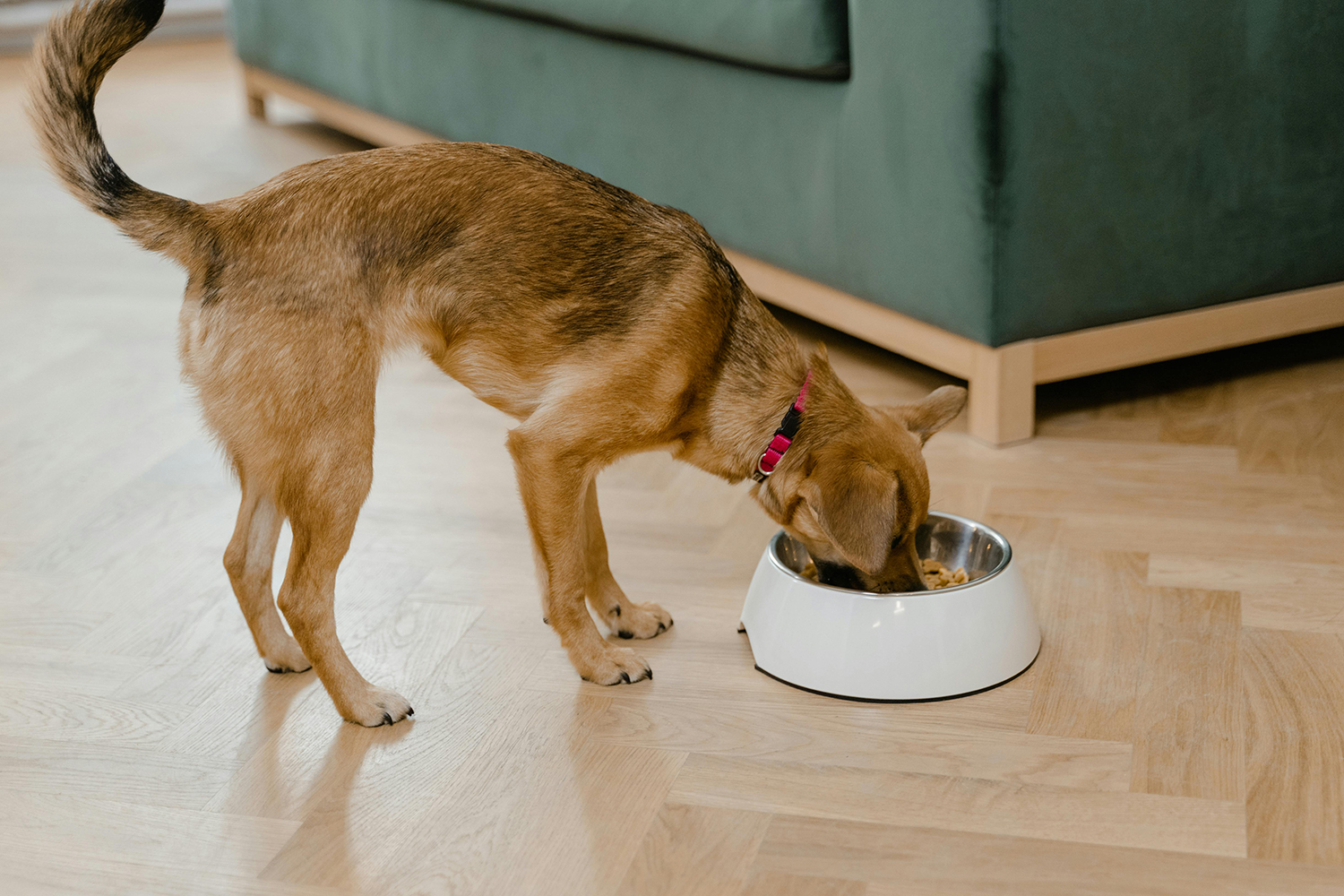
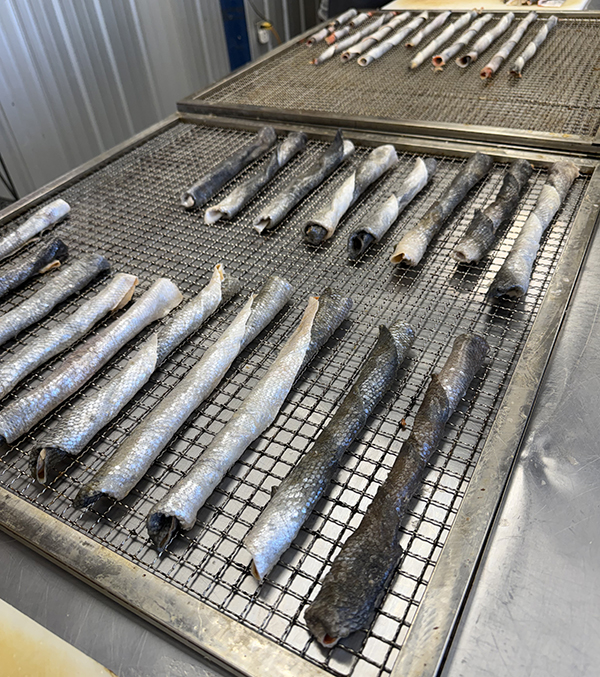
Situated on the banks of the Kenai River in Alaska, Sara Erickson’s company AlaSkins uses the skins of wild-caught salmon, halibut and cod to make single-ingredient treats for pets. Since 2017, her efforts have helped divert some 60 tons of seafood byproducts from landfills and oceans into the happy bellies of dogs and cats.
“All of the fish is caught right here, where I’m at, on the Kenai Peninsula,” said Erickson.
The process works like this: Boats bring in fresh fish that is skinned and frozen the same day or the next. During halibut season, for instance, these skins are thawed, dehydrated, cut into bite-sized delights, rolled and packed within three days at the AlaSkins processing plant.
Some 15 percent of all seafood processed globally is lost. With worldwide production through fisheries and aquaculture rounding up to 223.2 million metric tons (MT), the wasted resource can account for an alarmingly large figure. Depending on the species and processing involved, 30 to 70 percent of seafood is considered a byproduct – heads, skins, frames and more. A third of these byproducts are used in side-stream processing to make fishmeal or fish oil, with most of what’s left being sent to a landfill or dumped back into the ocean.
![Ad for [BSP]](https://www.globalseafood.org/wp-content/uploads/2025/07/BSP_B2B_2025_1050x125.jpg)
Erickson saw opportunity where others saw waste. Inspired by her father’s early years in China, Erickson knew that fish skins, while often discarded in Western cultures, are nutrient-rich. AlaSkins also retails fish oils and moose antler chews at about 100 stores.
“So now we’ve created a whole new industry from something that was considered waste and normally thrown away,” said Erickson.
Alaska’s stricter laws on processing and discarding fish waste mean that processing plants must also get innovative with their byproducts. Processors and producers see pet food as one pathway to achieving better utilization of seafood.
For Alaskan Leader Seafoods, a fishing company that primarily catches cod in Alaskan waters, byproduct utilization is more about using the whole fish than profitability. Processing byproducts for pet consumption requires specialized machinery, from grinders that pulverize cod heads to freezing racks. At Alaskan Leader, cod heads are ground up and block frozen onboard fishing vessels before being shipped off to pet food manufacturers.
“It is necessary to utilize all of the fish and save dumping product that can be used in some form,” said Pamela Shutes-Meixner, president of commodity sales at Alaskan Leader Seafoods. “We consider this an environmental benefit more than a money-centric decision.”
Revenue from byproduct sales covers infrastructure costs but generates little profit beyond that. Meixner explained that profit margins amounted to “pennies.” On the flip side, Erickson’s dog treats go for about $60 per pound, significantly higher than the $0.73 per pound that fishmeal garners.
“Alaska really needs to do more with our fish. We cannot just keep throwing our waste away,” stated Erickson. “We need to start making high value products that can increase our export value.”
Her business model, turning what processors earn pennies for into premium retail products, demonstrates that potential.
Dr. Friederike Ziegler, a seafood sustainability researcher at Research Institutes of Sweden (RISE), agrees that economic value matters, but cautions against oversimplifying the sustainability equation.
“Economic sustainability is an integral part of sustainability, one of the three pillars, so in that sense, diverting a side stream from lower (fishmeal) to higher value (pet food) utilization can be seen to increase the economic sustainability, but not from an environmental point of view,” Ziegler said.
Ultimately, getting more out of seafood is the most sustainable option, be it for fishmeal or pet food. But the higher premiums linked to pet food could offer economic benefits that in turn help incentivize sustainability efforts.
The use of byproducts in pet food is not limited to small players like AlaSkins. Mars Petcare, the maker of Pedigree and other popular pet food, aims to embrace sustainable sourcing for all their seafood needs.
“We maximize the use of seafood by-products to reduce waste and promote sustainability,” said Andrew Russell, global marine sustainability lead at Mars. “The use of whole fish and byproducts vary by product and nutritional needs, supporting both pet health and our commitment to sustainable sourcing.”
But sustainability at later stages of processing ultimately depends on whether the original fishery is managed sustainably at the source.
“While some might argue that ‘the byproducts are generated anyway and it is better they are used,’ it is important to see that the income generated from side streams can make the difference between the entire processing activity being profitable or not,” said Dr. Ziegler, adding that a profitable side-stream process may justify running an unsustainable fishery business.
Eat the whole fish: A discussion of culture, economics and food waste solutions
In Alaska, commercial fishing is heavily regulated, with sustainability being a constitutional mandate. For the greater seafood industry, Erickson believes that “Alaska must follow Iceland’s model.” The Iceland Ocean Cluster is a now-global network of researchers and startups that promote the 100% Fish model, seeking to maximize the use of captured marine resources.
Recent funding efforts are helping. The Alaska Seafood Marketing Institute (ASMI) is collaborating with the Iceland Ocean Cluster to expand side-stream production and explore the pet food market.
“So, just looking at all of these sort of new ways to use marine products across the board is something that we’re really interested in, and pet foods, the one that we know is sort of the easiest one to do, just as far as the market’s quite so large, the byproducts that are necessary, aren’t necessarily as tricky to produce,” said John Burrows, seafood technical program director at ASMI.
But expanding into the pet food market, while potentially profitable, requires some infrastructure and processing changes. Discarding fish skins can oftentimes be easier than setting up processing lines to hygienically handle materials meant for consumption, even by pets.
“In short, the ‘hassle factor’ outweighs the benefits for many processors when disposal remains low-effort and low-cost, but targeted investments in infrastructure, partnerships and streamlined compliance could unlock substantial value from Alaska’s abundant, high-quality byproducts,” added Erickson.
For smaller processors harvesting in remote regions, everything from transport to cold storage to packaging can drain effort and time from workers who are drawn away from packing premium fish fillets. But as processors upgrade aging facilities, maximizing utilization is increasingly part of the conversation.
“Generally, there is just an increased capacity – a revisiting of infrastructure and processing lines,” said Burrows. “As that’s been happening, people are trying to optimize that process. If we’re actually going to commit to looking at infrastructure, what else can we be making with this species? I think there’s more willingness to explore, at least right now.”
As pet owners and manufacturers increasingly demand traceable, sustainable ingredients, processors who invested early in byproduct infrastructure may find that sustainability and profitability need not be mutually exclusive further down the supply chain.
Now that you've reached the end of the article ...
… please consider supporting GSA’s mission to advance responsible seafood practices through education, advocacy and third-party assurances. The Advocate aims to document the evolution of responsible seafood practices and share the expansive knowledge of our vast network of contributors.
By becoming a Global Seafood Alliance member, you’re ensuring that all of the pre-competitive work we do through member benefits, resources and events can continue. Individual membership costs just $50 a year.
Not a GSA member? Join us.
Author
-

Originally from Mumbai, Sukanya Charuchandra is a freelance science writer drawn to reporting on biomedical research, archaeology, and climate science. She holds Master’s degrees in science journalism and biotechnology.
Related Posts
Responsibility
No more landfills: Great Lakes region commits to full utilization of fish byproducts
Most Great Lakes commercial fish waste is no longer landfilled, as companies commit to full utilization and new markets for byproducts.
Intelligence
Global shrimp industry navigating sustainability, innovation and shifting trade dynamics
A comprehensive recap of the 2025 Global Shrimp Forum, which focused on sustainability, innovation and resilience in a fast-changing trade landscape.

Intelligence
Industry guide reveals how full utilization can unlock value of shrimp byproducts
A new report explores how the global shrimp industry can eliminate waste by transforming processing byproducts into valuable products.
Innovation & Investment
Circular economy: New tech turns fish waste into valuable pharma and cosmetic ingredients
SINTEF scientists are developing new technology to convert fish byproducts into high-demand ingredients, promoting a circular economy.