Constant flow technology: Useful automation for aquaculture
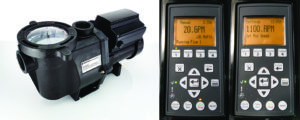
Controlling the speed of a pump motor with a variable-frequency drive to maintain output is more efficient than controlling the pump’s flow with a valve.
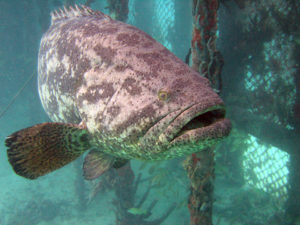
A collaboration among the Center for Aquaculture Research in Colombia, Center for Research, Education and Recreation, and University of Miami is working to adapt the latest aquaculture technology available worldwide to local conditions and create opportunities for farming new commercial species in Colombia.
Controlling the speed of a pump motor with a variable-frequency drive to maintain output is more efficient than controlling the pump’s flow with a valve.
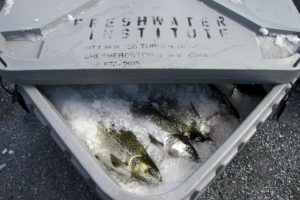
A study to evaluated operating practices and system designs that could potentially enhance depuration of off-flavors from Atlantic salmon cultured in a semi-commercial-scale freshwater recirculating aquaculture system.
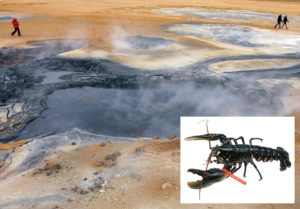
Following earlier work in southwestern Norway that achieved semi-commercial production of European lobsters, a project has received grant support to develop commercialized land-based recirculating aquaculture of lobsters utilizing geothermal water sources in Iceland.
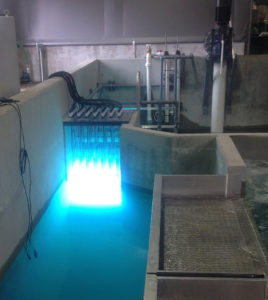
For most effective use, water should have low turbidity and high U.V. transmittance, with ultraviolet dosage tuned to the target organisms. Low-pressure/high-output amalgam U.V. lamps are often used in RAS systems.
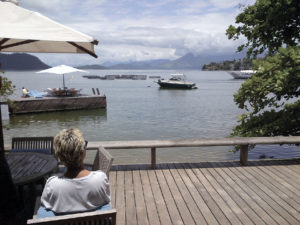
In combination with the availability of coastal areas with favorable environmental and labor conditions, Brazil’s affluent market for seafood could support expansion of a niche aquaculture sector: boutique farming.
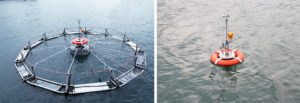
The development of submersible fish cage technologies may be necessary to avoid the operational challenges of surface-based aquaculture, which can include extreme temperature and weather conditions, jellyfish infestation, oil spills and many types of biofouling.
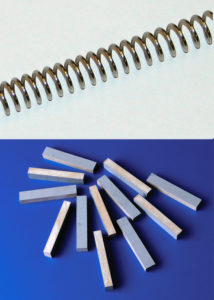
Typical electric immersion heaters used in aquaculture use resistance wire as the source of heat. When the “hot zone” of a resistance heater operates in air or becomes covered with deposits, the rapidly rising temperature can potentially damage plastic tanks and liners.
In carp and other freshwater fish, the adhesive substance that covers their eggs can be a barrier to fertilization. In field studies, the author discovered that some soils from Bengal, India, proved effective in removing the adhesive component from eggs.
Since un-ionized ammonia-nitrogen and nitrite-nitrogen are toxic to most finfish, controlling their concentrations in culture tanks is a primary objective in the design of recirculating aquaculture systems.
Aquaculture is a complex industry, but extensive knowledge of its varied facets exists. While the resources required for aquaculture face limitations, production efficiencies are improving. Today’s industry needs better information-based management strategies to increase its performance and sustainability.
In systems recently developed for shrimp farms, passive acoustic-based technology enables sensor-based control of multiple automatic feeders. Improved growth and feed conversion have been recorded at commercial farms using the technology.
Recirculating aquaculture systems (RAS) are increasingly used to raise fingerlings for stocking large fish in more traditional production systems. A number of unit processes are critical to the design of successful RAS systems.
A newly developed technology for producing all-male populations of freshwater prawns by temporal silencing of the androgenic gland insulin-like gene marks the first RNA interference-based biotechnology to be commercialized in the field of aquaculture.
Mahimahi is a fast-growing, high-value fish species with excellent potential for aquaculture. The technology for maturation, spawning, larval rearing, fingerling production has been mastered, yet progress toward commercial development has been slow.
Today’s aquaculture industry is rapidly adopting recirculating aquaculture systems (RAS) for hatchery and nursery applications. Recently, there has been a move to combine RAS technology with the floating raft aquaponics.