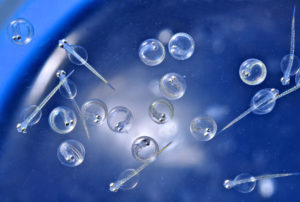
Early-stage diet innovator secures Aqua-Spark investment
The Netherlands-based investment fund is backing a proprietary micro-encapsulation technology that aims to replace live-feed needs for early-stage fish and shrimp.



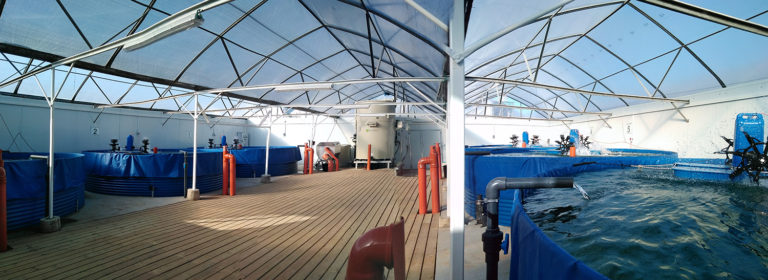
BioFishency's two products, the Single Pass BioFilter and the Mini-RAS, each aim to improve the survival, growth and reproduction rates of fish, which increases profitability and sustainability for the farmer.
The Netherlands-based investment fund is backing a proprietary micro-encapsulation technology that aims to replace live-feed needs for early-stage fish and shrimp.

Professor Selina Stead, the new head of the Institute of Aquaculture (IoA) at the University of Stirling in Scotland, assumes her post on March 1 and will be in charge of 180 staff and students, and in regular contact with a global network of partners and businesses.
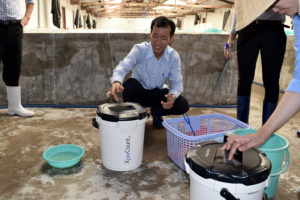
XpertSea does more than count fish. It uses AI and computer vision to calculate growth rates and optimal harvest dates to improve aquaculture efficiency.
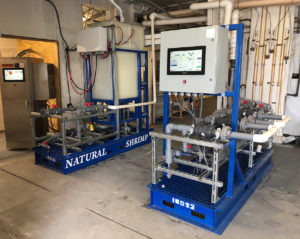
U.S. RAS shrimp producer NaturalShrimp uses electrocoagulation to remove and control bacteria, ammonia and other contaminants that can hinder production.
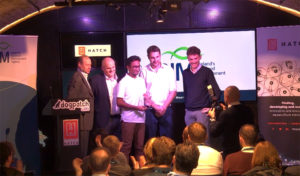
Demo Day in Dublin, Ireland, last week marked the conclusion of the Hatch aquaculture business accelerator’s second cohort in 2018.

The emerging technology, known as the foundation for cryptocurrencies, may be the trustworthy traceability tool the industry needs in a digitally driven world.

Verona, Italy-based ColomboSky’s satellite monitoring tool provides early detection of approaching water threats specifically for marine aquaculture.
Overfeeding is a waste stream for aquaculture. Underwater cameras in pens help, but a company mixing hydroacoustics and machine learning has another idea.

We're posting all six presentations from the exciting session, "Thoughts on the Future of Aquaculture." This week's speaker is Isaac Fraynd of Netherlands-based impact investment firm Aqua-Spark.
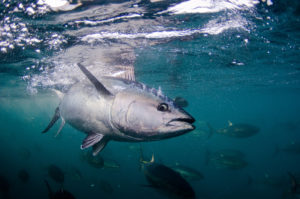
Bluefin tuna may be the most prized fish in the ocean. If hon-maguro sashimi is to remain chic, closed-cycle aquaculture may help keep it on menus.
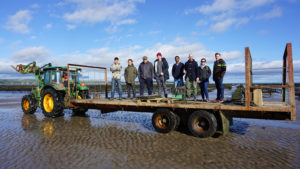
For entrepreneurs in the Hatch accelerator program, the process of attracting investors to herald a new growth curve is an intense and immersive one.
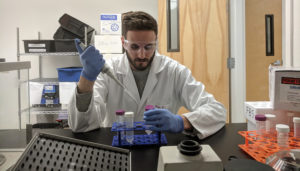
Companies growing meat in laboratories need to overcome challenges including cost, regulation and consumer acceptance. Proponents believe there’s a place in the market for lab-grown fish meat.

Over the next six weeks, we'll post each of the presentations from the exciting and fast-paced session, "Thoughts on the Future of Aquaculture in the PechaKucha Style."
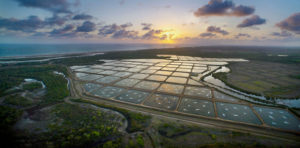
Australian aquaculture gets some needed attention later this month when Fish 2.0 holds a regional workshop focused on innovation and investment in Melbourne.
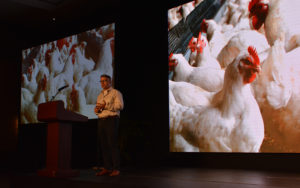
At the Global Aquaculture Alliance’s annual GOAL conference in Guyaquil, Ecuador, unfamiliar topics gave aquaculture industry leaders something to chew on.