


Catch & Culture Review: Complexity and control – An evaluation of multi-species management measures for U.S. snapper and grouper fisheries

Model provides a tool for assessing trade-offs of running a mixed snapper-grouper fishery by limiting effort
Multispecies fisheries occur throughout the world, yet they are usually regulated with tools designed for one species at a time. That mismatch can produce large amounts of discarded catch: boats keep fishing the complex even after some species can no longer be kept. Effort-based management can help prevent this problem by limiting fishing itself rather than only what may be landed afterward.
This study by Jie Cao and colleagues at North Carolina State University (USA), the National Marine Fisheries Service (USA), and the National Oceanic and Atmospheric Administration (USA) used a simulation model to test several time- and space-based effort controls in the snapper-grouper fishery of the U.S. South Atlantic.
Six species that dominate commercial and recreational catch were used to stand in for the broader complex. Each management option was scored on spawning biomass, commercial and recreational landings, commercial and recreational discards and economic measures for both sectors. Results were examined for individual species and for the group as a whole.
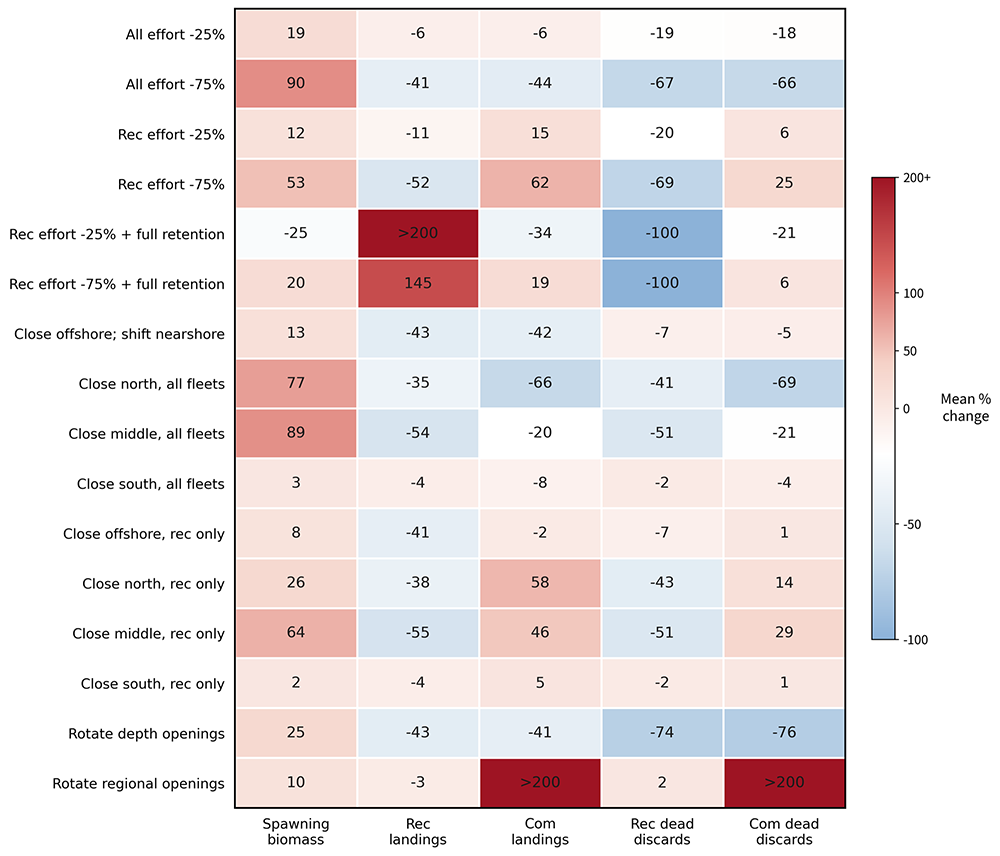
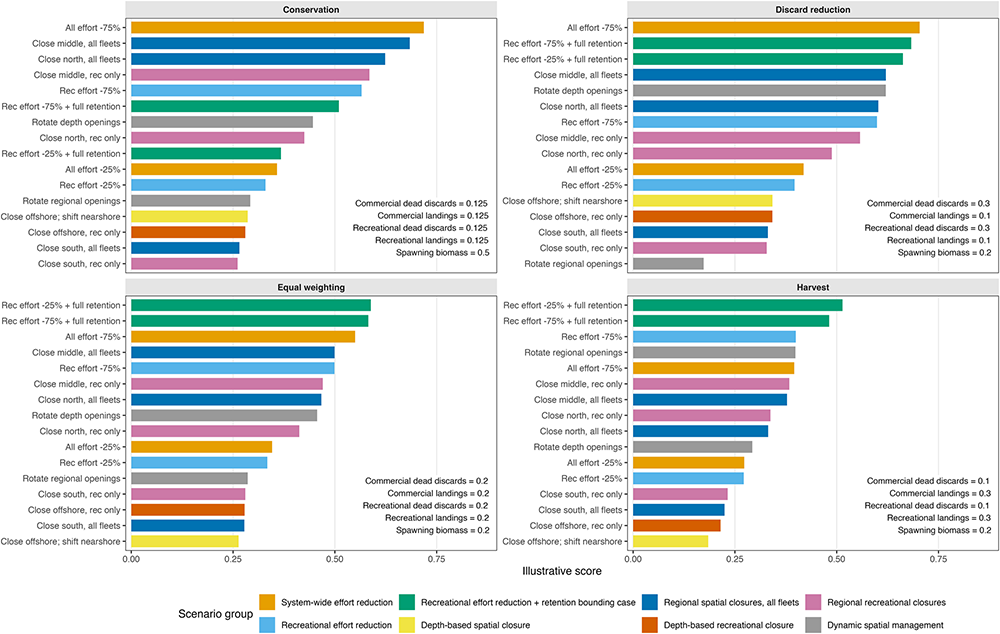
Some controls outperformed others, but none was best for every species and both fleets. The preferred approach depends on what managers value most – including conservation gains such as higher spawning biomass, harvest goals such as more landings and fewer discards, or economic results –and on how they weigh the tradeoffs among those aims. The study model is intended to make those tradeoffs clearer to identify.

Relevance of research findings to the industry
The findings of this study are useful to the snapper-grouper industry because they score management options in terms of what happens to landings, dead discards, stock size and money in both the commercial and recreational sectors.
Commercial fishing in this complex already runs under limited entry, while private recreational fishing does not, and the study model addresses this. If recreational effort is reduced or cut, and commercial effort is left alone, spawning biomass often rises and commercial landings and surplus can improve, but recreational landings fall, which is an allocation issue. The discard finding is the one closest to the current debate at the South Atlantic Fishery Management Council (SAFMC), part of their Snapper-Grouper Fishery Management Plan. Bag limits, size limits, and short seasons allow some boats on the water, and effort limits take time or bottom away.
Locations are also relevant and can matter more than a single coast-wide season. Closing the northern or middle fishing regions did more for biomass than closing the south region, because fish and fishing are not spread evenly, and a box on a map that looks the same on paper is a different fishery by latitude and depth. The results suggest rotating large closures while leaving small open spots on artificial or chosen natural reefs, as a way to keep some access and still get spillover. However, this only works if managers know where boats go when a box shuts, something the model only partly tests.
The simulation does not take the place of Southeast Data, Assessment, and Review (SEDAR) assessments, and it does not settle who should get what share of the catch. What it adds is a way for industry and the Council to discuss and evaluate the choices the model actually scored: building spawning biomass against keeping trips on the water, commercial landings against recreational fish in the box, and a larger short-term harvest against cutting dead discards. Those are the same tradeoffs that ran through every scenario – including effort cuts, full retention, and spatial closures alike –and why no single rule produced positive results for every species and both sectors.
Perspectives
Managing mixed-species fisheries is complex because single-species rules ignore shared effort and the fact that boats keep fishing after some species close. This study used a simulation model to test time- and space-based effort controls for the U.S. Atlantic snapper-grouper complex and to map tradeoffs among biomass, landings, discards, and economic results. None of the 16 scenarios raised spawning biomass, raised landings, cut dead discards, and improved economics for every species and both sectors at once. Broad effort cuts and some fixed closures usually grew biomass and reduced dead discards, but they often cut landings.
Results for the various species differed: gag groupers, red porgies and red snappers responded more to effort and regional closures, and black sea bass showed the largest recreational landing and value gains under full retention. Life history and how spawning biomass was defined help explain those gaps.
Spatial closures were not interchangeable: northern and middle closures did more than a southern one, and recreational-only closures shifted benefits toward the commercial sector. Rotating large, closed areas, with small open “marine exploitable areas” on selected reefs, is one way to keep some access while seeking spillover.
Overall, the study model offers a way to weigh the tradeoffs that result from managing a mixed-species fishery through effort controls rather than catch limits alone. Which option looks best depends on what managers and stakeholders choose to emphasize. Future work on the snapper-grouper complex could take this framework further and combine those priorities into a formal management strategy evaluation. That next step would still have to balance competing aims: rebuilding spawning biomass, protecting harvest, cutting discards, and keeping economic outcomes reasonably stable across fleets and species. The authors conclude that the findings of this study are meant to help move management in that direction.
How bycatch species have changed in abundance in France’s eastern Atlantic tropical tuna purse-seine fishery
Epipelagic fisheries exploit the sunlit top of the ocean, roughly the upper 200m, and capture animals that swim in that layer rather than on the bottom: tunas, billfish, mahi-mahi, some sharks and rays, and the small fish that gather under floating objects. The gears used are purse seines, longlines, trolling, and pole-and-line, not trawls that scrape the seabed. These are major fisheries but their scale, diverse life histories, and high variability make abundance hard to observe. Fishery data usually cover target tunas, not bycatch, and estimating how bycatch species change over time in tropical tuna fisheries is difficult: data are sparse, and many of the animals are rarely caught.
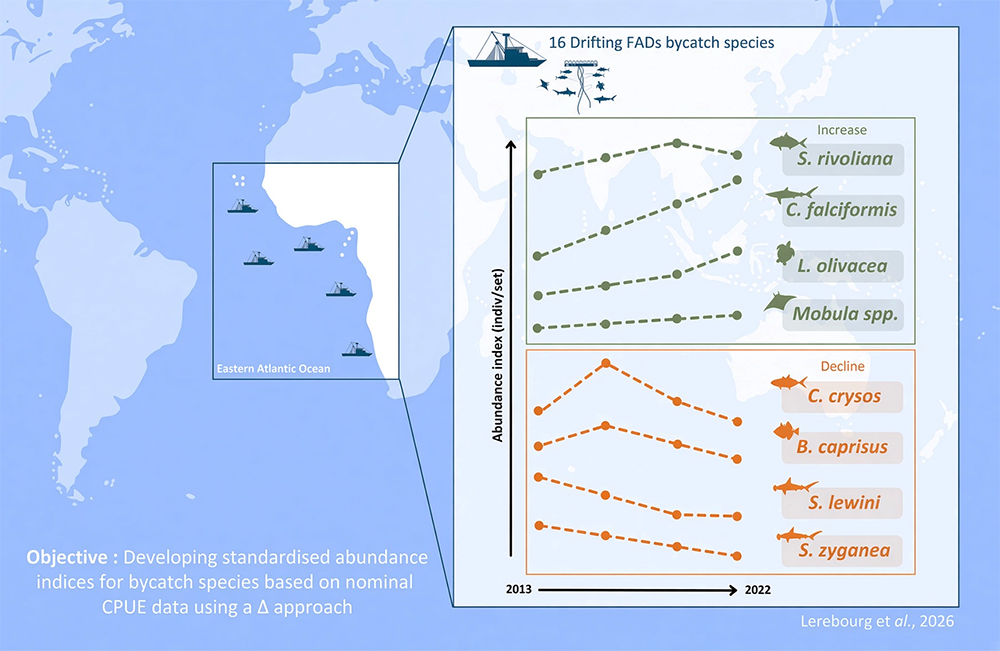
A study by Clara Lerebourg and colleagues at Univ Montpellier, Ifremer (France), Institut Cavanilles de Biodiversitat i Biologia Evolutiva (Spain), and Université de Montpellier (France) used observer records from French tropical tuna purse-seine vessels in the east-central Atlantic from 2013 to 2022 to build standardized abundance indices and describe trends for 16 principal bycatch taxa, including sharks, rays, billfishes, and sea turtles.
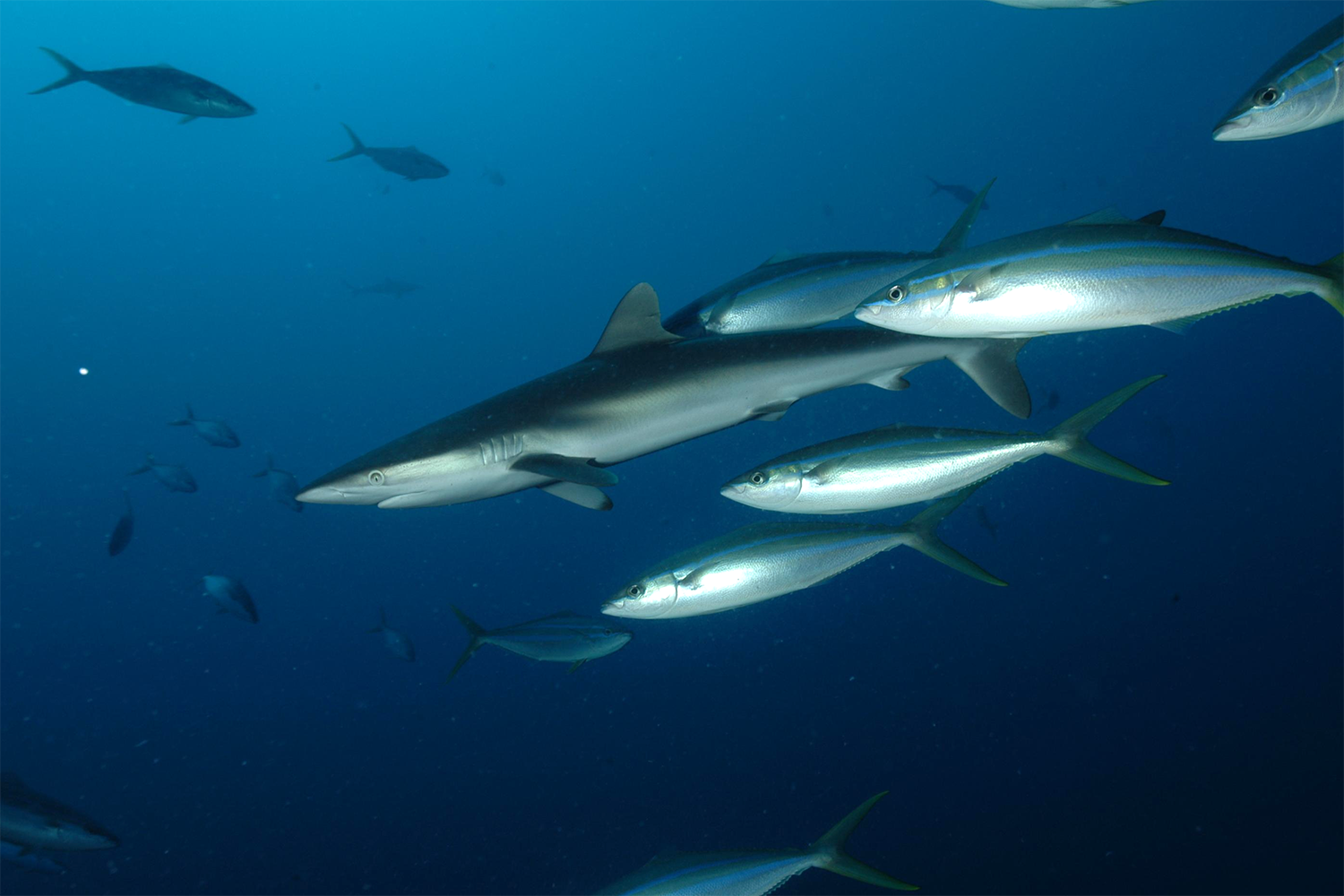
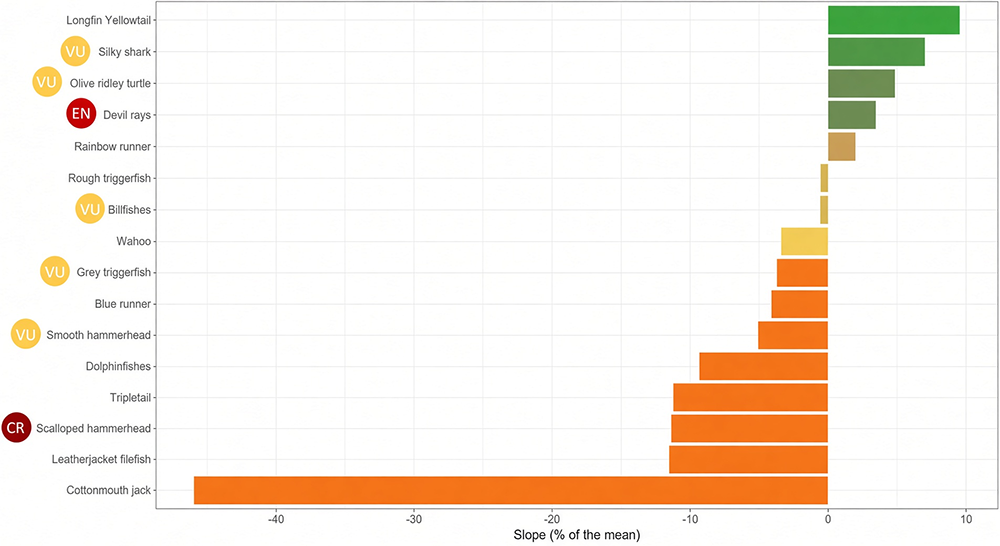
For most of the 16 species studied, the standardized series is stable or declining over the decade, but there were three taxa found to be increasing, including silky sharks (Carcharhinus falciformis), devil rays (Mobula spp.) and olive ridley turtles (Lepidochelys olivacea). The authors treat those increases as standardized catch rates and not as proven recoveries.
Results also show that catchability data can increase if sets move into preferred habitats, if observers become better at identifying the animal, or if handling and retention rules change what is recorded. The converse is also true for the declines: a falling index can be a smaller population, a shift away from that species’ habitat, or both.
As reported by the authors, to their knowledge, these are the most extensive concurrent, fleet-specific, fishery-dependent abundance series yet produced for pelagic bycatch taken on drifting fish aggregating devices (FADs) in the tropical Atlantic. These series are suitable inputs for stock assessments, ecological risk assessments and subsequent work on bycatch mitigation.
Relevance of the findings to the industry
For the French tropical purse-seine fleet, and by extension other EU vessels in the same trade, the study is relevant because it converts existing observer coverage into standardized, species-specific relative abundance. Drifting-FAD sets remain the principal source of skipjack catch. Obligations to ICCAT, eco-labeling schemes and bycatch action plans require a rate that is independent of raw catch-per-unit-of-effort, CPUE.
Heterogeneity among taxa is very relevant for adequate stock management. An increase in standardized silky shark or Mobula rays’ CPUE on FADs does not imply the same process, or the same intervention, as a decline in scalloped hammerhead or cottonmouth jack. Meaning that mitigation efforts designed for one group cannot be assumed to adequately transfer to another group.
The analysis also demonstrates the inadequacy of unstandardized logbook rates as a basis for scientific or regulatory inference. Fleet composition and FAD use changed over 2013–2022; those changes can generate spurious trends unless they are modeled. The converse limitation can be stated with the same emphasis: the index remains conditional on catchability. And an increase may reflect local density, a redistribution of sets into preferred habitat, or improved observer detection.
Combined with independent information, the data series in this study provide some information, but French Atlantic purse seiners are not the tropical Atlantic fishery as a whole, so the authors indicate that transfer of these results to fishing seiner from other nations or in different ocean basins requires a parallel standardization and not a just simple extrapolation.
Perspectives
This study provides the first standardized, multi-species abundance indices for bycatch taken with tuna purse seines in the eastern Atlantic. The resulting data series shows that species associated with drifting FADs do not move together, and that after spatial, temporal and operational effects were removed from the data, it shows that different taxonomic groups diverged. A few vulnerable species had modest rises in standardized catch per unit effort, and also showed that several fish species and critically endangered hammerheads declined sharply.
These indices begin to fill a long-standing gap for taxa that are seldom assessed and may stand in, cautiously, for wider population change. The analysis also underlines the need for continuous observer coverage and for models that can carry zero-heavy bycatch counts if the ecological effects of the fishery are to be judged. Some of the directions are compatible with recent mitigation, but fishery-dependent CPUE cannot prove cause.
Overall, the study concludes that these standardized series are a practical base for ecological risk assessment and for ecosystem indicators under the International Commission for the Conservation of Atlantic Tunas (ICCAT) and other tuna Regional Fisheries Management Organization (RFMOs).
Advancing stock assessments of benthopelagic fishes through broadband acoustic techniques
Dependable data on the size of a fish stock are required before it can be harvested sustainably. Stock assessments need reliable data on fish abundance and trends. Several commonly used fisheries models combine recruitment, distribution, movement, and mortality, but the data that feed them can be difficult to obtain. Fish stocks are patchy, and the animals can migrate and fluctuate. Trawl and gillnet surveys are expensive, kill fish, cover little ground, and are biased by how well the gear catches each species. As a result, many commercial fish stocks lack a solid assessment, but fisheries acoustics can help fill part of the data gap.
In a study by Giacomo Gardella and colleagues at the Greenland Institute of Natural Resources, (Greenland) and the Technical University of Denmark (Denmark), the authors apply a refined version of an established broadband acoustic protocol to the local inshore spawning stock in the Nuuk system (WISCNuuk, the fjord complex around Greenland’s capital, Nuuk, on the southwest coast). The fjord is a fair test bed: it is confined, species-poor in pelagic fishes (cod, capelin, redfish), and the cod are often unschooled at night.
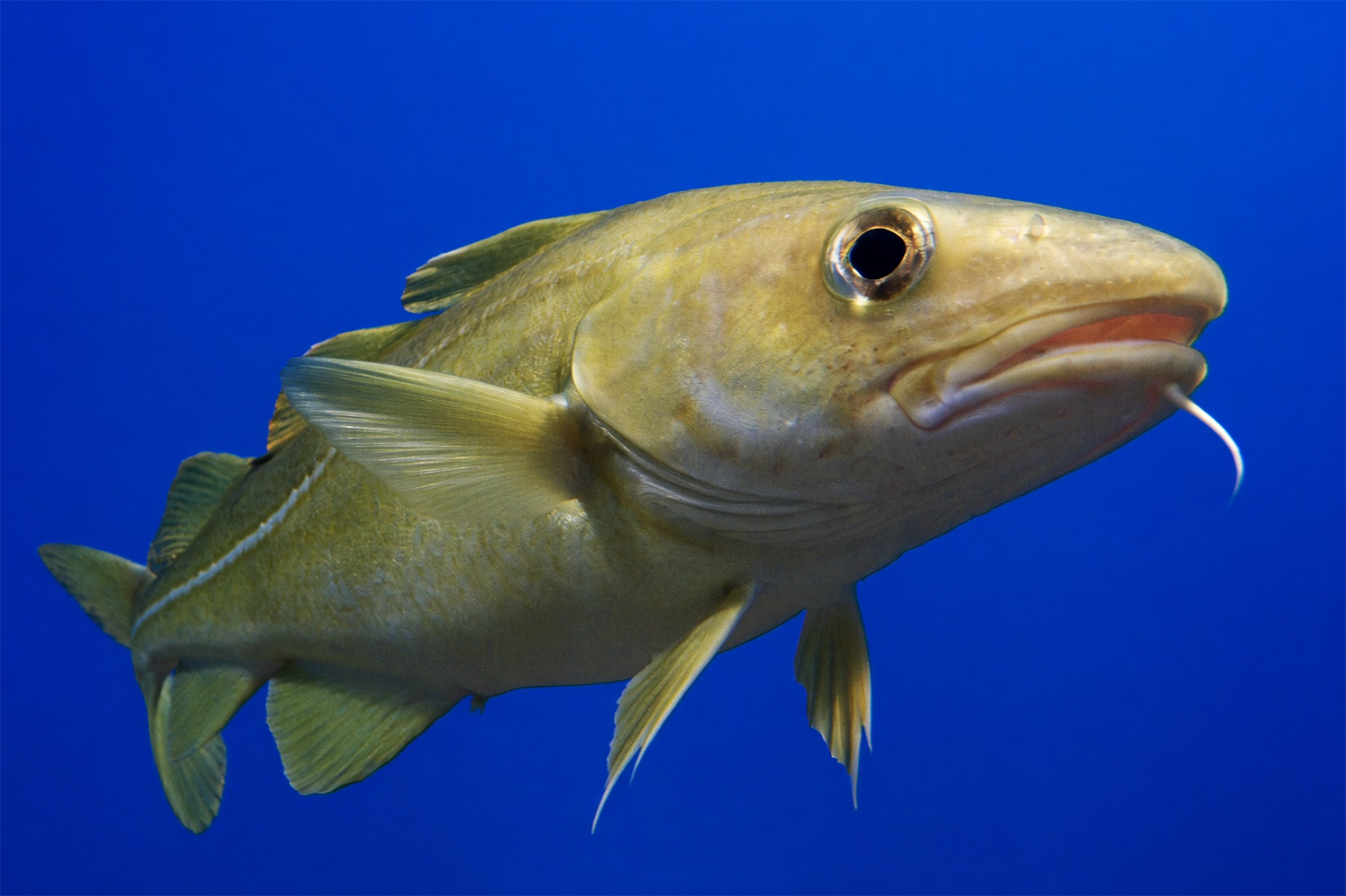
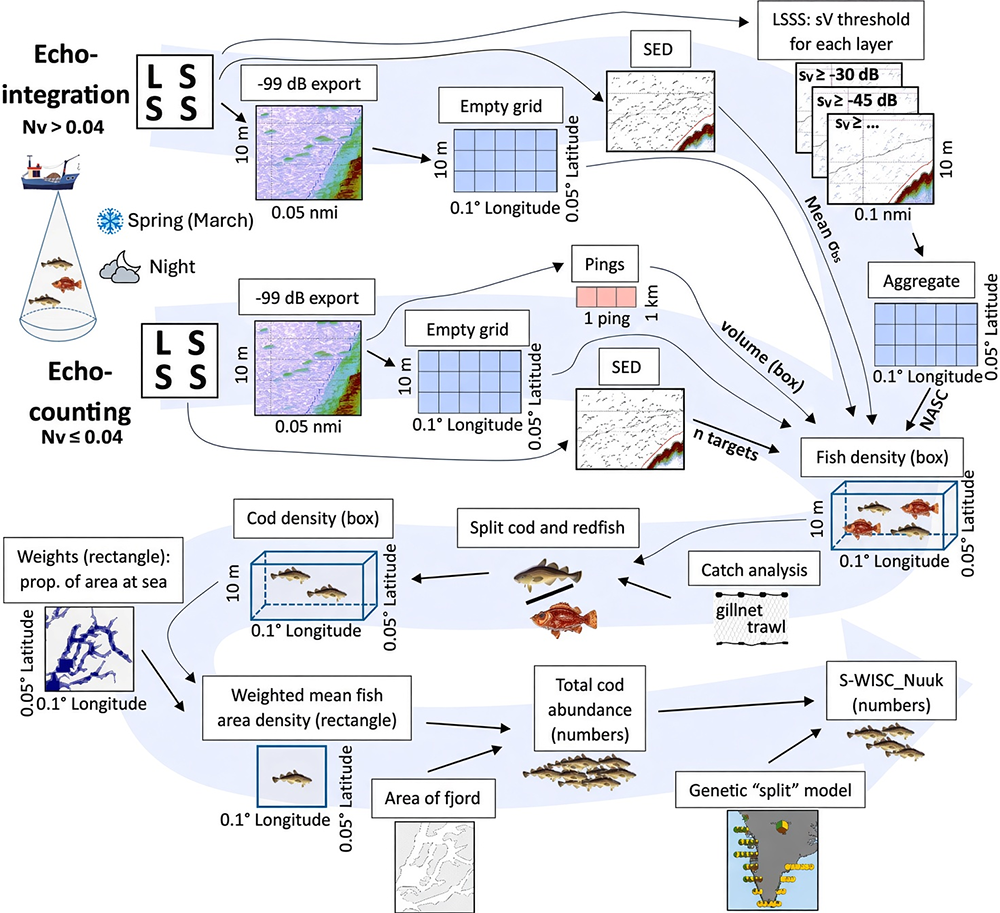
The research compared echo-counting with echo-integration and with a state-space assessment model (SAM; a computer model that estimates how many fish are in a stock and how hard they are being fished) of the same stock. This effort is a full approach for estimating the total abundance of Atlantic cod (Gadus morhua), a benthopelagic (fish that live both near the seafloor and up in the water above it, not attached to the bottom and not only in open water) species with echo-counting and current acoustic gear.
Active acoustics is a relatively low-cost, low-impact technology used to measure animals in the water column and produce fine-scale maps in space and time. Newer broadband echosounders resolve range much more sharply than older continuous-wave systems, so individual fish can be detected and counted, something conventional acoustics could not do. That makes it possible to apply echo-counting to benthopelagic stocks. What has been missing to date are agreed methods, so echo-counting surveys have not yet entered formal assessments.
The results of the three approaches tested in this research came out close to one another. So, based on these findings, the recommendation of the study is to count where single targets can be resolved and to integrate only in the dense patches. The protocol then maps where the cod are in the fjord and sets out how data should be collected, processed, and analyzed if echo-counting is to be incorporated into the International Council for the Exploration of the Sea (ICES) fish stock process.
Overall, the results show that broadband echosounders can pick out single fish, which makes echo-counting practical, and that echo-counting provides about 12 percent more cod than integration and 6.3 percent more than SAM.
Relevance of research findings to the industry
For those involved in fish surveys and assessments, or that fish for benthopelagic stocks, the results of this study indicate that acoustics are not a tool only for pelagic fish stocks. Where fish are spread out, a calibrated broadband system can produce an absolute number instead of only a relative index, and it can do it with far less lethal sampling than a trawl grid.
This is very relevant for inshore and fjord fisheries, for stocks that hug the bottom by day and rise at night, and for places where a full trawl survey is too costly or too destructive. Greenland’s inshore cod is the example used in this research, but the same approach can be applied to other gadoids (cods, hakes sand related species) and reef-associated species for which assessments still mostly depend on nets. Survey vessels already carry the type of gear used in this study (EK80-class gear), and the extra cost is in protocol and processing with equipment typically on board already.
Results do not support suspending trawling, because species of similar size still look alike on an echogram, and the authors state that they still require ground truthing with line fishing, video or a limited trawl. What changes is how much extractive sampling is needed once the acoustic method is stable. Echo-counting also returns a length signal without bringing every fish on deck, which is useful for size-based recommendations and actions, and for avoiding areas with small-sized fish.
Direct acoustic-versus-model checks are still rare, and agreement in a small, well-mixed fjord does not automatically transfers directly to an open-shelf stock with mixed species and a wide dead zone. But it does show that the numbers are real, which is the first requirement before a time series should be allowed into an assessment.
Perspectives
In this study, authors report that echo-counting worked well in the Nuuk fjords and is straightforward to run there, so they argue that it should become the basis of the local cod assessment. Fishing accounts for more than 95 percent of Greenland’s export earnings, and cod is a main target, inshore and offshore, along most of the coast. An acoustic survey would cost less in people and ship time than the present gillnet work used.
Timing would also improve. A March survey can share the vessel with the daytime capelin survey and deliver numbers before the April ICES NWWG meeting. The April ICES Report of the North Western Working Group (NWWG) is the working group’s annual assessment document for fish stocks around Greenland, Iceland, and the Faroe Islands – including West Greenland inshore and offshore cod, haddock, saithe, Greenland halibut, redfish and Icelandic herring and capelin. The NWWG report updates recruitment, biomass, spawning stock and fishing mortality and is the scientific basis ICES later uses for catch advice to managers. That is why authors of this study recommend a March acoustic survey: so a same-year abundance figure can enter this April meeting instead of last year’s gillnet survey.
This approach works for cod and can also work for other species; for example, beaked redfish are also benthopelagic and just as visible on the echograms. The cod-redfish split can be reversed to estimate redfish; also, the protocol discussed in this study can be applied to other species and areas with similar conditions.
Now that you've reached the end of the article ...
… please consider supporting GSA’s mission to advance responsible seafood practices through education, advocacy and third-party assurances. The Advocate aims to document the evolution of responsible seafood practices and share the expansive knowledge of our vast network of contributors.
By becoming a Global Seafood Alliance member, you’re ensuring that all of the pre-competitive work we do through member benefits, resources and events can continue. Individual membership costs just $50 a year.
Not a GSA member? Join us.
Author
-

Editor Emeritus
Related Posts
Fisheries
Analysis of pelagic tuna fisheries management in China
Although a range of supervisory management measures have been implemented over nearly four decades, its regulatory framework should be improved.
Fisheries
Catch & Culture Review: How climate change may alter the trajectory of North Sea demersal fisheries
Our monthly fisheries literature review examines fundamentals of fisheries management, fishery dynamics of squid and climate change impacts on Pandalus jordani.
Fisheries
Catch & Culture Review: Bioeconomic modeling for tuna fisheries and bespoke fisheries management
In this review of recent fisheries literature, we examine tuna harvest strategy optimization and why a one-size-fits-all management approach fails.
Fisheries
‘A world down below’ – Deeper fishing insights lead to better tools for bycatch reduction
High-tech bycatch reduction devices – data analytics, cameras and sensors – are in play but SafetyNet Technologies says the secret is collaboration.