


Study identifies major sources of carbon emissions in Nordic seafood production

Study finds that fuel use drives carbon emissions in fisheries, while feed production dominates aquaculture’s climate footprint
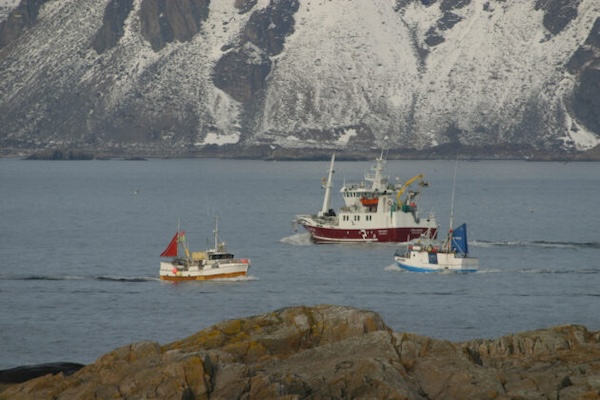
A new study finds that fuel use drives emissions in fisheries, while feed production dominates aquaculture’s climate footprint, highlighting the need for targeted climate action.
The report, published by the Nordic Council of Ministers, was prepared by researchers from Norwegian food research institute Nofima and universities and research institutions across the Nordic region. It examines seafood production in Denmark, Finland, Iceland, Norway, Sweden, the Faroe Islands and Greenland, finding that emissions vary widely depending on species, fishing methods, farming systems, processing practices and transportation.
“The report shows that seafood cannot be treated as one uniform product category,” said Bente Torstensen, CEO of Nofima.
Researchers found that fuel consumption is generally the largest source of emissions in capture fisheries. The amount of fuel used depends on factors including vessel size, fishing gear, distance to fishing grounds and the effort required to catch fish.

In aquaculture, feed production and composition are generally the largest sources of emissions over a product’s life cycle. Electricity use can also be significant, particularly in land-based recirculating aquaculture systems (RAS), depending on the energy source.
Processing and transportation add further emissions. Refrigeration, freezing and fishmeal production can increase energy demand, while transporting fresh fish by air can substantially increase its climate footprint compared with shipping.
“The report does not identify one particular type of seafood as a general climate problem,” Torstensen said. “Instead, it shows that emissions can be high in fuel-intensive fisheries, energy-intensive processing, and aquaculture systems where feed production or electricity use generate substantial emissions.”
The report also identifies differences between Nordic countries. In Denmark, aquaculture emissions fell by 29 percent to 63,000 metric tons (MT) of carbon dioxide (CO₂) equivalent in 2023, largely because of improved feed efficiency and cleaner electricity.
In the Faroe Islands, capture fisheries were the largest single source of territorial emissions, accounting for an estimated 260,000 to 290,000 MT of CO₂ annually. Feed production accounted for the largest share of life-cycle emissions from salmon farming.
Iceland’s fisheries, aquaculture and seafood processing sectors emitted approximately 692,000 MT of CO₂ equivalent in 2023. Fuel use in fishing was the largest contributor, although fishmeal production, processing energy and aquaculture feed were also important sources.
In Greenland, emissions from offshore trawlers and seafood processing depend heavily on fossil fuel use. The researchers noted that centralizing processing could reduce emissions but might come at the expense of jobs and economic activity in coastal communities.
For Norway, feed production remains the largest source of emissions in salmon farming, while fuel consumption is the main challenge for the fishing fleet. The report identifies renewable electricity as an opportunity to reduce processing emissions.
Across the region, the researchers found that many Nordic seafood products have a lower climate footprint per kilogram of edible product than animal-based foods from agriculture, particularly meat from ruminants. However, they cautioned that differences in data sources and methods make direct comparisons between countries uncertain.
The study draws on national emissions statistics, industry data, scientific literature and existing life-cycle assessments, with most data covering 2023.
Rather than recommending a single approach for the seafood industry, the researchers argue that emissions reductions should focus on the most carbon-intensive activities within each production system.
“The key finding is that the climate footprint depends on how seafood is caught, farmed, processed and transported,” Torstensen said. “This means that measures must target the most emission-intensive parts of the value chain.”
Now that you've reached the end of the article ...
… please consider supporting GSA’s mission to advance responsible seafood practices through education, advocacy and third-party assurances. The Advocate aims to document the evolution of responsible seafood practices and share the expansive knowledge of our vast network of contributors.
By becoming a Global Seafood Alliance member, you’re ensuring that all of the pre-competitive work we do through member benefits, resources and events can continue. Individual membership costs just $50 a year.
Not a GSA member? Join us.
Author

Related Posts
Responsibility
Smart energy management in simulated RAS cuts electricity use, carbon emissions
Smart energy management cut electricity use and carbon dioxide while maintaining safe oxygen levels in simulated recirculating aquaculture systems.
Aquafeeds
Net-zero aquafeed facility planned for Iceland
BioMar Group and Síldarvinnslan will build a modern, net-zero aquafeed production facility in Iceland, an emerging aquaculture producer.
Responsibility
Aquaculture, feed companies embark on a carbon-cutting journey
The aquaculture value chain can significantly reduce carbon emissions with innovations in feed, transportation and operations.

Responsibility
Modeling future carbon emissions from global mangrove forest loss
Developing a spatial model that projects emissions caused by mangrove forest loss to overcome current limitations in global estimations.