


Artificial intelligence analysis reveals global rise in floating algal blooms

Scientists used artificial intelligence to analyze 1.2 million satellite images, finding floating algae are expanding across world’s oceans

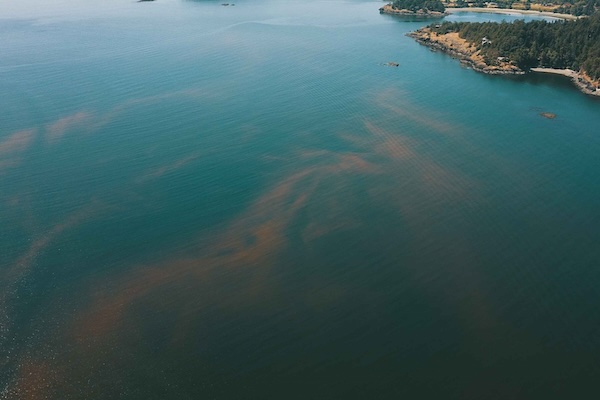
Researchers have used artificial intelligence to show that floating algal blooms are expanding across much of the world’s oceans, a shift that could affect marine ecosystems, fisheries and coastal economies.
The study, published in Nature Communications, analyzed 1.2 million satellite images collected between 2003 and 2022 to produce the first global assessment of floating algae. The researchers found significant increases in both floating microalgae and macroalgae, suggesting the world’s oceans may be shifting toward conditions that favor larger and more frequent floating algal blooms.
According to the researchers, floating macroalgae can provide important habitat and nursery areas for marine life in the open ocean, potentially benefiting fisheries. However, when large blooms reach coastal waters and begin to decompose, they can damage marine ecosystems, threaten human and animal health, discourage tourism and create economic losses for coastal communities.
“While regional studies have been published, our paper gives the first global picture of floating algae, including macroalgal mats and microalgal scum,” said Chuanmin Hu, professor of oceanography at the University of South Florida College of Marine Science and senior author of the study. “Our results show that the global ocean now favors the growth of floating macroalgae.”
![Ad for [BSP]](https://www.globalseafood.org/wp-content/uploads/2025/07/BSP_B2B_2025_1050x125.jpg)
Eye in the sky: Europe employs satellites to advance aquaculture
The researchers found that floating microalgae increased globally by about 1 percent per year between 2003 and 2022. Macroalgae expanded much faster in some regions, with blooms in the tropical Atlantic and western Pacific increasing by 13.4 percent annually. They also identified a major shift beginning around 2008, when large blooms of floating seaweed began appearing in several parts of the world.
“Before 2008, there were no major blooms of macroalgae reported except for sargassum in the Sargasso Sea,” Hu said. “On a global scale, we appear to be witnessing a regime shift from a macroalgae-poor ocean to a macroalgae-rich ocean.”
To complete the study, the researchers trained an artificial intelligence model to identify floating algae in satellite imagery, allowing them to analyze more than 1.2 million images covering 13 ocean regions and five categories of algae. The team said the approach made it possible to process decades of global observations that would have been difficult to analyze manually.
The researchers said the expansion of floating algae is likely driven by a combination of factors that vary by region, including nutrient runoff, warming ocean temperatures and changes in ocean circulation. They plan to analyze additional satellite data to better understand what is driving the long-term increase in floating algal blooms.
Now that you've reached the end of the article ...
… please consider supporting GSA’s mission to advance responsible seafood practices through education, advocacy and third-party assurances. The Advocate aims to document the evolution of responsible seafood practices and share the expansive knowledge of our vast network of contributors.
By becoming a Global Seafood Alliance member, you’re ensuring that all of the pre-competitive work we do through member benefits, resources and events can continue. Individual membership costs just $50 a year.
Not a GSA member? Join us.
Author

Related Posts
Intelligence
Can AI tool from NASA track harmful algal blooms from space?
A NASA-developed artificial intelligence tool uses satellite data to detect harmful algal blooms in U.S. coastal waters.
Innovation & Investment
U.K. initiative to combat rising threat of harmful algal blooms to aquaculture
New UK-wide training will help aquaculture tackle harmful algal blooms with standard reporting and early warning systems.

Intelligence
Researchers uncover giant enzymes in marine algae responsible for deadly fish-killing toxins
A new study shows that massive enzymes in marine algae that produce neurotoxins cause mass fish deaths during harmful algal blooms.

Intelligence
FAO issues ‘roadmap’ for early harmful algal bloom warning systems
Document provides guidance to implement or improve early warning systems for harmful algal blooms that threaten seafood and public health.