


A look at Asian sea bass culture in India: Status, challenges and the way forward

Farming of the Asian sea bass known as barramundi is expanding in India as an alternative to shrimp, but limits include seed shortages, high feed costs, disease, and other factors
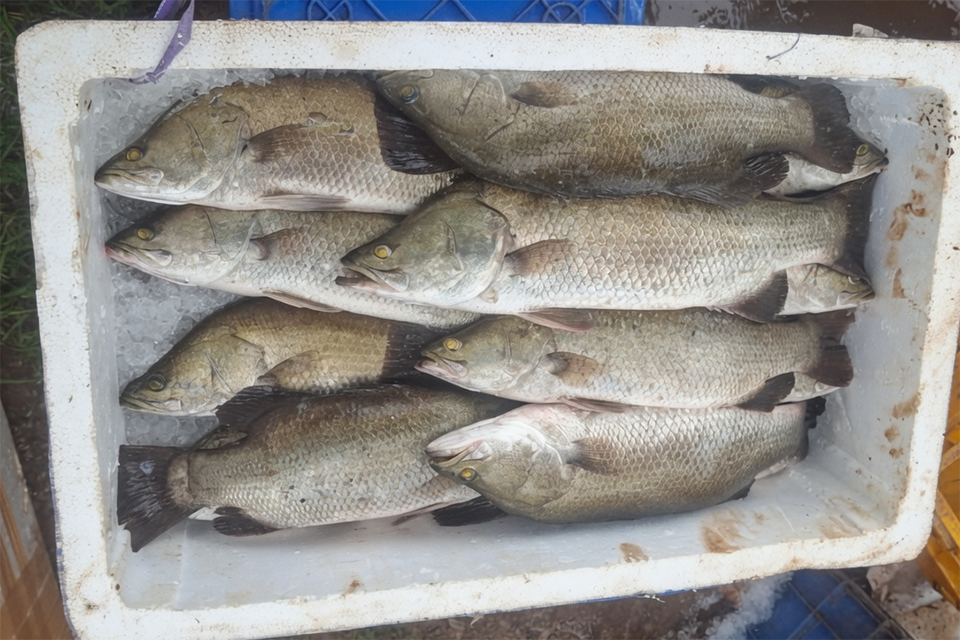
If you walk through the coastal aquaculture belts of Tamil Nadu, Andhra Pradesh, or Gujarat these days, you will notice something different. Alongside the familiar shrimp ponds, an increasing number of farmers are turning to Asian sea bass (Lates calcarifer), or barramundi as it is known in many markets. The fish is hardy, tolerates a wide range of salinities and commands strong prices in domestic markets. For farmers who have watched shrimp crops fail or prices crash, barramundi has become a practical way to spread risk.
The species has come a long way in the last 10 years. Hatchery techniques have improved, commercial feeds are available and a handful of progressive operators are making profits. Yet production remains modest and the problems that hold the sector back are the same ones farmers talk about every season: seed that arrives late or uneven in size, feed that eats up most of the budget, disease that appears without warning and a market that still runs largely through middlemen.
Here we examine and discuss where Asian sea bass culture stands today, what is actually slowing it down, and what needs to change if it is to grow into a reliable part of India’s aquaculture mix.
Where things stand today
Official FAO FishStatJ data show that India produced 7,147 metric tons (MT) of Asian sea bass (Lates calcarifer) in 2024, up from 5,311 MT in 2020. Although production remains modest compared with shrimp and carps, sea bass farming is expanding rapidly. FAO data also show that Thailand and Malaysia are the world’s leading producers, with 58,462 and 55,563 MT, respectively, followed by other major producers including Saudi Arabia and Taiwan (Province of China). Industry estimates suggest India’s actual production may be closer to 9,000 MT, reflecting continued expansion of the sector.
![Ad for [BSP]](https://www.globalseafood.org/wp-content/uploads/2025/07/BSP_B2B_2025_1050x125.jpg)
How most farms operate
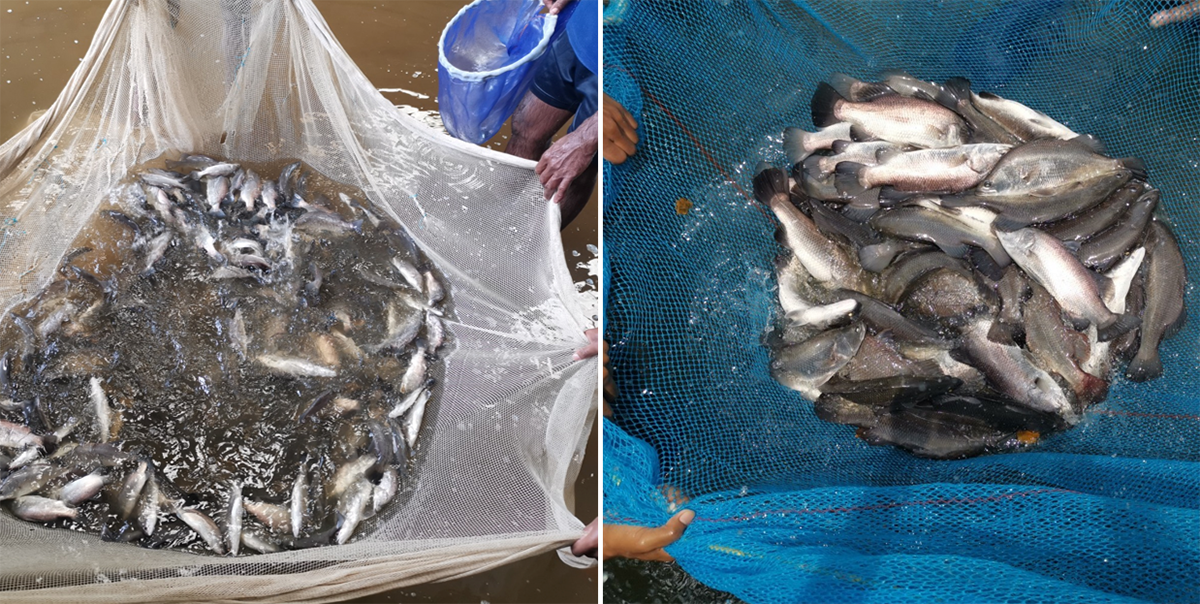
A typical commercial crop starts with fingerlings of 50–100 grams in size. Stocking at this size is common because it cuts down on early cannibalism and makes survival more predictable. Densities range between 1,000 and 3,000 fish per acre (2,470 to 7,410 fish per hectare), depending on how much aeration the farm can provide and how tightly the manager runs the system. After six to eight months, the fish reach 700 grams to 1.5 kilograms. Under careful management, survival runs 60–80 percent and feed conversion with adequate aquafeeds is around 1.4.
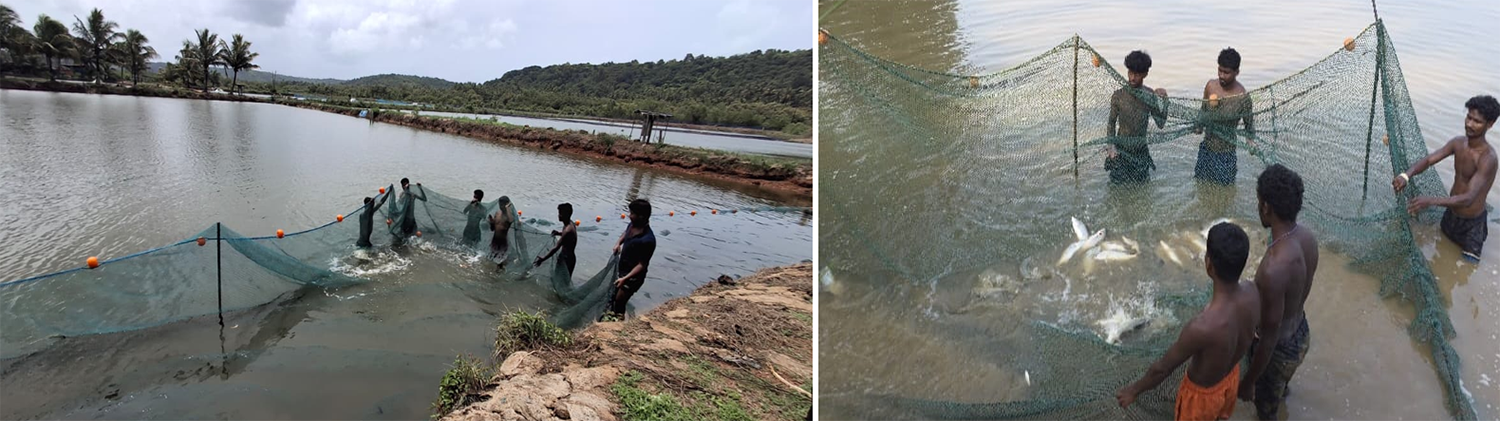
Farms that grade regularly and keep a close eye on biomass tend to do better. The difference between a disciplined operation and a casual one shows up clearly at harvest.
Seed production
The basic protocols for producing Asian sea bass seed were worked out by the Rajiv Gandhi Centre for Aquaculture (RGCA) under the Marine Products Export Development Authority (MPEDA), the Central Institute of Brackishwater Aquaculture (CIBA) and the Central Marine Fisheries Research Institute (CMFRI). A few private hatcheries have since set up in the main coastal clusters and are producing commercially. Capacity is still short of demand, especially in the December–March period when salinity drops after the monsoon and broodstock performance dips. Until more private hatcheries come online and quality becomes more consistent, seed will remain a bottleneck.
Feed
Formulated extruded feeds for sea bass are now available from several companies. They come in stage-specific sizes with balanced protein and amino-acid profiles, and when used properly they deliver steadier growth and better FCR. Feed is still the biggest single cost – usually 55–65 percent of total expenses – so any increase in raw-material prices hits the bottom line hard. Some farmers continue to use trash fish or live feed despite the availability of aquafeeds. The practice is cheaper in the short run but creates uneven growth, affects water quality, and increases disease risks.
Production systems
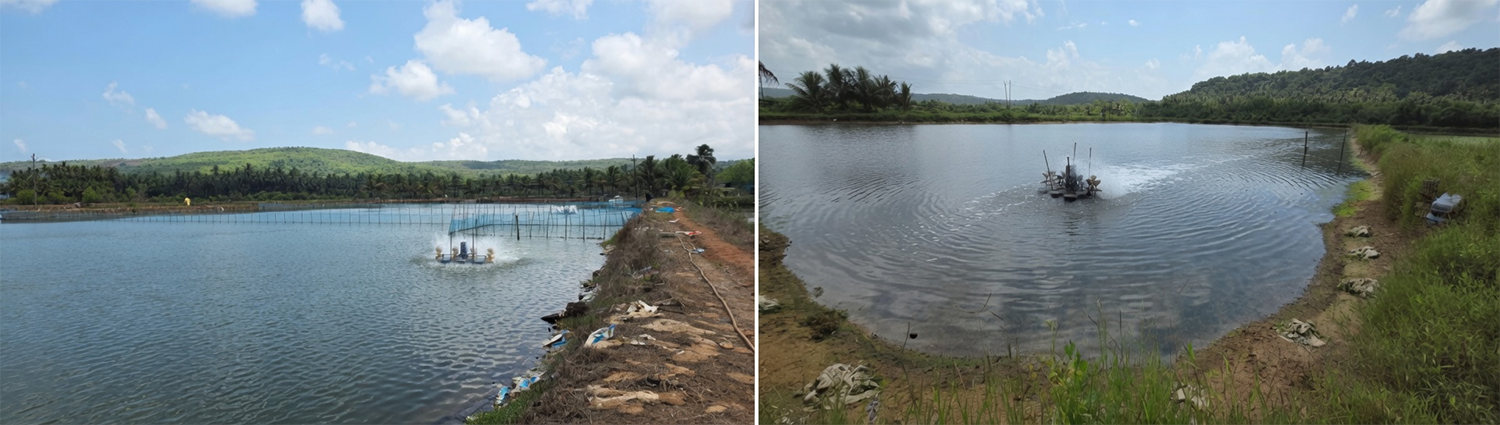
Most production still happens in earthen brackish water ponds. Many of these ponds were originally built for shrimp and were switched after disease losses or as a deliberate move to diversify. The advantages are obvious: The infrastructure is already there, capital outlay is lower and salinity can often be managed. Success depends almost entirely on how well the farm is run – including using regular grading, water-quality monitoring and management, and careful feeding.
Cage culture is practiced in some estuaries and sheltered coastal waters. Floating net cages make use of open water without the need for land, allow higher densities and free the farmer from pond maintenance. The downside is exposure: Storms, strong currents and sudden water-quality changes can wipe out a crop if the site is poorly chosen or the mooring is weak.
Recirculating systems remain rare. A few operators use them for nursery work or small trials. The control over water quality is attractive, but the capital cost, power bills and need for skilled staff keep RAS on the margins for now.
What is holding the sector back?
Ask barramundi farmers what frustrates them the most and the answers come quickly and include the following:
Seed supply and quality
Between December and March, seed of adequate quality is hard to find. The seasonal gap forces many farmers to stock later than they would like or to take whatever is available. Even when seed is available, quality varies. Some batches are already weaned onto commercial feed; others are still dependent on live or trash fish. Unweaned seed tends to accept pellets slowly, suffers higher stress and size variation and shows more cannibalism. Without any formal certification system, the farmer carries the risk of a bad batch from the start.
Feed cost and the trash-fish habit
Feed is the largest expense on most farms. High protein requirements and rising ingredient prices keep margins under pressure. Some operators still prefer trash fish because it feels cheaper. In practice it usually costs more once you factor in poor conversion, water-quality problems and the resulting disease risks.
Disease
As more farms take up Asian sea bass culture, disease problems are becoming harder to ignore. Vibriosis, streptococcosis, parasites (especially in cages) and secondary infections after temperature stress all appear regularly. Diagnostic services specific to sea bass are limited, biosecurity practices vary widely and many hatcheries still do not screen seed systematically. In ponds, organic load and poor water quality make things worse. In cages, the fish are simply more exposed to whatever is in the surrounding water. Vaccination programs are almost non-existent, so treatment remains reactive.
Weather and climate
Hot summers drive dissolved oxygen down, stop the fish from feeding properly and raise mortality. Cold winters slow growth and weaken the immune system. Sudden swings in temperature or salinity, heavy rain and cyclones add further uncertainty, especially for cages and poorly prepared ponds.
Marketing
Most farmers still sell through commission agents. The agent often decides the price, the timing of harvest and how long the farmer waits for payment. With limited direct access to retailers or institutional buyers and little collective bargaining power, producers have little room to maneuver.
Practical steps to move forward
None of these problems is new, and none has a single dramatic solution and sustainable progress will only come from steady work on several fronts at once.
Seed
Feed-weaned seed needs to become the standard. A workable certification system would give farmers more confidence. Broodstock conditioning should be improved so that year-round production becomes more reliable. Private hatchery investment needs encouragement – the public sector alone will not close the gap.
On the farm
Recommendations include stocking only uniform fingerlings and matching density to the real capacity of the farm, not to wishful thinking. Grade the fish regularly and keep proper records of biomass and FCR. These habits sound basic, but they separate the farms that make money and succeed from those that struggle.
Effects of poultry protein concentrate, phosphorus supplementation in barramundi juveniles
Health
Basic diagnostic tools at cluster level, routine biosecurity, health screening of seed before stocking and region-specific disease surveillance would all reduce losses. Longer-term investment in vaccines and preventive health programs is needed if the industry is to grow without constant crisis management.
Feed
The economic and environmental case for formulated feed is already clear. Demonstration farms and practical training can help more operators make the switch. Trash-fish feeding should be phased out for both cost and biosecurity reasons.
Climate
Summer feeds that support the fish under heat stress, better aeration, smarter stocking calendars and stronger pond or cage infrastructure will reduce weather-related losses. These measures are becoming part of ordinary good management rather than optional extras.
Markets
Farmer producer organizations, direct links to retailers and institutions, better cold-chain facilities and more transparent pricing would give producers a stronger position. Reducing reliance on a single layer of middlemen is one of the clearer ways to improve returns.
A realistic outlook
Sea bass culture in India has much potential and is moving forward, but it is still early. Pond systems carry most of the production, cages are expanding where conditions allow, and recirculating systems remain experimental. Commercial feed is available, yet seasonal seed shortages, uneven seed quality, high feed costs, occasional trash-fish use, disease pressure, climate swings and dependence on agents continue to decide whether a farm makes a profit or just breaks even.
Growth will not come simply from adding more ponds or cages. It will come from better hatcheries, tighter farm management, consistent use of appropriate feeds, stronger health practices and marketing arrangements that leave more value with the farmers that grow the fish. If those pieces improve together, Asian sea bass can shift from a useful diversification option to a steady, commercially meaningful contributor to India’s coastal aquaculture.
Now that you've reached the end of the article ...
… please consider supporting GSA’s mission to advance responsible seafood practices through education, advocacy and third-party assurances. The Advocate aims to document the evolution of responsible seafood practices and share the expansive knowledge of our vast network of contributors.
By becoming a Global Seafood Alliance member, you’re ensuring that all of the pre-competitive work we do through member benefits, resources and events can continue. Individual membership costs just $50 a year.
Not a GSA member? Join us.
Authors
-

Corresponding author
Tamil Nadu, India -
Assistant Professor
Institute of Fisheries Post Graduate Studies, TNJFU, OMR Campus,
Vaniyamchavadi, Chennai, India
Related Posts
Innovation & Investment
Biofilter in a box: Startup’s solution cleans aquaculture wastewater enough to farm oysters in it
Canadian start-up Clean Valley brings containerized wastewater sanitizing cleaning system and portable oyster hatcheries to Brunei and beyond.
Health & Welfare
What can selective breeding do for your species?
Classical selective breeding may be the most effective and appropriate method to genetically improve marine fish aquaculture.
Responsibility
Beefing up seaweed production to green up beef
Josh Goldman is on a mission to reproduce asparagopsis, a tropical seaweed that could have a significant impact on global greenhouse gas emissions.
Responsibility
Australis Aquaculture wins prestigious climate innovation award
Australis Aquaculture received the U.S. Secretary of State’s 2021 Award for Corporate Excellence in the Climate Innovation category for advancing climate-smart ocean farming of barramundi in Vietnam.