


How technology is improving seafood quality and consumer satisfaction

New solutions are helping fisheries deliver higher-quality products with greater efficiency
Technology and artificial intelligence (AI) are taking hold across fisheries, improving operations and benefiting consumers. Smarter sorting, real-time freshness monitoring and digital traceability each ensure that seafood reaches customers in better condition with greater consistency and transparency. The result is a more trustworthy supply chain that delivers reliable quality and a superior ocean-to-plate experience.
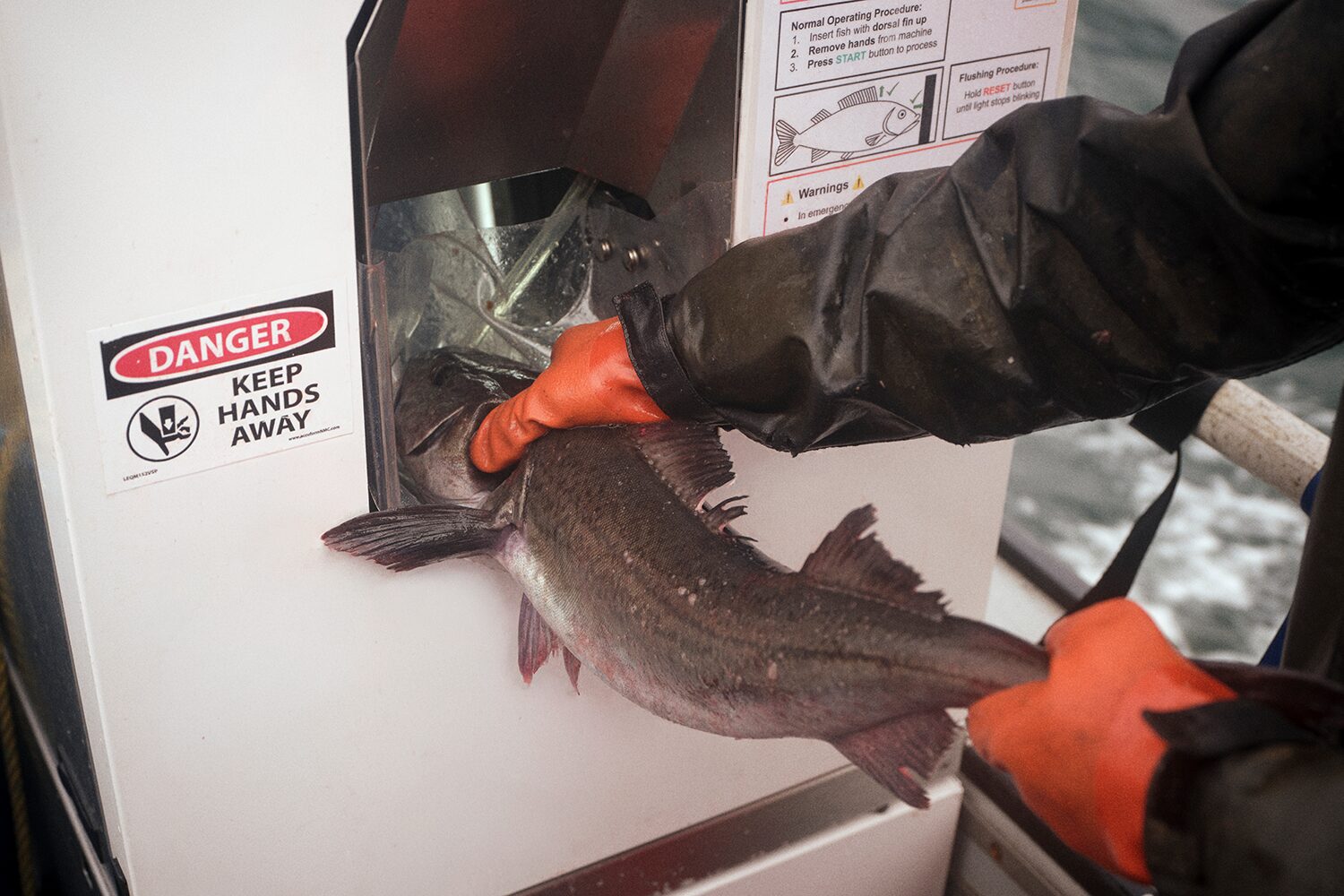
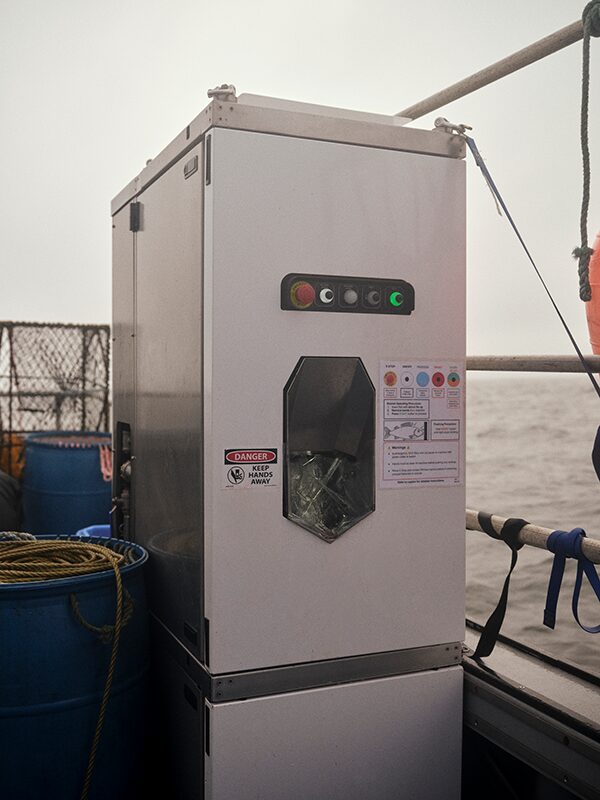
California company Shinkei Systems is proving that machine learning algorithms can modernize even centuries-old seafood techniques. Shinkei’s AI-powered robot, Poseidon, performs ike jime – a traditional Japanese fish-handling method for harvesting fish that advocates say improves flavor, texture and shelf life, while cutting down on labor and increasing safety for users.
“The ike jime process involves killing live fish with a spike through the brain and cutting their gills,” Saif Khawaja, founder and chief executive of Shinkei Systems and inventor of Poseidon, told the Advocate. “This stops the stress hormone and lactic acid buildup that can harm flavor and texture when fish are left to asphyxiate. But ike jime is a difficult technique. Someone has to cover the fish, restrain it, and locate the brain and gills before inserting the spike. That’s where our solution comes in.”
Poseidon is about the size of a common household refrigerator and sits on fishing boat decks. Fish are fed into it, before AI identifies the species and pinpoints the brain and gills. A mechanical component then penetrates the brain in a second. The fish emerge with a hole in the head and incisions near the gills before being placed in an ice slurry for blood drainage. The robot’s algorithm is trained to handle different fish sizes and shapes, as well as the challenges of commercial fishing boats – wriggling fish, rough waves and harsh weather.
![Ad for [Aquademia]](https://www.globalseafood.org/wp-content/uploads/2025/07/aquademia_web2025_1050x125.gif)
“Three billion people rely on seafood as their main protein source, so there’s real opportunity to make an impact here,” said Reed Ginsberg, co-founder and CTO at Shinkei Systems. “You can put in fish of any species, and some have brains the size of a fingernail, so precision is essential to avoid causing pain and suffering. Poseidon delivers that accuracy and that’s where the AI really matters.”
Khawaja sees automated ike jime as a gamechanger for the fishing industry – and he’s not just counting on the appeal of a more humane harvesting method.
Poseidon is supplied to fishermen, who then sell the fish that they catch back to Shinkei Systems at a premium. Shinkei Systems, in turn, sells the fish to restaurants and other retailers. In October 2024, Khawaja launched Seremoni, the distribution arm of Shinkei Systems. Currently, Seremoni sells the company’s Seremoni GradeTM black cod, black sea bass, red snapper and vermillion rockfish – with more species coming in the year ahead – to restaurants and retailers in over 20 metro areas across the United States. These include Michelin-starred restaurants and local favorites like Gjelina and Crudo e Nudo in Los Angeles, Blue Hill at Stone Barns in New York, and retail chains like FreshDirect and Wegmans. Seremoni also distributes to fish markets in Japan, including the famed Toyosu Fish Market, through a partnership with Yamato Transport.
“Our consumers care first and foremost about what’s on their plate,” said Khawaja. “No matter what tools are used behind the scenes, satisfaction ultimately comes down to the freshness, flavor and consistency of the fish itself. AI plays an important supporting role in helping us deliver that level of quality every single time. We use data, precision cold-chain logistics and AI-driven planning tools to optimize harvest timing, reduce variability and ensure our seafood arrives at peak freshness. These systems help uphold the strict handling standards behind our Seremoni Grade designation.”
“Technology also helps us provide transparency, from dock location to date of catch, which strengthens consumer trust,” Khawaja continued. “In the end, consumers choose Seremoni because the fish tastes extraordinary. That’s why people like Dan Barber, chef of Blue Hill at Stone Barns, have called our seafood the ‘platonic ideal’ of what fish can taste like.”
In the UK, growing awareness of crustacean welfare – following the legal recognition of decapod crustaceans as sentient – is prompting new guidance and industry efforts to improve handling and killing methods, preventing physiological changes that harm meat quality, appearance and shelf life. Natasha Stokes of UK animal welfare organization Crustacean Compassion notes that regulation may place greater responsibility on fisheries to comply with clearer welfare standards – a shift that emerging technologies can support.
“AI-powered catch measurements, modified creels and undersea video can improve welfare and more sustainable management of decapod fisheries,” said Stokes. “Remote Electronic Monitoring (REM) systems using cameras, gear sensors and GPS can help fill critical data gaps in the welfare of individuals and wild populations by documenting on-board handling and whether discards are treated in a way that maximizes survival. This provides essential welfare data and encourages more humane handling.”
On-board handling can breach decapod crustacean welfare needs and affect both survival rates and catch quality. However, innovations like automatic sorting can help, said Stokes. CrabScan360, developed by California startup Seafood AI, uses biometric imaging and AI to identify crabs and determine their species, size, weight, and sex within seconds. It also indicates – via a green or red light – whether a crab meets legal requirements, making manual, potentially imprecise sorting faster and more consistent.
How the next generation diagnostic tools are improving early detection of disease in aquaculture
“This system would create a unique digital record of each crab’s measurements and harvest location, time and date, laying the foundation for a fully traceable supply chain and helping fishermen meet quota requirements while maximizing harvest quality,” said Stokes.
Although there is no research on the flavor, texture or shelf life in decapods, studies in other animals show that high stress before slaughter lowers muscle glycogen and raises meat pH, leading to poorer texture, taste, and shelf life. With technology and AI becoming more common in fisheries, Ben Sturgeon, CEO of Crustacean Compassion, notes strong anecdotal evidence from chefs that electrical stunning improves flavor. He says that emerging tools will enhance post-harvest handling – from chilling to storage and processing – to better preserve freshness and reduce spoilage.
“We currently lack data, so understanding the numbers is crucial,” said Sturgeon. “Even knowing how many animals die or show stress during chilling, storage or processing would highlight where interventions are needed, improving catch optimization and reducing waste. AI is an ideal monitoring tool for this.”
“AI that provides real-time data on water quality including pH, O2 and ammonia, and enables adjustments would support welfare and reduce losses,” he added. “Higher welfare approaches, centered on early and effective killing, also offer gains in market stability, added value and reduced waste, as well as better tasting products with a longer shelf life.”
As more consumers adopt flexitarian diets – willing to eat meat if it is ethical, ecological and supportive of circular or cultural economies – investing in areas such as smart fishing and full supply chain monitoring will help optimize operations while meeting consumer expectations for high quality, safe and environmentally friendly products.
“Consumer demand for greater sustainability is increasing incentives for fishermen to adopt more humane practices, resulting in healthier animals with higher market value,” said Sturgeon. “As crab and lobster fisheries face pressure from overfishing, increased competition amid spatial squeeze and growing demand for sustainable seafood, technologies that improve marine welfare can unlock a more sustainable approach to the ocean ecosystems on which the terrestrial world depends.”
“The commercial fishing industry is still very analog in a lot of ways and we see tremendous opportunity for where we can use AI and other technology to improve the situation for the fish, the fishermen who catch them, and consumers,” said Ginsberg. “AI tools can help the fishing industry become less wasteful and more transparent – that’s good for everyone.”
Now that you've reached the end of the article ...
… please consider supporting GSA’s mission to advance responsible seafood practices through education, advocacy and third-party assurances. The Advocate aims to document the evolution of responsible seafood practices and share the expansive knowledge of our vast network of contributors.
By becoming a Global Seafood Alliance member, you’re ensuring that all of the pre-competitive work we do through member benefits, resources and events can continue. Individual membership costs just $50 a year.
Not a GSA member? Join us.
Author
-

Correspondent Bonnie Waycott became interested in marine life after learning to snorkel on the Sea of Japan coast near her mother’s hometown. She specializes in aquaculture and fisheries with a particular focus on Japan, and has a keen interest in Tohoku’s aquaculture recovery following the 2011 Great East Japan Earthquake and Tsunami.
Related Posts

Innovation & Investment
20,000 lettuces under the sea: Could underwater agriculture be the future of farming?
Preliminary research suggests that emerging mariculture methods could provide alternatives to land-based agriculture and within recirculating systems.
Innovation & Investment
‘Balancing the conflict’: How Nobify’s AI-powered bird deterrent tech can protect fish farms
Nobify’s AI-powered bird deterrent tech protects fish farms, cutting losses and offering a scalable, eco-friendly alternative to nets.
Fisheries
Artificial intelligence is already helping improve fisheries, but the trick is in training the tech
Artificial intelligence is providing valuable data to fisheries, cutting costs and the need for human review. Can the technology be perfected?

Intelligence
‘The ultimate setting’: Why Japan wants to grow fish in space
Scientists at Okayama University of Science hope to boost astronaut survival by taking aquaculture where no man has gone before.