


First-ever captive breeding program for sardinella launched in the Philippines

Initiative aims to support aquaculture and stabilize the country’s sardine supply
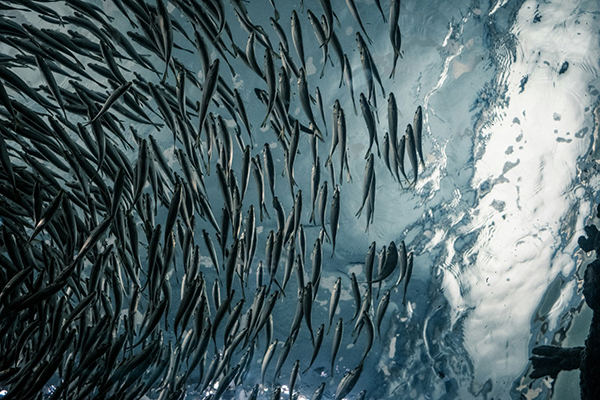
The Philippines’ National Fisheries Research and Development Institute (NFRDI), an agency at the Department of Agriculture (DA) and the research arm of the Bureau of Fisheries and Aquatic Resources (BFAR), has announced a research program to breed Bali sardinella (Sardinella lemuru), locally known as tamban, in captivity. The program is the first attempt of its kind in Philippine fisheries research and development.
Tamban, a type of sardine native to the Eastern Indian Ocean and Western Pacific, is one of the most widely consumed and affordable fish in the Philippines. From 2018 to 2022, it consistently led small pelagic fish production, peaking at more than 339,000 metric tons in 2020. Meanwhile, in 2023, sardines ranked second among capture fishery commodities, contributing 314,147.30 metric tons or 16.7 percent of total output, valued at U.S. $243.2 million, according to the Philippine Statistics Authority.
Despite its economic significance, tamban aquaculture has not been developed.
“A documented breeding technology specific to tamban has never been attempted before,” said NFRDI Officer-in-Charge and project leader Maria Theresa M. Mutia. “Historically, the focus has been on managing wild stocks to ensure sustainable capture fisheries. But with increasing pressure on wild populations and the threat of supply instability, we must now explore alternative solutions through research and innovation.”
![Ad for [BSP]](https://www.globalseafood.org/wp-content/uploads/2025/07/BSP_B2B_2025_1050x125.jpg)
Running from 2024 to 2030, the program aims to develop tamban breeding and culture technologies for aquaculture. It is designed to establish protocols for live capture, transport, domestication and grow-out, laying the groundwork for tamban production outside natural fisheries. The program is also structured in three phases: biological studies and domestication (2024-2025), broodstock development and breeding trials (2026-2028) and grow-out culture (2029-2030). It’s being implemented in partnership with the Southeast Asian Fisheries Development Center – Aquaculture Department (SEAFDEC/AQD) and DA-BFAR Region 9.
Initial efforts under the first phase have brought positive results. Protocols for live transport and domestication have been developed successfully, with tamban surviving up to 378 days in captivity. Preliminary biological studies have also found that the species feeds primarily on copepods, along with phytoplankton and zooplankton – data that will support future feed development and nutrition management.
Can this breeding technique breathe new life into giant freshwater prawn farming?
“Establishing tamban’s biological parameters and domestication protocols is essential,” according to the NFRDI. “The data will serve as the foundation for the next phases of the program, especially for broodstock development and culture system design.”
Currently, 232 live tamban are being reared at NFRDI’s Freshwater Fisheries Research and Development Center in Taal, Batangas, and at the SEAFDEC/AQD hatchery facility in Tigbauan, Iloilo. The new breeding program could make significant contributions to food security, stabilize sardine supplies in the Philippines and open new possibilities for the country’s aquaculture.
Now that you've reached the end of the article ...
… please consider supporting GSA’s mission to advance responsible seafood practices through education, advocacy and third-party assurances. The Advocate aims to document the evolution of responsible seafood practices and share the expansive knowledge of our vast network of contributors.
By becoming a Global Seafood Alliance member, you’re ensuring that all of the pre-competitive work we do through member benefits, resources and events can continue. Individual membership costs just $50 a year.
Not a GSA member? Join us.
Author

Related Posts
Health & Welfare
Atlantic cod genomics and broodstock development project
The Atlantic Cod Genomics and Broodstock Development Project has expanded the gene-related resources for the species in Canada.
Health & Welfare
Broodstock management and early hatchery rearing of Arctic charr
Reviewing and summarizing available information on Arctic charr broodstock management, early hatchery rearing and areas of needed research.
Innovation & Investment
Japan hopes aquaculture can save bluefin tuna
Bluefin tuna may be the most prized fish in the ocean. If hon-maguro sashimi is to remain chic, closed-cycle aquaculture may help keep it on menus.
Health & Welfare
The history and future of the Aquaculture Pathology Laboratory
The University of Arizona’s Aquaculture Pathology Laboratory has significantly contributed to the expansion of the shrimp farming for three decades.