


The Philippines holds first national dialogue on decent work in aquaculture, unveils new research

Landmark forum in the Philippines unites government, industry and labor leaders to advance decent work, sustainability and responsible growth in aquaculture
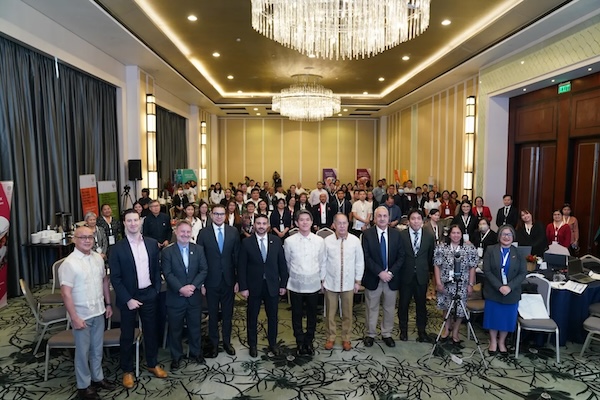
The Philippines convened its first national dialogue on decent work in aquaculture, marking a key step toward reshaping one of the country’s most vital food industries.
The two-day event in Makati City brought together about 150 representatives from government, workers’ and employers’ organizations and domestic and international partners to address challenges in productivity, competitiveness and labor rights in aquaculture.
Organized by the International Labour Organization (ILO) with support from the Government of Japan through its Resilient, Inclusive and Sustainable Supply Chains (RISSC) Project, the dialogue spotlighted new research and policy directions aimed at strengthening the aquaculture sector against global disruptions while promoting fair labor practices and sustainable growth.
“Japan is proud to be among the largest voluntary contributors to the ILO for the Asia-Pacific region, having been implementing technical cooperation in the labour sector for over 50 years,” said His Excellency, Endo Kazuyo, from the Embassy of Japan in the Philippines. “Today’s discussions among stakeholders can foster an improved quality of life for workers in aquaculture. As a key Philippine industry, better practices in this sector are sure to drive more sustainable growth for the entire Philippine economy.”
![Ad for [BSP]](https://www.globalseafood.org/wp-content/uploads/2025/07/BSP_B2B_2025_1050x125.jpg)
Aquaculture produces more than half of the country’s fisheries output and anchors rural livelihoods nationwide. With wild stocks in decline, its role is poised to expand. The Philippines is the world’s top seaweed producer and ranks 12th in overall aquaculture output. Yet the sector still struggles with informal work, low and unstable incomes, unsafe conditions, child labor and limited social protection – constraints that continue to limit its full potential.
Participants used the dialogue to set shared priorities for a more responsible and sustainable aquaculture supply chain, identifying opportunities to boost resilience, competitiveness and decent work standards.
The two-day dialogue aimed to deepen collaboration among key stakeholders to advance a more responsible and sustainable aquaculture supply chain. Participants identified shared priorities and opportunities to strengthen the sector’s resilience, competitiveness and sustainability through decent work and responsible business conduct – a step seen as pivotal in shaping the future of Philippine aquaculture.
“As global demand for ethically sourced seafood grows, the industry must meet rising expectations for transparency, environmental and social due diligence, and stronger labor rights protection,” said Khalid Hassan, director of the ILO country office for the Philippines.
Since 2023, the ILO’s RISSC Project has promoted decent work and responsible business practices across the aquaculture supply chain. Its efforts include establishing the first Industry Tripartite Council for aquaculture in Region 12 and launching a flagship study on labor conditions and responsible practices in shrimp and seaweed production.
Grounded in the ILO’s Decent Work Agenda, the study identifies key gaps in compliance, social dialogue, informality and data, and offers practical steps to strengthen labor standards, improve business practices and elevate the sector’s global standing.
Now that you've reached the end of the article ...
… please consider supporting GSA’s mission to advance responsible seafood practices through education, advocacy and third-party assurances. The Advocate aims to document the evolution of responsible seafood practices and share the expansive knowledge of our vast network of contributors.
By becoming a Global Seafood Alliance member, you’re ensuring that all of the pre-competitive work we do through member benefits, resources and events can continue. Individual membership costs just $50 a year.
Not a GSA member? Join us.
Author

Related Posts
Responsibility
Philippines designates new MPA to protect marine life and support local communities
The Philippines has designated the Bitaug MPA, protecting marine life and supporting local livelihoods through community management.
Responsibility
ILO: Seeking Decent Work for Thailand’s fishing and seafood industry
The new Global Estimates of Modern Slavery report released by the International Labour Organization indicates that 24.9 million workers at any given time in 2016 were in modern slavery. One in 10 of those workers around the world was working in the fishing and agriculture industries.
Responsibility
How can the fishing industry address forced labor, with the scope more in focus?
The Financial Transparency Coalition reported that IUU fishing and forced labor often go hand-in-hand and that greater transparency is key.
Fisheries
Climate change will increase labor risks in fisheries, study warns
Authors of a new Marine Policy paper call for integrated policy responses across climate, industrial fisheries and labor systems.